

Reiterating that long, blemish-free service in essential posts creates a substantive right against arbitrary denial by the State, the Delhi High Court has held that teachers appointed through written tests and interviews, who served government schools for over 20 years, are entitled to regularisation.
The High Court held that employees cannot be denied regularisation merely because their appointments were described as temporary, contractual, ad hoc, or part-time. What matters is the true nature of employment and the reality of continuous service rendered over decades.
The Court reiterated that the ruling of Secretary, State of Karnataka vs. Uma Devi [(2006) 4 SCC 1] was intended to prevent illegal backdoor appointments and not to deny relief to employees who were appointed through a fair process and continued in essential public functions for long periods.
Teaching Punjabi in government schools was found to be a perennial and essential educational function of the Directorate of Education. The teachers had been selected through written examinations and interviews, possessed the required qualifications, and had discharged their duties without blemish for over two decades, added the Court.
The Court emphasized that the State cannot keep workers on insecure terms for decades and thereafter refuse regularisation. Constitutional obligations under Articles 14 and 16 require fairness, dignity, and protection against arbitrary treatment of long-serving employees.
Accordingly, the Court directed regularisation of the appellants and granted consequential service benefits, reinstatement where necessary, and recalculation of retiral benefits. However, arrears based on parity with regular TGT salaries for the pre-judgment period were not granted, though regular TGT pay was directed prospectively from the date of judgment.
Briefly, the appellants were appointed between 1986 and 1994 as part-time Punjabi language teachers through the Punjabi Academy, an instrumentality of the State, and were deployed in schools under the Directorate of Education (DOE), GNCTD. They possessed the requisite educational qualifications and were selected through a recruitment process involving written examinations and interviews. Their appointments were renewed year after year on ad hoc and temporary terms.
After rendering over two decades of uninterrupted service, the appellants were appointed as full-time Punjabi language teachers between 2008 and 2011 and continued to teach in DOE schools. Despite earlier governmental communications recommending creation of regular posts and absorption of qualified language teachers, no such action was taken. The teachers ultimately approached the Court seeking regularisation and parity with regular TGT (Punjabi) teachers. The Single Judge dismissed their claim for regularisation.
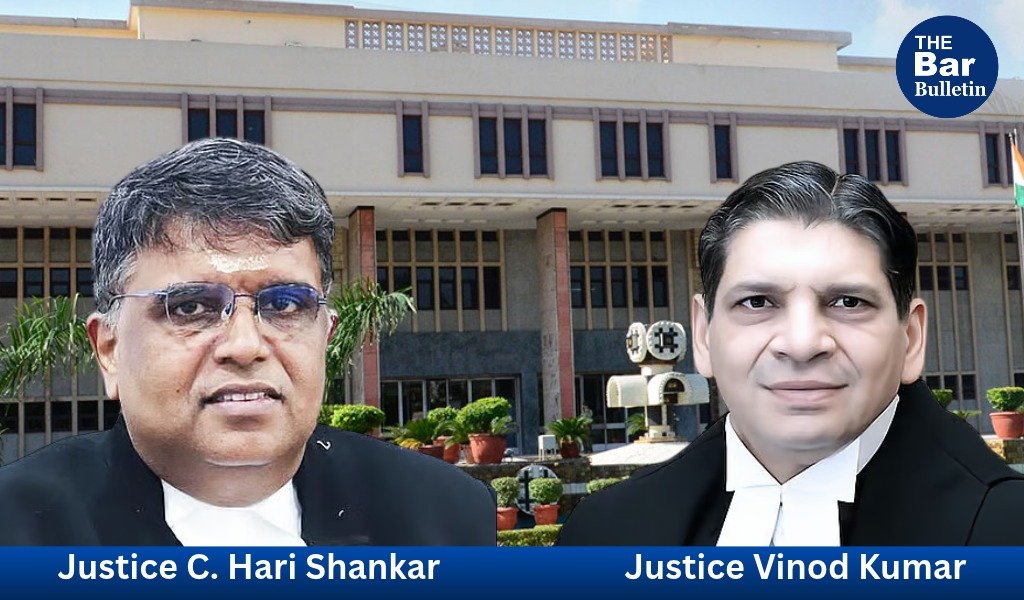
The Division Bench comprising Justice C. Hari Shankar and Justice Vinod Kumar observed that labels such as ‘temporary’, ‘contractual’, ‘part-time’, or ‘ad hoc’ cannot defeat substantive rights that accrue through long years of uninterrupted service. What is relevant is the ‘essence of employment’, namely whether the employee performed essential and perennial duties and whether the appointment was made through a process resembling regular recruitment.
The Court found that the appellants were not backdoor appointees. They had been selected through written examinations and interviews, possessed the necessary qualifications, and had spent decades performing the core educational function of teaching Punjabi in government schools. Their service records were unblemished, and their continued engagement demonstrated the continuing necessity of their work.
Rejecting the argument that the teachers remained employees only of the Punjabi Academy, the Court observed that the teachers’ salaries, conditions of employment, and deployment were effectively controlled by the GNCTD and the Directorate of Education. The Academy functioned merely as a channel through which the State provided and utilised their services.
The Court further remarked that the State cannot exploit workers by keeping them on temporary arrangements for decades and then deny them regular employment. The obligation of the State as a model employer requires fairness, dignity, and constitutional compliance in dealing with such employees.
