

The Delhi High Court has asserted that Medical Assessment Boards cannot re-quantify disability percentage at MBBS admission stage, as their role is confined to assessing functional competency. Accordingly, the Court set aside the disability re-quantification orders passed by Medical Assessment Boards and Appellate Boards in both petitions, which had reduced the petitioner’s recorded disability from 60% to 30% and from 61% to 16% respectively.
The Court held that the UDID card issued under the Rights of Persons with Disabilities Act, 2016 is the primary document for determining eligibility for PwBD reservation, and Medical Assessment Boards have no authority to revisit or reduce the percentage of disability recorded therein. Further, the role of the Medical Assessment Board under Clauses 9.2 and 9.3 of the Guidelines on Assessment of Persons with Benchmark Disabilities for Admission to the MBBS Course, 2026, (2026 Guidelines) is confined to assessing the candidate’s functional competency, that is, whether the candidate can complete the MBBS curriculum and undertake the profession of medicine.
The Court placed strong reliance on the Supreme Court’s decision in Om Rathod v. Director General of Health Services [(2024) 19 SCC 70], which holds that quantification of disability is moot at the point of admission and that Disability Assessment Boards must focus on functional competence rather than re-quantifying disability. Hence, the petitioners were directed to be permitted to participate in the third round and mop-up round of NEET (UG) 2026 counselling under the PwBD category in accordance with their rank and entitlement, treating their disability as recorded in their UDID cards; however, the Court declined to create supernumerary seats.
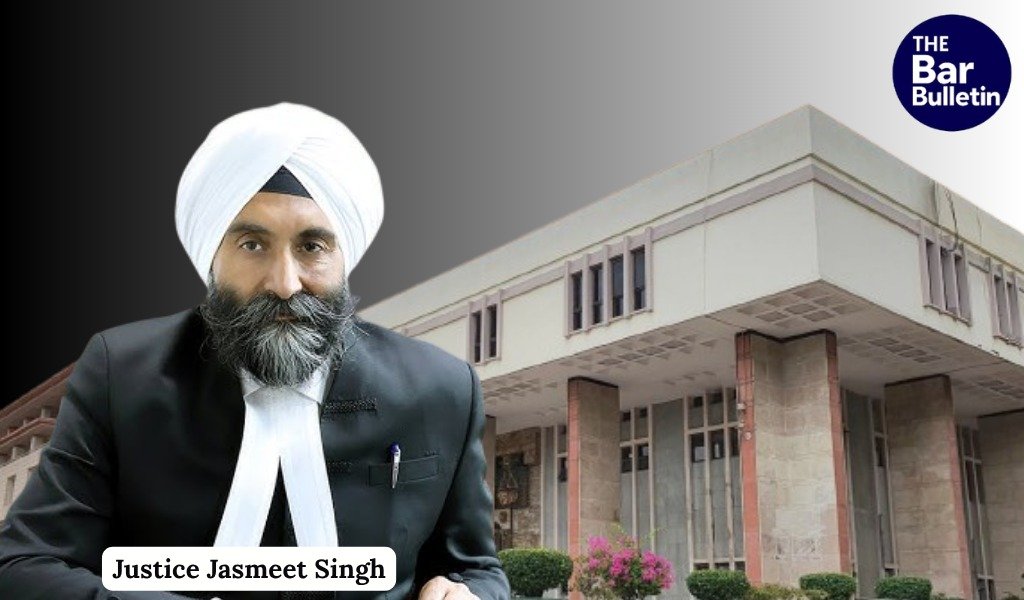
A Single Judge Bench of Justice Jasmeet Singh examined the Guidelines on Assessment of Persons with Benchmark Disabilities for Admission to the MBBS Course, 2026 dated July 27, 2026. Clauses 9.2 and 9.3 of the Guidelines provide that the UDID Card shall serve as the primary documentary evidence of the existence, nature and extent of the specified disability, and that while the particulars recorded in the UDID Card shall ordinarily form the basis of consideration, the Medical Assessment Board shall independently determine the candidate’s functional competency, and the determination of eligibility shall not be based solely upon the category or percentage of disability recorded in the UDID Card.
The Court pointed out that Clause 3.9 defines ‘Functional Competency’ as the demonstrated ability of a candidate, with or without reasonable accommodation or assistive technology, to acquire and perform the essential competencies required under the Competency Based Medical Education curriculum. Clauses 2.4 and 6.1 introduce a competency-based and function-oriented assessment framework, and require the Guidelines to be read in conjunction with the National Medical Commission Act, 2019, the Rights of Persons with Disabilities Act, 2016, the Graduate Medical Education Regulations, 2023, and the Notification dated 12th March, 2024 issued by the Department of Empowerment of Persons with Disabilities.
The Court also considered Sections 56, 57 and 59 of the Rights of Persons with Disabilities Act, 2016, which provide for the Central Government to notify guidelines for assessing the extent of specified disability, for the appropriate Government to designate certifying authorities competent to issue disability certificates, and for an aggrieved person to appeal against the decision of the certifying authority to an appellate authority designated by the State Government. Rules 17, 18 and 19 of the Rights of Persons with Disabilities Rules, 2017 were also noted, particularly Rule 19 which provides that a certificate issued under Rule 18 shall be generally valid for all purposes.
The Court placed strong reliance on the Supreme Court’s decision in Om Rathod v. Director General of Health Services [(2024) 19 SCC 70], where the Supreme Court observed that Disability Assessment Boards must focus on the functional competence of persons with disabilities and not merely quantify the disability. The Supreme Court also said that the disability of a person is quantified at the time of availing a UDID Card, and the quantification of disability is moot at the point of admission to educational courses since eligibility for reservation may be evaluated using the quantification in the UDID Card. Further, the role of the Disability Assessment Boards must be tailored (with a functional competency approach) only for the course which the candidate seeks to pursue.
Briefly, the petitions were filed before the Delhi High Court by NEET (UG) 2026 candidates seeking admission to the MBBS course. The first petitioner Shivam Kumar, an 18-year-old candidate with a permanent visual disability, held a Disability Certificate and UDID card dated Dec 28, 2024, recording 60% disability. He appeared in NEET (UG) 2026 and secured 398 out of 720 marks with a PwBD rank of 409. The second petitioner Aashiya held a Disability Certificate and UDID card dated June 11, 2022, recording 61% locomotor disability, and secured 363 out of 720 marks (81.18 percentile) with a PwBD rank of 638.
Both petitioners were directed under a Notice dated July 30, 2026, issued by the Medical Counselling Committee to appear before designated Medical Assessment Boards for an Eligibility Certificate. The Medical Assessment Board at Lady Hardinge Medical College re-quantified Shivam Kumar’s disability at 30% (against the UDID-recorded 60%), but certified him eligible and capable of pursuing the MBBS course. The Appellate Medical PwBD Assessment Board at Vardhman Mahavir Medical College & Safdarjung Hospital concurred with the 30% figure by an Eligibility Certificate dated Aug 14, 2026, and his candidature was shifted from the PwBD category to the General category on the same day, thereby depriving him of Round 1 counselling.
Similarly, in Aashiya’s case, the Primary Disability Assessment Medical Board re-quantified her disability at 16% on Aug 05, 2026, and declared her ineligible for PwBD reservation, and the Appellate Disability Assessment Board constituted for Delhi pursuant to the Supreme Court’s directions in Anmol v. Union of India confirmed the 16% figure by an Eligibility Certificate dated Aug 14, 2026.
