

The Delhi High Court has laid down is that a person present on a footpath or pavement, whether walking, standing, resting, or even working, cannot be held guilty of contributory negligence merely because a motor vehicle was driven onto the footpath and caused injury. The entire responsibility in such circumstances lies upon the driver of the motor vehicle who drove into a space reserved exclusively for pedestrians, and footpaths being sacred and safe spaces meant for pedestrians, any injury suffered by a person on the footpath, irrespective of the reason for his presence, cannot be a factor for fastening contributory negligence upon him.
The Court also held that right to walk on demarcated footpaths is a fundamental right under Articles 19(1)(d) and 21 of the Constitution, and any unauthorised use of the footpath is a civic and municipal issue, not a basis for contributory negligence in a motor accident claim.
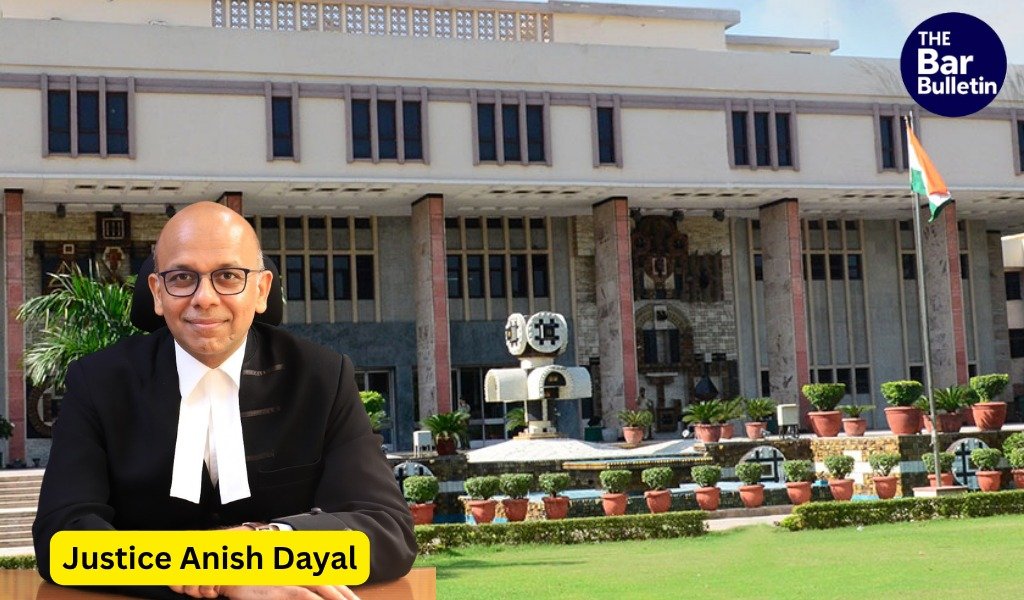
A Single Judge Bench of Justice Anish Dayal observed that a pedestrian present on a footpath, whether walking, standing, resting, or even working, cannot be fastened with contributory negligence merely because a motor vehicle was driven onto the footpath and caused injury. At the same time, the Court asserted that the right to walk on demarcated footpaths is a fundamental right flowing from Articles 19(1)(d) and 21 of the Constitution, and this right has priority over movement by motorised vehicles.
Further, driving a motor vehicle on a footpath is prohibited under Rule 39(3) of the Motor Vehicles (Driving) Regulations, 2017, and parking on a footpath is barred under Rule 15 of the Rules of The Road Regulations, 1989, making the driver solely responsible when a vehicle enters pedestrian space. Accordingly, the Court held that any unauthorised or illegal use of a footpath, including encroachment or hawking, is a matter of civic responsibility and municipal enforcement, and cannot be converted into a defence of contributory negligence in a motor accident claim.
Contributory negligence must be established by showing that the injured person contributed to the occurrence of the accident itself, and not merely that the injured person was present on the footpath at the time of the crash, added the Court.
Briefly, on 20th September 2019, the appellant, Hari Nath Sharma, was working as a barber on the footpath at Gali No. 10, opposite property no. PP-38, Ram Dharam Kanta, Anand Parbat, Industrial Area, New Delhi, when a truck being driven in a rash and negligent manner by respondent no. 1, Umesh Kumar, struck him and caused grievous injuries.
The Motor Accident Claims Tribunal, Central District, Tis Hazari Courts, Delhi, by its award dated 22nd October 2022, initially assessed the compensation at Rs. 1.71 lakhs, but reduced the same by 30% on account of contributory negligence attributed to the appellant, resulting in a net award of Rs. 1.19 lakhs along with interest at 6% per annum.
The MACT concluded that the appellant was encroaching upon the footpath as an unauthorised and illegal squatter and, by working as a barber on the footpath, had exposed himself to the risk of being injured, thereby fastening contributory negligence upon him. Significantly, the plea of contributory negligence was not even raised by the Insurance Company in its written statement before the MACT.
