
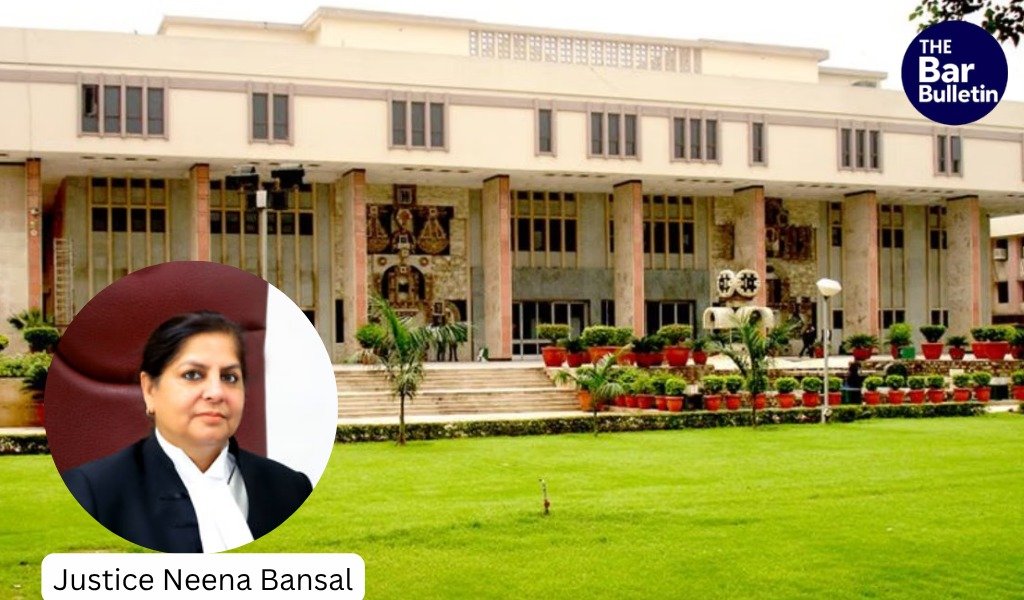

The Delhi High Court has dismissed an appeal challenging a consent decree arising from a settlement in a property dispute, holding that a party cannot seek to vary a settlement solemnly recorded before the Court by subsequently asserting that additional monetary terms were agreed but deliberately left unrecorded.
Justice Neena Bansal Krishna held that where the parties personally appear before the Court, affirm the terms of settlement on solemn affirmation and act upon them, the settlement must ordinarily be treated as the final record of the bargain unless cogent material establishes that the consent was vitiated by fraud, inducement, undue influence or other legally recognised circumstances.
The case arose from a suit seeking mandatory injunction and mesne profits in respect of a portion of property at Bapa Nagar, Karol Bagh. During the proceedings, the parties settled the dispute on 26 September 2022. The appellants acknowledged that they had no right, title or interest in the property, handed over possession and the keys, and received demand drafts totalling ₹40 lakh, which was expressly recorded as the full and final settlement.
Subsequently, the appellants alleged that they had agreed to the settlement on an assurance that they would receive an additional ₹3 crore upon sale of the property, besides ₹10 lakh represented by two post-dated cheques. They contended that these terms had been deliberately omitted from the settlement and sought setting aside of the consent decree on grounds including fraud, misrepresentation and undue influence.
The High Court, however, found that the alleged additional payment was not an incidental term but, if true, would have been an integral part of the consideration for surrendering possession and relinquishing the property claim. The Court therefore found its complete absence from the settlement significant, particularly when the parties had expressly recorded ₹40 lakh as the full and final settlement.
The Court also noted that the parties were personally present with their respective counsel when the settlement was recorded and that the Trial Court had specifically asked them whether they understood and agreed to its terms. They answered in the affirmative.
On the legal question of maintainability, the High Court relied on the Supreme Court’s decision in Sakina Sultanali Sunesara (Momin) v. Shia Imami Ismaili Momin Jamat Samaj,2025 INSC 570 holding that where a party disputes a compromise, it must first approach the Court which recorded the compromise. Only after an adverse decision can the party challenge the decree in a first appeal under Section 96(1) CPC, with Order XLIII Rule 1A(2) permitting a challenge to the recording of the compromise.
The Court held that the appellants had followed this prescribed course by first approaching the Trial Court under Section 151 CPC. Since that application was dismissed, the subsequent appeal before the High Court was maintainable. However, on merits, the Court found no basis to interfere with the consent decree.
The High Court further held that the two post-dated cheques of ₹5 lakh each did not establish any additional liability, as the settlement recorded before the Court made no reference to them and no clear nexus between the cheques and the final compromise had been demonstrated.
Finding that the appellants had failed to establish fraud, inducement, undue influence or any other circumstance rendering the compromise void or voidable, the Court dismissed the appeal and upheld the consent decree.
