
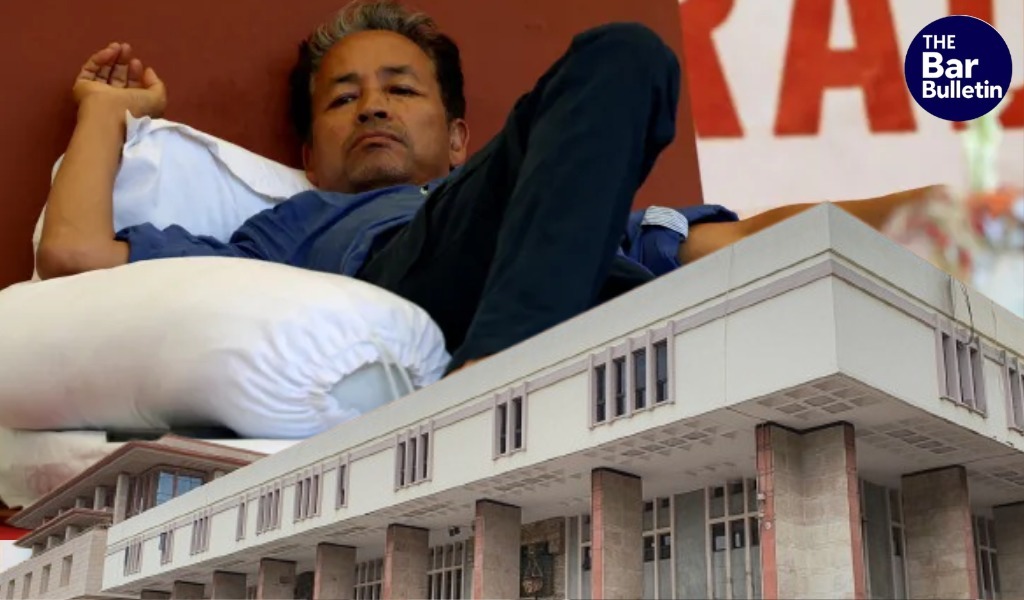

The Delhi High Court on Wednesday dismissed a public interest litigation concerning the alleged forcible removal of climate activist Sonam Wangchuk from his protest site at Jantar Mantar on July 18, observing that the issues raised had already been addressed in proceedings initiated by Wangchuk’s wife. The matter was heard alongside petitions alleging police excesses during the protests before a Division Bench of Chief Justice Devendra Kumar Upadhyaya and Justice Tejas Karia.
The petitioner sought directions for registration of an FIR against police personnel, constitution of a Special Investigation Team (SIT), preservation of CCTV footage and body-camera recordings, and protection of protesters from coercive action. It was argued that the petition raised broader constitutional questions concerning the right to peaceful protest under Article 19 and was not confined merely to Wangchuk’s alleged removal from the protest site.
The Bench, however, noted that the petition substantially revolved around the events of 18 July 2026, when Wangchuk was allegedly removed from Jantar Mantar and taken to Sir Ganga Ram Hospital. It observed that Wangchuk’s wife had already approached the High Court by way of a writ petition and a subsequent Letters Patent Appeal, both of which had been disposed of on 21 July 2026 with appropriate directions. Consequently, the Court held that the grievances relating to that incident could not be reopened through a separate public interest litigation.
As regards the prayer for registration of an FIR and preservation of records, the Court held that the petitioner was free to invoke the statutory remedies available under the Bharatiya Nagarik Suraksha Sanhita (BNSS), including the mechanism under Section 173 and other related provisions. It observed that the reliefs sought pertained to a solitary incident and were more appropriately pursued through the criminal law framework.
Accordingly, the Court dismissed the petition while clarifying that it had expressed no opinion on the merits of the allegations and that the petitioner remained at liberty to avail any remedy available in law.