

The Supreme Court on Wednesday heard concerns raised by lawyers over the methodology for co-opting women members to achieve 30% representation of women members in State Bar Councils, particularly regarding who can be considered for the additional 10% seats.
The Supreme Court had earlier directed that the 10% co-option component of its 30% women’s representation mandate would be implemented by the Chief Justice of the jurisdictional High Court, who would nominate two women members to each State Bar Council from among former women High Court judges or senior women advocates having a fair standing at the Bar. The Court had said the mechanism would infuse “objectivity, independence and transparency” in the functioning of State Bar Councils.
There was broad agreement among the lawyers that women’s representation in Bar Councils should be increased. The objections were mainly to the method of filling the additional 10% seats through co-option. Some lawyers questioned the scope of nomination and suggested that women advocates who had contested Bar Council elections and secured votes should be considered, as this would keep the process closer to the electoral mandate. Concerns were also raised that nomination could give rise to allegations of favouritism and differences among groups within the Bar.
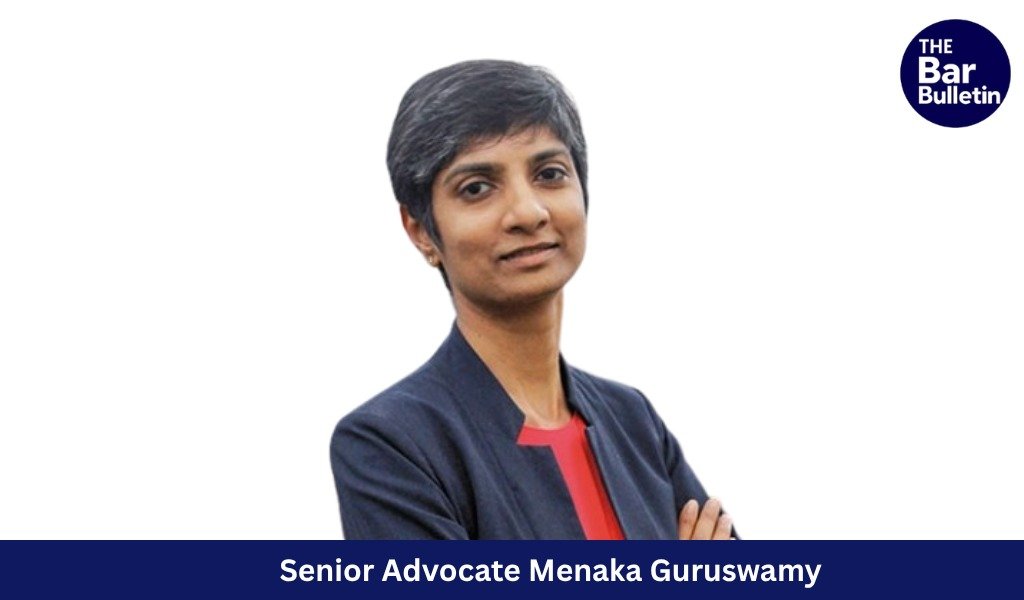
One of the principal concerns related to the proposed consideration of former women judges, Senior Advocate Menaka Guruswamy submitted that former High Court judges, once they demit office, face restrictions under Article 220 and may therefore fall outside the statutory framework governing advocates on the rolls.
“
“The problem is, my Lords, those former women judges, once they leave the High Court, are not able to participate in any activities or be on the rolls as judges. Article 220, my Lords. So, my Lords, that then falls outside of the statutory scheme. So, like the Bar Council representative has said, my Lords, within the statutory scheme, if your Lordships will consider practising lawyers who are on the electoral rolls, who may have stood for elections, secured votes, that will make it an easier passage.”
Lawyers also raised concerns over the Court’s use of the term “senior” practitioners, pointing out that the order did not make clear whether this meant designated Senior Advocates or seniority based on professional experience. Counsel further questioned what criteria would govern the selection of one person from among the names placed before the Chief Justice.
“
“Senior advocates, my Lord, the other difficulty is the order does not mention whether senior by designation or it is senior, my Lord, in what way the seniority will be ultimately judged… Then the question is out of those members which are given, how do you choose? What is the criteria of choosing one of them by the Chief Justice? Nothing is mentioned as far as that part is concerned.”
Another concern was that some advocates who had contested Bar Council elections but narrowly missed being elected could be overlooked by the co-option mechanism. One lawyer cited his own experience of finishing sixth in the Jharkhand State Bar Council elections, missing election by only two votes, and urged the Court to provide opportunities to younger lawyers.
“
“My Lord, I am from Jharkhand. I attained 6th position in the Jharkhand State Bar Council elections and I just missed the election by two votes only, my Lord. And this is my urge to you, that please give chance to the young advocates… Sir, please give chance to the young lawyers also. Because we are the future of the nation. At least we should get an opportunity.”
Against these concerns, Justice V. Mohana observed that the Court had to give the mechanism an opportunity to operate, while noting that the concerns raised by the lawyers had been taken into consideration. She remarked:
“
“One thing we would like to bring is to bring the women participation on the higher side. I think we have to allow this to work. And your concerns have been taken note of.”
The CJI explained that the co-option mechanism was deliberately kept somewhat away from the electoral process to avoid members being identified with particular groups within the Bar. He noted that the Court was aware of the “politics” and “groupism” in Bar Council elections. He also clarified that the order did not make former women judges the only category for nomination, but merely included them within the pool of consideration, particularly where experienced women judges were available. He remarked:
“
“We wanted co-option to be a little away from the election. Like a neutral umpire, some independent person goes in the body like ex-officio members. So that, as in a neutral umpire, you don’t identify yourself with A group or B group. We also know very well how Bar Council kind of politics goes on and groupism takes place. So, that was the objective. There is no mandatory condition that the only former judges are to be nominated. It is only a pool of consideration that we have put. In Chief Justice, where we find that there are two very good, experienced women available, which we can nominate them also.”
The bench also observed that a robust Bar Council would be better placed to deal with challenges confronting the legal profession.
The Bench acknowledged that the mechanism was being introduced for the first time and may not be perfect, but said it was an attempt to increase women’s representation. It indicated that the concerns raised by the lawyers could be considered as the mechanism is implemented. The Court also said the various suggestions placed before it were plausible and acceptable options, and that their effectiveness could be assessed in practice as the process progresses.