
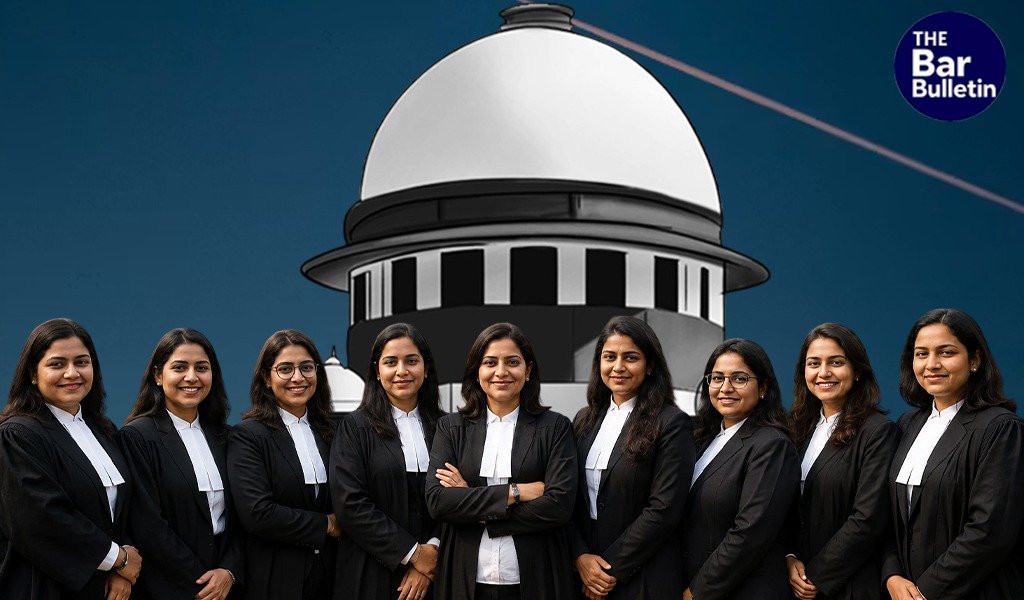

The Supreme Court on Tuesday finalised the mechanism for nominating the two women members to be co-opted into every State Bar Council, directing that they shall be nominated by the Chief Justice of the jurisdictional High Court from among former women High Court judges or senior women advocates of standing. The directions form part of the Court’s continuing exercise to secure 30 per cent representation for women in State Bar Councils.
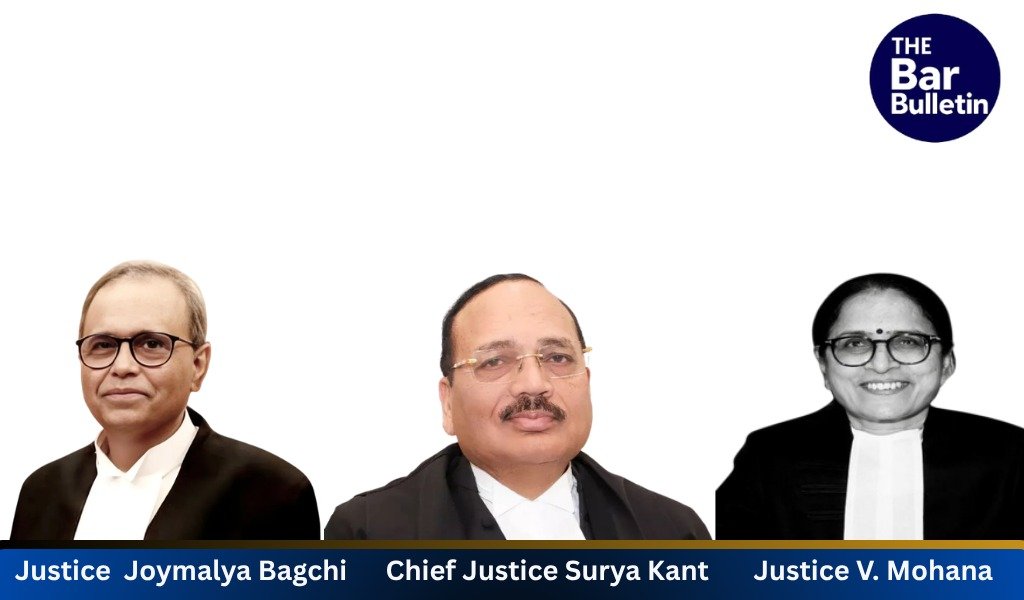
A Bench of Chief Justice of India Surya Kant, Justice Joymalya Bagchi and Justice V. Mohana held that vesting the power of nomination in the Chief Justice of the concerned High Court would ensure a fair, transparent and objective process. It further directed that while making the nominations, the Chief Justice may take into account factors such as regional representation and the peculiar requirements of the concerned State. The Court also clarified that a woman advocate who had contested the Bar Council elections would remain eligible to be considered for co-option.
The matter arises out of the Supreme Court’s earlier directions issued in December 2025, wherein it held that women must occupy at least 30% of the seats in every State Bar Council, including positions of office-bearers. Recognising that the ongoing election process in several States could make immediate implementation difficult, the Court had directed that 20% of seats be filled through elections, while the remaining 10% would be secured through co-option.
A Bench heard extensive submissions from Senior Advocates Gopal Sankaranarayanan, V.V. Giri and several other counsel appearing for the Bar Council of India, State Bar Councils, intervenors and stakeholders.
During the hearing, Advocate Vivek Narayan Sharma, appearing for the Bar Council of Uttar Pradesh, submitted that the Court’s earlier directions contemplated 30 per cent representation within the existing statutory strength of every State Bar Council. In the case of Uttar Pradesh, he pointed out, the statutory strength of 25 members translated into seven seats for women—five to be filled through election (20 per cent) and two through co-option (10 per cent). Sharma further argued that the Supreme Court had adopted a similar methodology while ensuring women’s representation in the elections to the Supreme Court Bar Association (SCBA), the Supreme Court Advocates-on-Record Association (SCAORA) and the Delhi High Court Bar Association (DHCBA).