
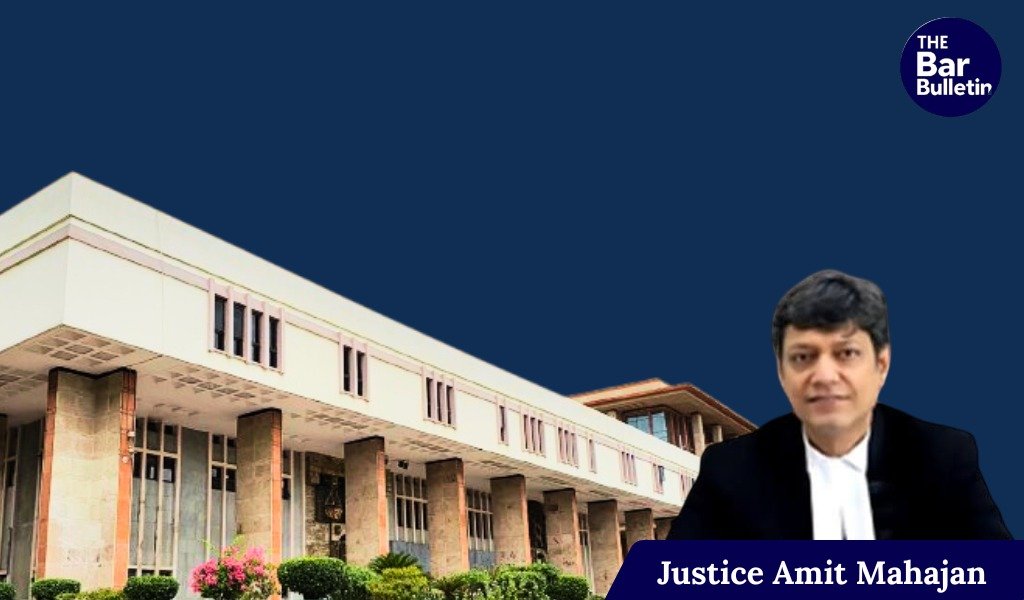
The Delhi High Court has held that a “first come, first served” policy for allotment of public grounds for Ramleela and similar cultural or religious events cannot be sustained merely because it provides an objectively ascertainable criterion. The Court directed the Delhi Urban Shelter Improvement Board (DUSIB) to review the existing instructions and frame comprehensive annual guidelines ensuring transparent and merit-based allotment of grounds.
Justice Amit Mahajan observed that the earliest applicant does not necessarily have the strongest claim to a public facility, particularly when the booking process and applicable criteria have not been publicly disclosed. The Court noted that such a policy could create unequal opportunities by favouring applicants with privileged access to administrative information.
The Court was hearing a petition filed by Rays of New Beginning Foundation, challenging the rejection of its application for allotment of Chunk-C Ground, Shivaji Place, Raja Garden, New Delhi, for organising the annual Ramleela Dussehra Mahotsav. The Foundation had organised the event at the same ground in 2023 and 2024 and sought allotment for the 2026 festivities.
The authorities rejected its application on the ground that another applicant had applied earlier, on April 10, 2026, whereas the Foundation’s application was received on May 27, 2026. The Foundation contended that the Delhi Development Authority’s Standard Operating Procedure dated September 1, 2026, provided preference to societies that had organised festivities at the same site in the preceding years, subject to the prescribed conditions.
Rejecting the rationale adopted by the authorities, the Court observed that the determinability of a criterion and its inherent rationality are two distinct questions. It further highlighted the need for a clearly published booking process specifying the application window, eligibility conditions, evaluation criteria and consequences of filing an application.
The Court, however, declined to cancel the existing allotment or transfer the ground to the petitioner for the 2026 festivities, noting that the events were about to commence.
For subsequent years, the Court directed the authorities to frame comprehensive annual policies, incorporating the following safeguards:
● Annual site-allocation notice at least 90 days in advance specifying available grounds, booking dates, eligibility, evaluation criteria, documents, charges, tie-break procedure and objections.
● Common application window : applications for the same site and booking period should ordinarily be received within the same predetermined window.
● Supplementary application window : if a site remains unallocated, it must be notified afresh through a short application window open to all eligible applicants.
● Common eligibility assessment : verify the applicant’s authority to represent the organisation, registration, prescribed documents and ability to comply with the conditions.
● Site-specific operational and safety plans including crowd capacity, entry and exit, emergency response, fire and electrical safety, sanitation, traffic, parking, accessibility, waste removal, restoration of the ground and statutory clearances.
● Published comparative assessment where multiple eligible applicants compete, use a predetermined, published scoring matrix or other published criteria.
● Limited preference for previous organisers : continuity and experience may be considered, but there must be no automatic right to allotment; where competing applicants exist, preference cannot extend beyond two consecutive years, and claims must be assessed on merit.
● Grievance-redressal mechanism provide an adequate procedure for addressing grievances.
● Timely completion of allotment, the annual timetable must ensure that final allotment and the ordinary grievance process are completed sufficiently before the event begins.
The Court clarified that these directions would operate prospectively and would not retrospectively alter the policies applicable to the 2026 season or predetermine the rights of applicants under those policies. The petition was disposed of accordingly.
Appearances
For Petitioner: Mr. Vikas Tripathi, Ms. Mandavi Pandey, Mr. Chandan, Mr. Kunal Shahi, Ms. Hema Kumari, Mr. Avinash Mishra, Mr. Raushan Kumar, Mr. Shivansh Dubey, Ms. Shivani, Mr. Pratham Singh, Mr. Aaditya Verma and Mr. Abhishek Kumar, Advocates
For Respondents: Mr. Anuj Chaturvedi, Ms.Yashita Jain and Mr. Ashok Kumar Bhaskar, Advocates for R1.
Ms. Manika Tripathy, Standing Counsel for DDA.