

The Gauhati High Court has ruled that traditional institutions exercising pervasive control over community members are amenable to writ jurisdiction, and village citizenship, identity, movement and social participation cannot be curtailed through customary sanctions violating Articles 14, 19 and 21 of the Constitution. The Court held that the Putu Menden and Yaongyimsen Senso Mungdang, though not ‘State’ entities under Article 12, are amenable to writ jurisdiction because their decisions substantially affect the civil and social rights of villagers.
The High Court struck down the decision permanently excommunicating the petitioners and their families from Yaongyimsen village citizenship, holding that such measures infringed fundamental rights guaranteed under Articles 14, 19 and 21. While acknowledging constitutional protection accorded to Naga customary practices under Article 371A, the Court ruled that customs cannot survive judicial scrutiny when they violate human dignity, equality, liberty and other fundamental rights.
The impugned orders sought to prohibit the petitioners from identifying themselves as villagers of Yaongyimsen, using the village name in official documents, entering village territory and maintaining social relations with villagers. The Court found these restrictions legally impermissible, and noted that wives, children and other family members were subjected to severe consequences despite having no role in the underlying dispute, rendering the action arbitrary and disproportionate.
Briefly, the dispute arose among members of the Ao Naga community originally belonging to Yaongyimsen village in Nagaland but residing in Chümoukedima. A disagreement emerged regarding the year of establishment of the Chumoukedima Yaongyimsen Union, with one group claiming it was formed in 1989 and another maintaining that it was established only in 2001. After several attempts at reconciliation failed, the matter was referred to the Yaongyimsen Putu Menden (traditional village authority).
In March 2024, the Putu Menden dissolved the existing Union leadership and directed those accepting 2001 as the establishment year to run the Union. The petitioners opposed this decision and circulated communications criticising the action. A confrontation subsequently occurred during a meeting convened by the traditional authorities, leading to a criminal case against certain members of the petitioners’ group.
Thereafter, the Yaongyimsen Senso Mungdang and the Putu Menden issued announcements and communications excommunicating the petitioners and their families from Yaongyimsen village citizenship. The impugned decisions not only expelled them from the village community but also prohibited marital ties with village members, barred entry into the village, prevented them from identifying themselves as Yaongyimsen villagers, and contemplated steps to remove the village name from their official documents and certificates.
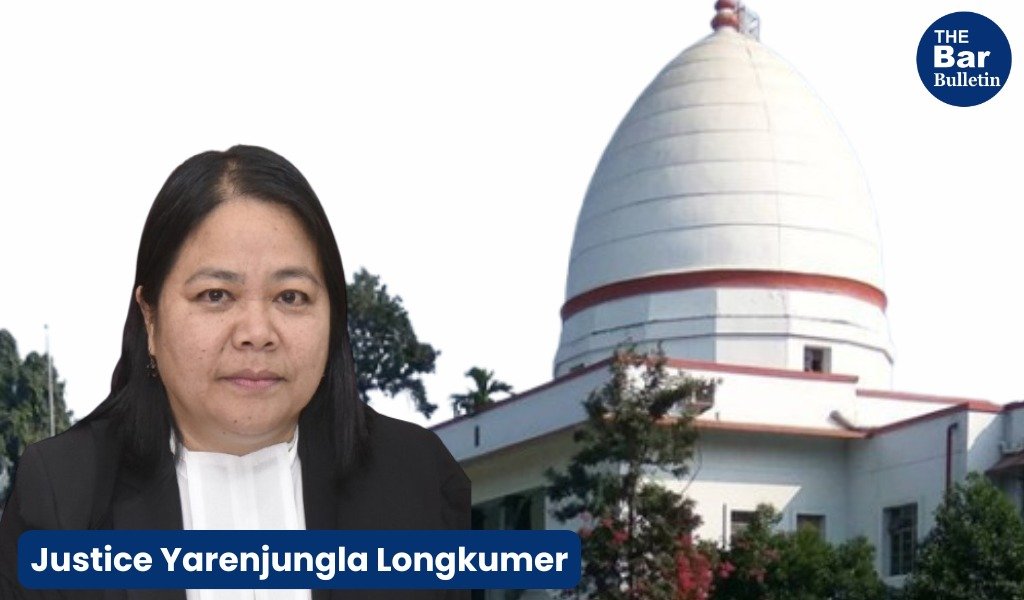
A Single Judge Bench of Justice Yarenjungla Longkumer first considered whether the writ petition was maintainable against the Putu Menden and the Senso Mungdang, both of which argued that they were private customary bodies and not “State” authorities under Article 12 of the Constitution. The Court observed that maintainability under Article 226 depends not merely on the status of a body but on the nature of functions it performs and the impact of its decisions on legal rights.
The Court held that although the Putu Menden is a traditional institution distinct from the statutory Village Council, it exercises significant authority recognised under customary law. The Senso Mungdang also exercises extensive control over village members residing both within and outside the village. Therefore, decisions taken by such bodies can attract judicial review where they affect legally protected rights.
Examining the contents of the excommunication order, the Court found that the restrictions imposed extended far beyond the affairs of a voluntary association. The orders affected the petitioners’ civil status, village identity, social relations, access to identity-linked benefits, and their ability to describe themselves as belonging to their native village. Such consequences clearly involved a public law element.
The Court further emphasised that customs and traditional practices, though protected under Article 371A, cannot override fundamental rights guaranteed under Part III of the Constitution. Constitutional protection of Naga customary law does not grant unrestricted power to impose sanctions that infringe human dignity, equality, liberty, freedom of movement, freedom of association, or other constitutional guarantees. Any custom having the force of law must withstand scrutiny under Articles 14, 19 and 21.
The High Court noted that the impugned actions penalised not only the alleged dissenters but also their wives and children, despite their lack of involvement in the underlying dispute. The respondents were unable to demonstrate what specific customary law had been violated or how such drastic restrictions were necessary to preserve harmony. The Court therefore concluded that the excommunication orders and accompanying prohibitions were arbitrary and unconstitutional.
