
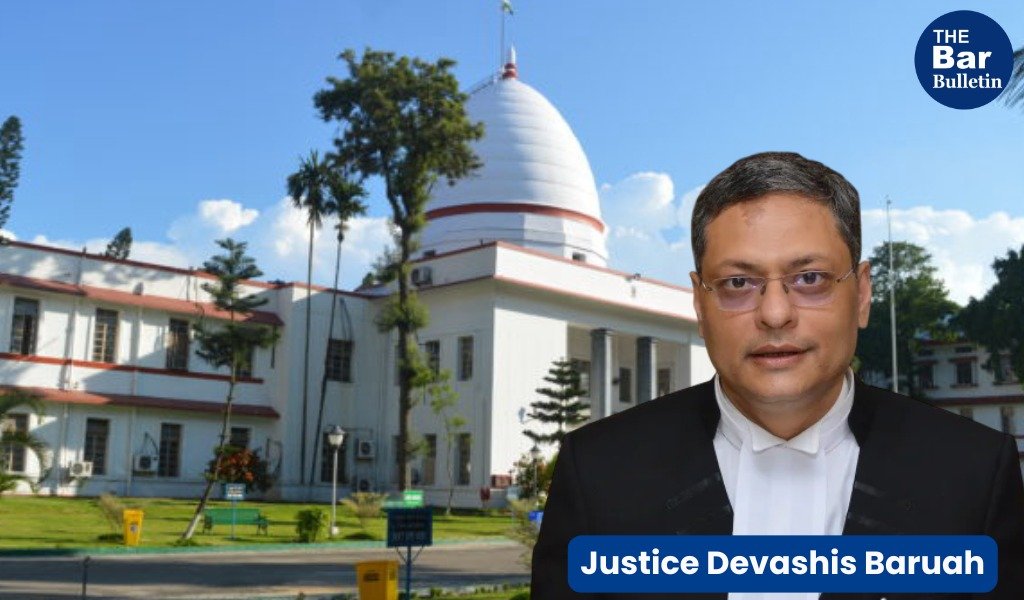

The Gauhati High Court has dismissed a petition by Dr. Bhupen Sarmah, a professor at the Omeo Kumar Das Institute of Social Change and Development, who sought enhancement of his retirement age from 60 to 65 years relying on UGC norms and the Assam Government’s 2012 Cabinet decision. The Court held that a State Cabinet decision alone cannot enhance retirement age where Central Government concurrence is required.
The High Court also held that retirement age is governed by applicable service regulations, not by functional similarity with another category of employees. Enhancement requires both State Government decision and Central Government concurrence. The Court found an intelligible differentia between research institutes and educational institutions, rejecting the discrimination argument.
Assam’s policy for professors in educational institutions did not apply to the Institute, and any enhancement required the Government of India’s concurrence, said the Court, while emphasising that it could not substitute its own retirement-age determination for a policy decision absent an Article 14 violation.
Also read State Is Custodian, Not Owner, of Temple Property: Supreme Court on Gift of Inam Land
Briefly, Dr. Bhupen Sarmah, a Professor at the Omeo Kumar Das Institute of Social Change and Development, approached the Gauhati High Court seeking enhancement of his retirement age from 60 to 65 years. He relied on UGC norms and the Assam Government’s Cabinet decision dated Sep 19, 2012, and notification dated Sep 26, 2012, raising the retirement age of professors in educational institutions, including medical colleges, to 65 years.
Although the Institute’s Governing Body had repeatedly recommended enhancement, the State Government declined the proposal. Regulation 32.1 of the Institute’s Service Regulations, 2022 prescribed retirement at 60 years or as notified by the Government from time to time. Sarmah was due to retire in February 2024 upon attaining 60 years. He argued that receiving UGC pay scales and performing work similar to professors in educational institutions entitled him to the same retirement age.
A Single Judge Bench of Justice Devashis Baruah observed that a research institute and an educational institution are different, even though their activities may overlap. The Institute had its own Service Regulations, which were not challenged in the petition, and Regulation 32.1 expressly fixed the retirement age at 60 years unless otherwise notified by the Government.
The Court found an intelligible differentia between the two categories and rejected the allegation of discrimination under Article 14. It further held that changing the Institute’s retirement age required a decision of the State Government with the concurrence of the Government of India, and a State Cabinet decision alone would not suffice.
The High Court asserted that enhancement of the age of superannuation is a policy matter, and courts cannot themselves prescribe a higher retirement age. Judicial interference is permissible where the policy or action is arbitrary or violates Article 14. Similarity in duties does not, by itself, entitle employees governed by separate service rules to identical retirement ages; retirement age also stands on a different footing from pay and allowances.
