
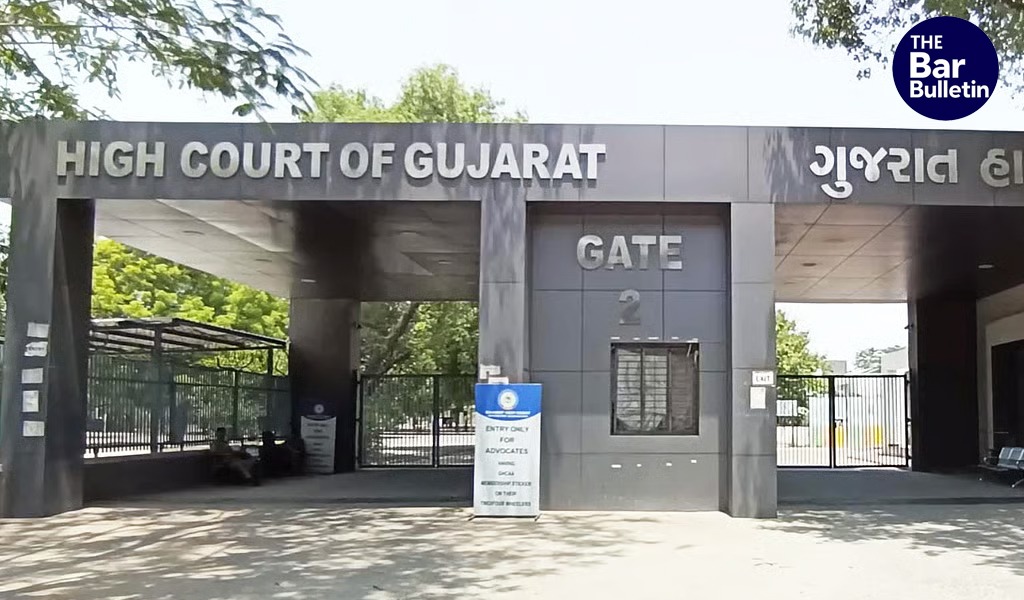

The Gujarat High Court (Ahmedabad Bench) has held that where land is acquired for a “Special railway project” under Chapter IV-A of the Railways Act, 1989, and the 2015 Notification has applied the regime of the Right to Fair Compensation and Transparency in Land Acquisition, Rehabilitation and Resettlement Act, 2013, the compensation, solatium, rehabilitation and resettlement provisions of the 2013 Act govern the field. The 60% amount under Section 20-F(9) of the Railways Act is essentially solatium, and since 100% solatium is already payable under Section 30(1) of the 2013 Act, landowners cannot claim both together. They are entitled to the higher benefit, not cumulative double solatium.
The Court also held that rehabilitation and resettlement in such cases must now be addressed through the Second and Third Schedules and Sections 31 to 38 of the 2013 Act, rather than by separately applying the National Rehabilitation and Resettlement Policy, 2007 under Section 20-O in its older standalone form. However, where no proper rehabilitation and resettlement scheme was prepared in the present case, the Court limited the relief to the Railway Board’s Nov 11, 2019 Circular providing lump sum compensation of Rs.5 lakhs to eligible affected families.
The Division Bench comprising the Chief Justice Sunita Agarwal and Justice D.N. Ray examined the legislative history and noted that before the 2008 amendment, railway land acquisition was carried out under the Land Acquisition Act, 1894. Chapter IV-A was inserted into the Railways Act in 2008 to create a faster acquisition mechanism for “Special railway projects”, along with an arbitration mechanism and a statutory 60% amount on market value under Section 20-F(9), besides applying the National Rehabilitation and Resettlement Policy, 2007 under Section 20-O. The Court noted from the Statement of Objects and Reasons and the Financial Memorandum that this 60% amount was intended as solatium for the compulsory nature of acquisition.
The Court then turned to the 2013 Act and the 2015 Removal of Difficulties Order. It observed that the 2013 Act was enacted as a unified and beneficial land acquisition code to ensure just and fair compensation and rehabilitation and resettlement, and that its provisions were expressly stated to be “in addition to and not in derogation of” existing laws. The Court also noted that the 2015 order extended the First, Second and Third Schedules of the 2013 Act to acquisitions under the Fourth Schedule enactments, including the Railways Act, in the interest of landowners.
While considering the plea that Section 20-F(9) should operate independently and additionally, the Court analysed the meaning of solatium and held that the 60% amount under Section 20-F(9) is, in substance, solatium itself, because it is payable “in consideration of the compulsory nature of the acquisition”. The Court compared Section 20-F(9) with Section 23(2) of the old 1894 Act and found the language virtually identical, except that the Railways Act had raised solatium from 30% to 60% for special railway projects.
Also Read Advocate Cannot Be Prosecuted Merely for Drafting Sale Deed as Professional Service: Patna HC
The Court further observed that once the 2013 Act framework was extended to acquisitions under the Railways Act, all monetary benefits under the First Schedule of the 2013 Act, including 100% solatium under Section 30(1), became payable in such acquisitions. On that basis, the Court reasoned that landowners are entitled to the higher of the available benefits, but cannot stack both solatium provisions together. In other words, the Court held that the 60% solatium under Section 20-F(9) cannot be claimed over and above the 100% solatium already awarded under Section 30(1) of the 2013 Act, because the latter, being the higher benefit, subsumes the former in this field.
On rehabilitation and resettlement, the Court held that the objective of Section 20-O of the Railways Act and the National Rehabilitation and Resettlement Policy, 2007 now stands reflected in the Second and Third Schedules of the 2013 Act. Therefore, for acquisitions under the Railways Act after the 2015 notification, rehabilitation and resettlement must be worked through Sections 31 to 38 of the 2013 Act. However, the Court found that in the present acquisitions no proper rehabilitation and resettlement scheme had been prepared by the Administrator and approved by the Commissioner as required under the 2013 Act.
At the same time, the Court took note of the Railways’ affidavit referring to Railway Board Circular dated 11.11.2019, under which affected families primarily dependent on the acquired land for livelihood, or whose entire landholding had been acquired, were to receive a lump sum of Rs. 5 lakhs as part of rehabilitation and resettlement implementation under Serial No. 4 of the Second Schedule to the 2013 Act. Since the acquisitions and awards had already concluded, the Court declined to grant wider rehabilitation relief beyond what was provided in that circular, but directed payment under the circular after verifying entitlement.
Briefly, the petitions concerned land acquired for a “Special railway project” under Chapter IV-A of the Railways Act, 1989. The petitioners were landowners whose lands had been acquired through notifications under Sections 20-A and 20-E of the Railways Act, and compensation awards were passed in 2025. The awards applied Sections 26 to 30 of the Right to Fair Compensation and Transparency in Land Acquisition, Rehabilitation and Resettlement Act, 2013, and granted the statutory benefits under the First Schedule, except that disputes were raised regarding (i) the separate 60% amount under Section 20-F(9) of the Railways Act, (ii) rehabilitation and resettlement benefits, and (iii) computation of the additional 12% amount under Section 30(3) of the 2013 Act.
The core case of the landowners was that, since the acquisition was for a notified “Special railway project”, they were entitled not only to compensation under the 2013 Act but also to a further 60% on market value under Section 20-F(9) of the Railways Act, because that provision specifically awards such sum “in consideration of the compulsory nature of the acquisition”. They also argued that Section 20-O of the Railways Act continued to entitle them to the benefits of the National Rehabilitation and Resettlement Policy, 2007. Their case was built around the argument that the 2013 Act is “in addition to and not in derogation of” existing laws, and therefore the Railway Act benefits should be added, not treated as displaced.
The Railways did not dispute that the acquisition was under the Railways Act for a special railway project, nor that the Railways Act is one of the enactments listed in the Fourth Schedule to the 2013 Act. It was also accepted that, by the Central Government’s notification dated 28.08.2015, the beneficial provisions of the 2013 Act relating to compensation, rehabilitation and resettlement had been extended to acquisitions under the Fourth Schedule enactments with effect from 01.01.2015, and that the impugned awards were accordingly made under the 2013 Act framework.
