


Judge of the Bahrain International Commercial Court and Senior Advocate Dr. Pinky Anand on Friday said high-value family disputes involving Indian individuals and business groups are increasingly finding their way to Singapore for resolution. She said:
“As a matter of course, I do find that a number of family agreements are entering Singapore in a sense of corridor. So starting from family, as you know, we have high-value net individuals and high-value net companies in India and very often we find that some of those disputes are veering around to Singapore, even though culturally, by the way, we have a big thing about resolving issues within the communities as much as possible, but obviously some disputes get resolved and some don’t.”
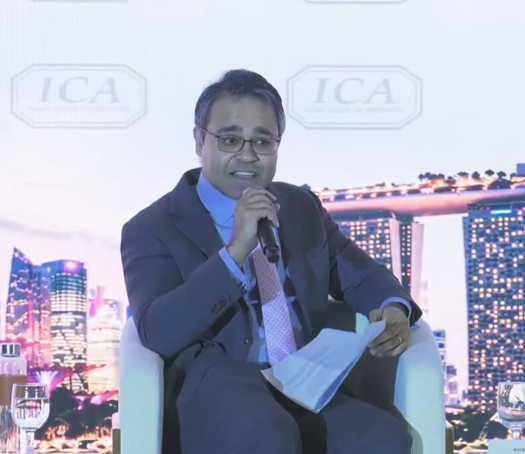
She made these remarks during a panel discussion titled “The Future of the Legal Profession: Perspectives from India and Singapore”, organised by the Indian Council of Arbitration (ICA) as part of its symposium on “India–Singapore: From Shared Legal Foundations to the Future” at The Fullerton Hotel, Singapore. The discussion was moderated by Avinash Pradhan, Head of International Arbitration and Co-Head of the South Asia Desk at Rajah & Tann Asia. The speakers were:
● Pinky Anand, Judge at the Bahrain International Commercial Court, Senior Advocate at the Supreme Court of India and former Additional Solicitor General of India;
● Pratibha Jain, Head of Strategy and Group General Counsel at Everstone Group; and
● Professor Tan Cheng Han SC, President of the Law Society of Singapore.
Dr. Pinky Anand: Nature Of Commercial Disputes Is Changing With New Sectors And Complexities

Opening the discussion, Avinash Pradhan asked Dr. Pinky Anand whether the nature and character of disputes involving Indian parties in international arbitration had changed, and what those changes signified.
Responding, Dr. Pinky Anand said that while the fundamental commercial nature of disputes remained the same, the sectors involved, the quantum of claims and the specificity of issues had evolved. She referred to emerging disputes involving fintech, cryptocurrency, financing agreements and shareholder arrangements.
Dr. Pinky Anand also pointed to a shift in corporate disputes from claims centred primarily on monetary compensation to questions of control over companies and their future growth. She said:
“
“Another very interesting change around has been the fact that there is more talk about control rather than money at times in corporate warfare. Very often today it is not the fact that you’re going to get X amount of money or Y amount of money or billions of dollars that’s of course important and always will remain, but at the same time who controls a company for a future growth.”
Dr. Pinky Anand also discussed the increasing role of family agreements and high-value disputes involving Indian individuals and companies being referred to Singapore. She noted that dispute resolution mechanisms were continually evolving, with mediation and international commercial courts offering additional avenues alongside arbitration.
She further observed that the growing representation of Asian arbitrators reflected the changing geography of international commerce, with jurisdictions such as India, Singapore, Hong Kong and countries in the Middle East playing an increasingly significant role.
Following Dr. Pinky Anand’s remarks, Avinash Pradhan highlighted the importance of distinguishing between the institution of arbitration and the cultural perspectives that individual arbitrators bring to proceedings. Avinash Pradhan said the selection of arbitrators should take into account whether they understood the commercial and cultural context in which a dispute arose.
He stated that appointing arbitrators unfamiliar with the business practices and cultural norms of jurisdictions such as India, Southeast Asia or China could affect their appreciation of the dispute. He said this was a question of choosing the appropriate arbitrators rather than a shortcoming in the arbitral institution itself.
Pratibha Jain: Investors Look For Certainty, Trust And Speed In Dispute Resolution
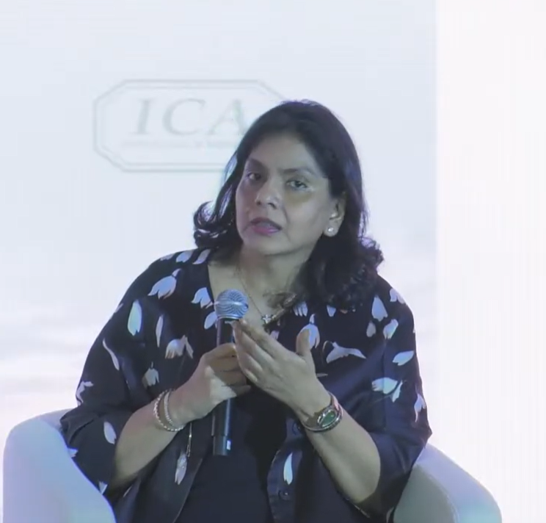
Avinash Pradhan then invited Pratibha Jain to share the perspective of an investor and a consumer of legal services, particularly in light of the growing India-Singapore dispute resolution corridor. Pratibha Jain said investors primarily looked for certainty, trust and speed when choosing an arbitration centre. She explained that the pool of arbitrators and their ability to deliver these three factors influenced whether businesses would choose a particular institution. She said:
“
“For an investor, what do we look for in a dispute? Certainty, trust and speed. Those are the three major aspects. Now, when you look at any arbitration centre, those are the only things I ultimately am answerable to business for.”
Pratibha Jain also explained that Singapore offered a sense of familiarity and comfort to businesses with Indian origins, even where their founders or stakeholders had acquired citizenship in other countries.
She added that India’s importance as an investment destination could grow further in the prevailing geopolitical environment, with Singapore also benefiting from increased investment activity involving India.
Avinash Pradhan Questions Why Legal Bills Have Not Fallen Despite AI
Turning to artificial intelligence, Avinash Pradhan raised a question about why legal costs had not declined despite the increasing use of AI tools by law firms.
He stated that corporate legal departments continued to face substantial legal bills even as technology companies and other sectors were experiencing cost reductions. He questioned why AI had not significantly reduced expenses in dispute resolution, particularly in areas such as document discovery.
Responding to the concern, Dr. Pinky Anand explained that using AI did not necessarily eliminate the work required from lawyers and clients. She gave an example of a matter in which financial and accounting issues were processed through AI systems by both the law firm and the client. Since both sides received similar AI-generated responses, further clarification and verification were still required, resulting in repeated work.
Another response during the discussion highlighted that law firms were still at an early stage of adopting AI. While the technology could improve efficiency, lawyers continued to supervise and verify its outputs, resulting in firms bearing the cost of both AI tools and human review.
Speakers highlighted that AI-generated drafts and comments could sometimes increase the workload. Lawyers might receive a greater number of comments on drafts because clients were independently using AI tools to review the same documents. Similarly, lengthy and apparently well-written legal notices generated through AI could require additional time to examine because they did not necessarily engage with the facts of the case.
Professor Tan Cheng Han: AI Could Reduce Number Of Junior Lawyers; Mentorship Is Essential

Towards the conclusion of the discussion, Avinash Pradhan asked Professor Tan Cheng Han about the impact of AI on the next generation of lawyers, saying that the issue was a particular concern for him.
Professor Tan Cheng Han cautioned that the long-term impact of AI remained uncertain but said the technology could take over many of the basic tasks currently performed by junior lawyers. This could reduce the number of associates required by law firms and affect the wider legal profession, including the future pipeline of judges.
Professor Tan Cheng Han also expressed concern over what he described as “cognitive offloading”, explaining that young lawyers could increasingly rely on AI to generate starting points for complex legal problems rather than developing the ability to work through them independently. He said:
“
“AI will do a lot of the basic tasks that younger lawyers do today and that suggests that we will need few of them. Either that or the associate of the future will be very different with a lot of other skill sets as well, but we don’t really know. But in one universe, and I think it’s a reasonably probable universe, there will be fewer associates. This is a huge problem across the entire ecosystem.”
Professor Tan Cheng Han said the reduction in junior-level roles could affect the talent pipeline, particularly because law firms traditionally relied on a large base of young lawyers to develop future senior practitioners and judges.
He also called for law schools to introduce more interdisciplinary education while ensuring that students continued to develop independent thinking skills. He suggested that close-book examinations could be one way of ensuring that students were able to reason without relying entirely on AI.
At the law firm level, Professor Tan Cheng Han emphasised the importance of mentorship and apprenticeship, stating that the profession had become less attentive to mentoring young lawyers than it was two decades ago. He said:
“
“If we are serious about future-proofing the profession, we really need to also put in the effort. So we need to start exercising our mentoring muscles all over again.”
Panelists Discuss Future Of Legal Profession Over Next Five To Ten Years
In his concluding question, Avinash Pradhan asked the speakers to share their outlook on how the legal profession would evolve and what they considered the biggest changes likely to emerge over the next five to ten years.
Pratibha Jain observed that the role of general counsel could undergo a significant transformation, potentially expanding substantially or evolving in a way that would make corporate legal departments resemble large law firms.
Dr. Pinky Anand said dispute resolution would continue to evolve, with increasing emphasis on more efficient mechanisms in view of their commercial significance. She also remarked that lawyers increasingly appeared to rely on screens and AI-generated responses rather than answering questions independently.
Professor Tan Cheng Han said law firms were likely to become more interdisciplinary in their composition. Responding to a question from a university student about whether young people would continue to have opportunities in the legal profession as AI became more capable. Responding, Professor Tan Cheng Han said he remained cautiously optimistic, but stressed that future lawyers would need a broader base of knowledge and stronger problem-solving abilities to use AI effectively and provide solutions suited to individual clients.