
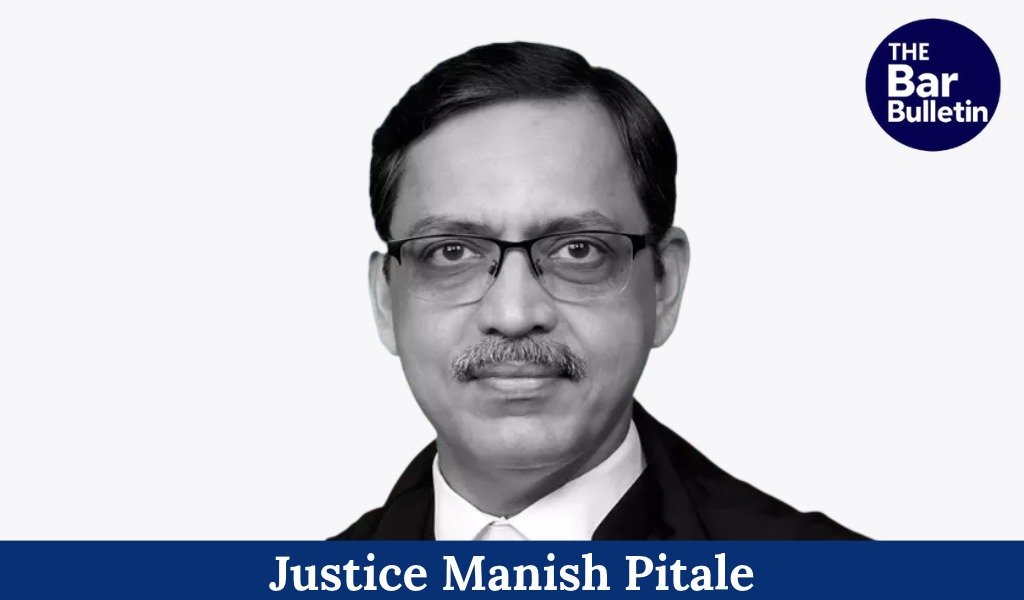

Delivering the special address at the ICC India Arbitration Conference 2026 in Mumbai on October 31, Justice Manish Pitale reflected on India’s progress in arbitration law, the role of specialised judges and practitioners, the need for stronger ethical standards and the challenges arising from the increasing use of digital assets in commercial disputes.
Opening his address with a candid assessment of India’s position in international arbitration, Justice Pitale observed:
“
“India at the present moment is obviously not featuring there as one of the preferred seats. What is the reason for this and where are we going is something we need to think about.”
He emphasised that becoming a preferred seat of arbitration would require more than legislative amendments. It would call for a change in institutional approach, judicial understanding and professional practices governing arbitration in India.
Tracing the evolution of arbitration law in India, Justice Pitale contrasted the court-supervisory approach under the Arbitration Act, 1940, with the shift towards limited judicial intervention under the Arbitration and Conciliation Act, 1996. Referring to decisions including Bhatia International v. Bulk Trading S.A. and Bharat Aluminium Co. v. Kaiser Aluminium Technical Service, Inc., he noted that judicial interpretation and successive legislative amendments have shaped the country’s arbitration framework.
He stressed the importance of judicial specialisation, pointing out that judges dealing with arbitration matters must be familiar with the principles governing arbitral proceedings. A judge accustomed to exercising appellate jurisdiction in ordinary civil matters, he observed, may approach a challenge under Section 34 of the Arbitration Act with an appellate mindset, which is inconsistent with the limited scope of judicial interference.
Justice Pitale also underlined the need for a dedicated arbitration Bar, observing that arbitration should not be treated merely as a post-court-hours or part-time practice. Complex commercial disputes require specialised professional assistance, experienced arbitrators and a more institutionalised approach to arbitration practice.
Emphasising the importance of collective institutional development, he said:
“
“So if all the three stakeholders, the judiciary, the bar, the legislature work in tandem, you will have a situation in the future and the near future, I hope that India becomes one of the preferred seats of arbitration.”
Addressing the relationship between domestic public policy and international arbitration standards, Justice Pitale highlighted the challenges that arise when domestic legal principles influence the enforcement or setting aside of arbitral awards in international commercial disputes.
Referring to the Fifth and Seventh Schedules to the Arbitration and Conciliation Act, 1996, and the 2014 IBA Guidelines on Conflicts of Interest in International Arbitration, he discussed the importance of independence, impartiality and disclosure in preserving confidence in arbitral proceedings.
He cautioned that harmonisation with international standards must take into account differences in domestic legal systems, professional cultures and public policy considerations.
Justice Pitale also addressed the proposed codification of ethical standards in international arbitration, particularly the challenges arising from double-hatting, where the same professional may act as counsel in one arbitration, arbitrator in another and expert witness in a third.
He raised questions about whether overlapping professional roles could create a reasonable apprehension of bias or conflicts of interest. He also highlighted the need to examine situations in which observations made by an arbitrator in an earlier award may become relevant to a subsequent appointment involving the same parties.
While acknowledging the need for minimum ethical standards, he observed that merely setting aside an arbitral award may not always be an effective consequence of ethical violations, as it could send parties back to the beginning of their dispute.
Reflecting on the conference’s discussions on monetary remedies, Justice Pitale suggested that commonly applicable principles concerning compensatory and restitutionary relief, interest and costs could be organised into standardised frameworks or reference modules.
He noted that disputes over loss of profits and computation of compensation often involve extensive arguments and expert evidence. Identifying common principles and checklists at the contract-drafting stage, he suggested, could reduce disagreements and improve procedural efficiency. Technological tools, including artificial intelligence, could also assist in computational aspects.
On digital asset recovery, he discussed the challenges involved in identifying, tracing and recovering cryptocurrencies and other digital assets. Referring to developments in jurisdictions such as the United Kingdom and Singapore, as well as the Madras High Court’s recognition of cryptocurrency as property in Ruti Kumari v. Zanmai, he noted that recognition of digital assets as property is only one part of the challenge, with practical difficulties remaining in tracing and recovering such assets.
Concluding his address, Justice Pitale emphasised the importance of conferences and professional exchanges in developing a stronger international arbitration ecosystem. He observed:
“
“And conferences like these, exchange of ideas, brainstorming will bring us to a situation where the environment of international arbitration becomes healthy across the world, including India.”
He also referred to the increasing participation of Indian businesses in cross-border transactions and questioned why Indian parties continue to choose foreign jurisdictions as seats of arbitration, even in disputes involving Indian entities.