

The Court of Arbitration constituted under the Indus Waters Treaty has unanimously held that the Treaty remains fully in force, finding that India’s April 2025 decision to place it “in abeyance” was not permissible under the Treaty or applicable international law.
In its Award on Treaty Status, the Court held that the Treaty does not permit either India or Pakistan to unilaterally suspend or terminate its operation and rejected the grounds invoked in support of India’s decision, including sovereignty, alleged material breach, fundamental change of circumstances, armed conflict and countermeasures.
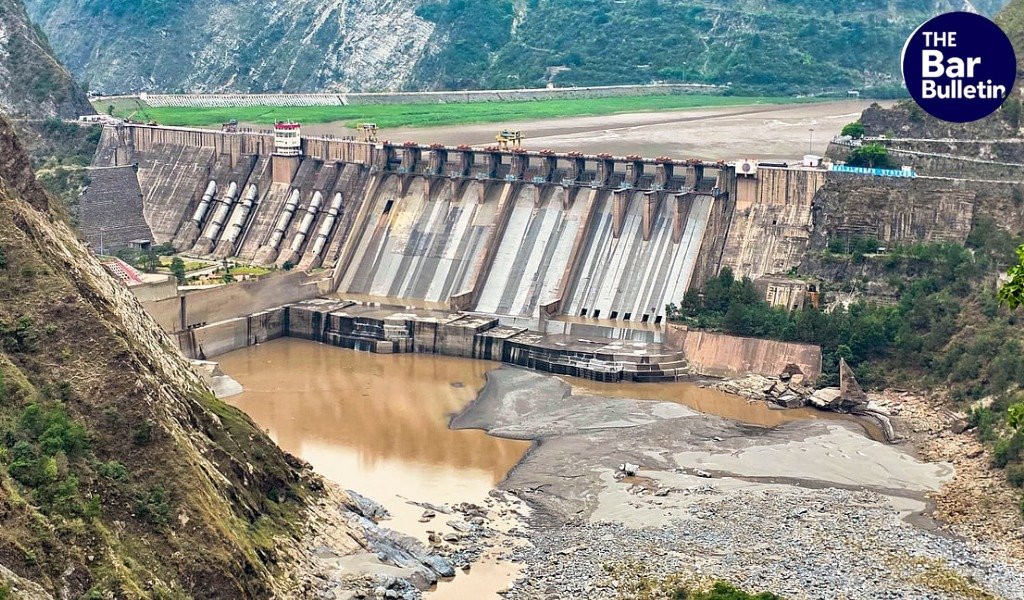
The Court also issued an Order on Interim Measures concerning the Ratle Hydro-Electric Plant. It unanimously directed India not to concrete specified portions of the Ratle dam wall and power intake structure pending the Neutral Expert’s decision on the project’s Treaty compliance, and required India to report changes to the project’s construction schedule. These measures will remain in place until 90 days after the Neutral Expert’s final decision, expected around July 2027.
The proceedings were initiated by Pakistan under Article IX and Annexure G of the Indus Waters Treaty and concern the interpretation and application of the Treaty, including India’s Kishenganga and Ratle hydro-electric projects on the Western Rivers.
Note: On 31 August 2026, the Ministry of External Affairs said that the Court of Arbitration was illegally constituted and had no jurisdiction over India. India stated that it had never recognised the Court’s legal existence and had not participated in the proceedings.