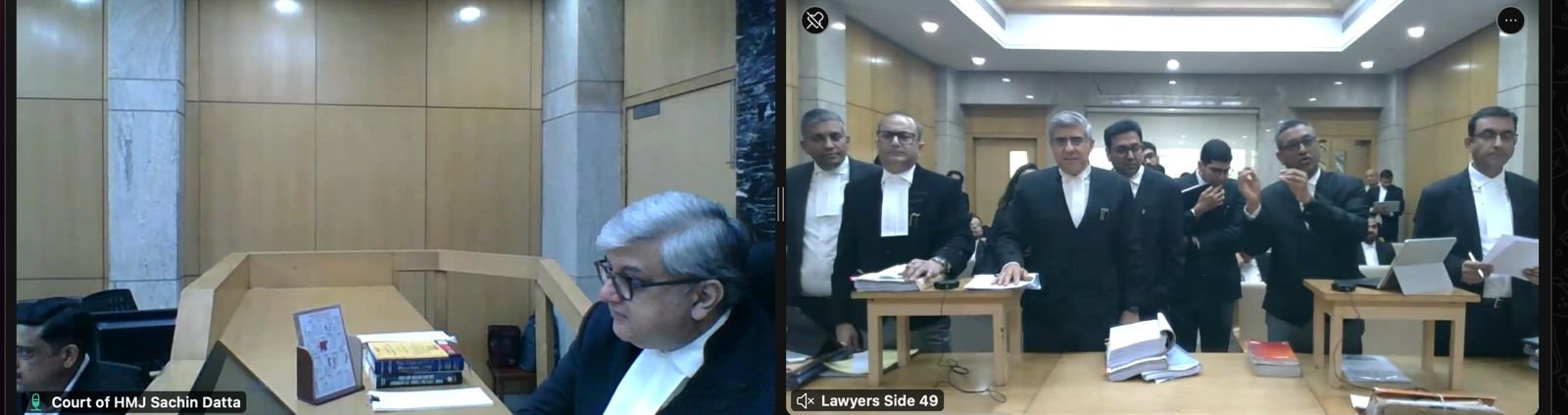

The Delhi High Court on September 2, 2026 heard challenges to a Partial Award in an ICC arbitration concerning the joinder of an admitted non-signatory in a mining-services dispute involving Mozambican entities Black Gold Resources Private, Limitada (BGR) and Minas de Benga, Limitada (MBL).
Before Justice Sachin Datta, Senior Advocate Amit Sibal, appearing for BGR, submitted that the underlying mining-services contract and the arbitration agreement were bilateral agreements governed by Mozambican law and did not justify joining a non-signatory. He argued that the Tribunal had proceeded on the assumption that Indian law governed the issue without adequately examining Mozambican law. Amit Sibal relied on Disortho S.A.S. v. Meril Life Sciences Pvt. Ltd., 2025 SCC OnLine SC 570, to submit that where an arbitration agreement is contained in a substantive contract, the governing law of that contract ordinarily governs the arbitration agreement.
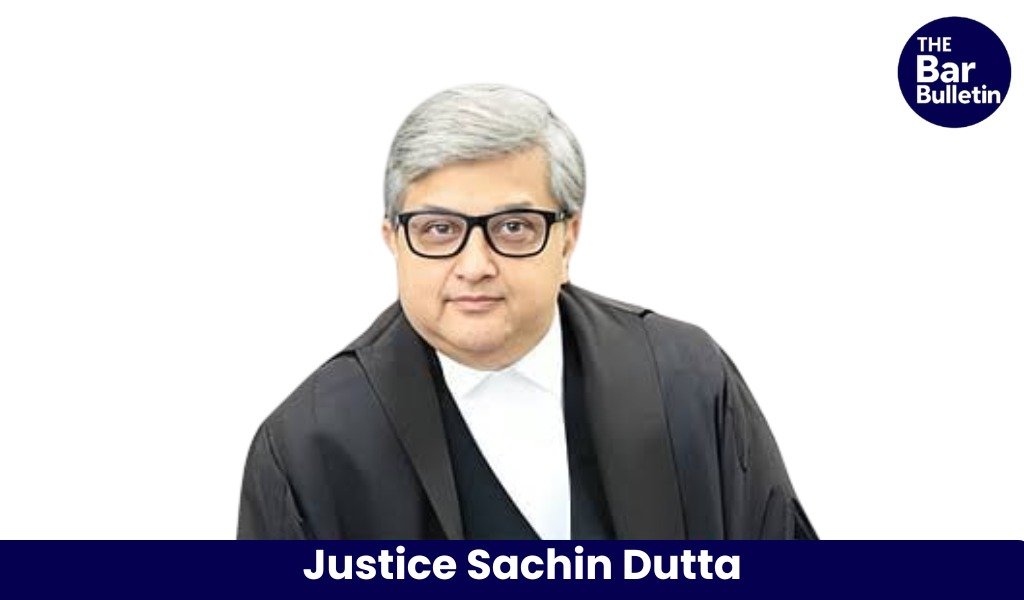
Senior Advocate Abhimanyu Mahajan, appearing for Trident Chemphar Limited (TCL), separately challenged the independence and impartiality of Presiding Arbitrator Prof. Sundra Rajoo. Mahajan submitted that Prof. Rajoo had previously acted as co-arbitrator in an ICC arbitration involving Tata Projects and NMDC, which, according to TCL, were shareholders and constituents of MBL. He argued that the previous appointment was a circumstance requiring disclosure under the ICC Rules and Section 12 of the Arbitration and Conciliation Act, 1996.
Abhimanyu Mahajan also raised the alleged non-disclosure of criminal proceedings in Malaysia concerning criminal breach of trust against Prof. Rajoo, while acknowledging his eventual exoneration. Relying on MSA Global v. Engineering Project, he argued that an arbitrator’s disclosure must be complete, candid and meaningful, and that the concern was not merely the outcome of the earlier proceedings but whether parties had been given sufficient information to assess potential doubts regarding the arbitrator’s independence.
TCL further questioned the ICC Secretariat’s institutional diligence, submitting that the earlier Tata Projects–NMDC arbitration was itself an ICC proceeding and that the relevant appointment information would therefore have been within the ICC’s records. Mahajan argued that the failure to meaningfully verify or address the circumstances, including during the Article 14 challenge, raised concerns regarding the institutional safeguards governing arbitrator appointments and challenges.
Senior Advocate Raj Shekhar Rao, appearing for Minas de Benga, addressed the Court on the parallel arbitrator-challenge proceedings. Referring to a disclosure concerning an arbitrator’s relationship with Chinese entities, Sr Adv Rajshekhar Rao submitted that a disclosure had been made and that the challenge was before the ICC. He also referred to the statutory position under Section 13 of the Arbitration and Conciliation Act, under which the arbitral proceedings can continue while an arbitrator challenge is pending.
Rajshekhar Rao further informed the Court that one arbitrator had recused himself in the context of allegations of bias and that the ICC had taken a decision on the challenge to the Presiding Arbitrator. According to the submission, the challenge had been rejected by the ICC, although the formal communication and reasons had not yet been received. The Court sought clarity on the status of that decision and the material available concerning the ICC proceedings.
The Court thereafter directed the parties to place written submissions and documents not yet on record before it to assist in considering the issues. The matter was directed to be listed on October 6, 2026, with three weeks granted for replies.