
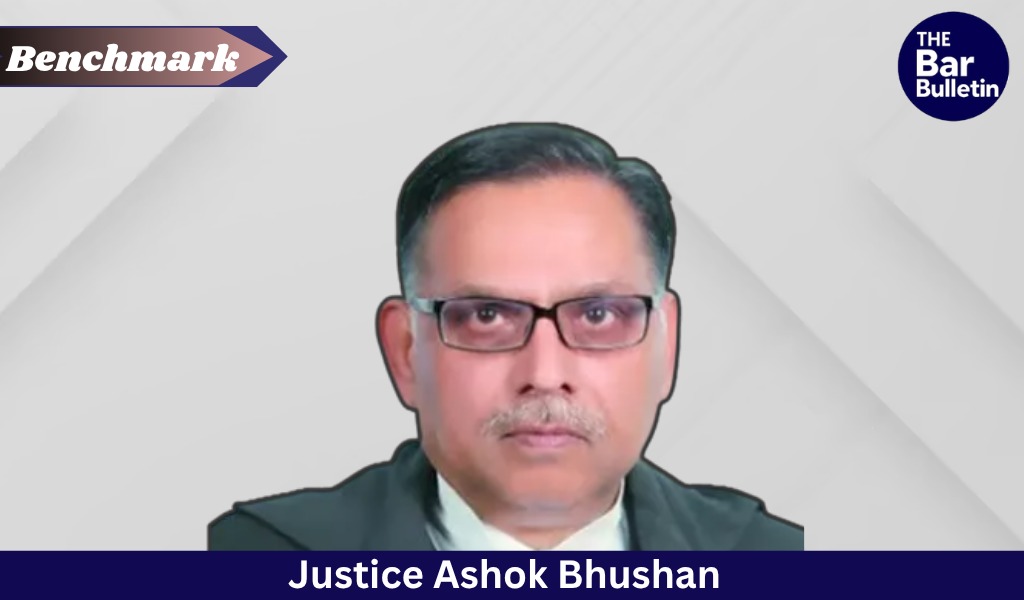

Justice Ashok Bhushan’s legal career is defined by a meticulous, step-by-step judicial style that prioritized exhaustive factual recording and strict adherence to constitutional limits. Upon his retirement as the Chairperson of the National Company Law Appellate Tribunal (NCLAT) on 04-07-2026 he left a legacy of stabilizing India’s commercial laws while having authored some of the most significant socio-political judgments of the modern era.
Justice Bhushan is a distinguished Indian jurist who served as a Judge of the Supreme Court of India from May 2016 to July 2021. Following his retirement from the apex court, he was appointed as the Chairperson of the NCLAT in November 2021. His judicial career is noted for a balanced approach to complex constitutional, civil, and corporate matters.
Early Life and Academic Background
Born on 05-07-1956, Justice Bhushan’s roots are in Jaunpur, Uttar Pradesh. He earned his degree in Bachelor of Arts in 1975 and pursued his legal studies in Allahabad University. He obtained his law degree in 1979 and enrolled in the Bar Council of Uttar Pradesh on 06-04-1979.
Commencement of Legal Journey
Justice Ashok Bhushan started practice on the civil and original side at Allahabad High Court and served as standing counsel for Allahabad University, State Mineral Development Corporation Limited, and several Municipal Boards, Banks, and Education Institutions. Notably, he was also elected as Senior Vice-President of the Allahabad High Court Bar Association.
Significant Career Milestones
On 24-04-2001, Justice Bhushan was elevated as permanent Judge of the Allahabad High Court. Thereafter, he served as the Chairman of Higher Judicial Service Committee and headed various other committees. On 10-07-2014, Justice Ashok Bhushan was sworn in as Judge of the Kerala High Court and took charge as Acting Chief Justice on 01-08-2014. Subsequently, he was sworn in as Chief Justice on 26-03-2015. Thereafter, on 13-05-2016, Justice Bhushan was elevated as a Judge of the Supreme Court of India.
After serving as a Supreme Court Judge for five years, Justice Bhushan retired in July 2021. Two months after he retired from the Apex Court, he was appointed as the Chairperson of the National Company Law Appellate Tribunal. Justice Bhushan demitted his office as Chairperson on 04-07-2026.
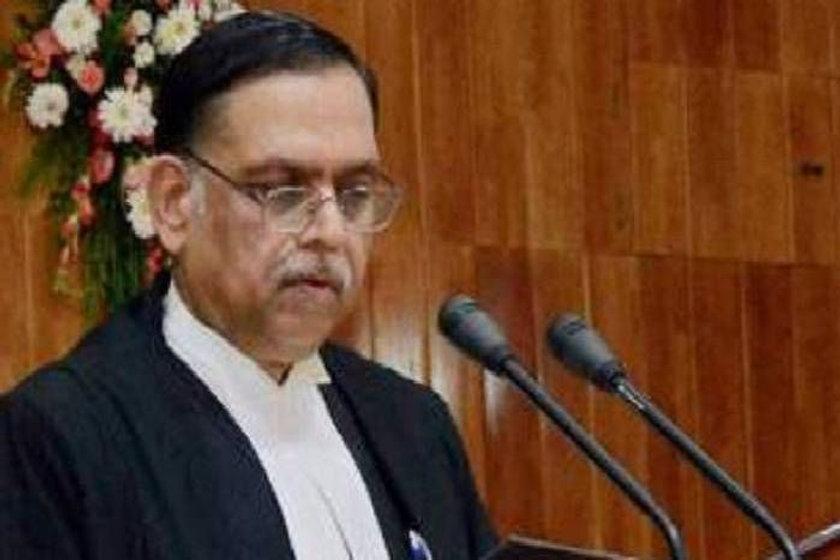
Landmark Judgments
Justice Bhushan was known for writing high-volume, lengthy judgments, averaging over 50 per year, that meticulously detailed every submission before reaching a conclusion.
● Siddiq (D) Thr. Lrs v. Mahant Suresh Das & Ors. (2020) 1 SCC 1 [The Ayodhya Verdict]
While the final 1,045-page judgment was anonymous, it is widely accepted that Justice Bhushan authored the 116-page addendum. This section focused on the religious significance of the site, examining whether the disputed land was the birthplace of Lord Ram based on faith and belief.
● Jaishri Laxmanrao Patil v. Chief Minister, Maharashtra 2021 SCC OnLine Sc 362 [The Maratha Reservation Case]
Justice Bhushan authored the lead opinion striking down the Maharashtra State Reservation for Socially and Educationally Backward Classes Act, 2018. It was ruled that the 50% reservation ceiling established in the Indra Sawhney case was a vital “reasonable balance” and could only be breached in truly “extraordinary circumstances,” which the Maratha community did not meet.
● In Re: Problems and Miseries of Migrant Labourers (2021) 8 SCC 519
During the COVID-19 pandemic, Justice Ashok Bhushan led a bench that took suo motu cognizance of the plight of stranded workers. The orders in this case mandated free transportation, the establishment of community kitchens, and the swift implementation of the One Nation One Ration Card (ONORC) scheme to ensure food security for migrants across state lines.
● Justice K.S. Puttaswamy v. Union of India (2019) 1 SCC 1
Justice Bhushan authored a separate concurring judgment broadly agreeing with the majority in upholding the Aadhar Act, forming part of the five-judge Constitution Bench. It was held that requiring demographic and biometric information for Aadhar did not violate the fundamental right to privacy and that the Act passed the three-fold test of legality, need, and proportionality.
● Government of NCT of Delhi v. Union of India (2018) 8 SCC 501
The 2018 decision emphasized that while Delhi has a ‘special status’, it remains a Union Territory and not a full state. Justice Bhushan delivered a separate concurring opinion in the 2018 judgment and later a dissenting opinion in a 2019 split verdict regarding the control of services.
● Kalpana Mehta & Ors. v. Union of India (2018) 7 SCC 1
While the Constitution Bench reached a collective decision, Justice Bhushan authored one of the three separate concurring opinions and clarified that Parliamentary Standing Committee Reports can be accepted as evidence in court. It was also emphasized that acceptance of such reports does not mean that the facts stated in them stand proved.
● Beghar Foundation v. Justice K.S. Puttaswamy (Retd.) (2021) 3 SCC 1
Justice Bhushan was part of the 4:1 majority that dismissed the review petitions that challenged the Supreme Court’s 2018 ruling on the Aadhar Act, finding no sufficient grounds for reconsideration. He disagreed with Justice D.Y. Chandrachud’s dissent, which argued that the review should be kept pending until a larger bench decided on the Money Bill reference from the Rojer Mathew case.
● Binoy Viswam v. Union of India (2017) 7 SCC 59
Justice Ashok Bhushan co-authored this decision that balanced state interests with individual rights regarding Aadhar and granted a partial stay on the retrospective invalidation of PAN cards, meaning that those without Aadhar could not have their existing PAN cards cancelled until the larger issue of privacy was decided.
● Union of India v. M. Selvakumar AIR 2017 SC 740
A Division Bench of Justice Ranjan Gogoi and Justice Ashok Bhushan authored the judgment and rejected the argument that because attempts for general category disabled candidates were increased from 4 to 7, OBC-category disabled candidates were entitled to a proportionate increase from 7 to 10. The legal boundaries between vertical and horizontal reservations were defined and the limits of judicial review over government policy were established.
Impact on Corporate and Competition Law
At the NCLAT, Justice Bhushan brought judicial finality to complex insolvency proceedings under the Insolvency and Bankruptcy Code (IBC). He consistently upheld the “commercial wisdom” of the Committee of Creditors (CoC), limiting judicial interference in business decisions unless they violated specific legal mandates.
Justice Bhushan’s tenure saw the NCLAT tackle major antitrust appeals. He notably presided over the challenge to the CCI’s ₹1,337 crore penalty on Google regarding Android mobile device dominance, balancing the need for fair competition with technological innovation. Justice Bhushan clarified that insolvency proceedings are in rem (against the world), allowing various stakeholders, including erstwhile promoters, the right to appeal if they are “aggrieved persons” under the IBC.
Notable NCLAT Decisions
A few noteworthy decisions rendered by Justice Ashok Bhushan as Chairman of NCLAT are:
WhatsApp LLC v. Competition Commission of India (2025)
It was ruled that WhatsApp’s conduct of playing dominance in the OTT messaging apps market and compelling expanded user data sharing with Meta without opt-out was rightly held by CCI as abuse of dominance under Section 4(2)(a)(i) and 4(2)(c) of the Competition Act.
Ishan Singh v. Narender Kumar Sharma (2026)
It was held that where a real estate project is undertaken in collaboration and substantial construction has been carried out, allotments have been made, and neither HARERA nor the arbitral tribunal has accepted that the underlying collaboration agreement was validly terminated, the unsold inventory as well as the subject project property cannot be excluded from the valuation of the corporate debtor or from the information memorandum in CIRP.
State Bank of India v. Manoj Kumar Das (2026)
This ruling was a part of the legal developments surrounding the Jet Airways insolvency case. Addressing the priority of employee terminal benefits under the IBC, it was held that statutory dues such as provident fund, gratuity, and pension owed to workmen are outside the liquidation estate and must be paid in full.
Enduring Mark of a Jurist
Justice Ashok Bhushan’s career is a testament to the belief that the law is a living instrument meant to serve the common person. Whether navigating the complexities of the Ayodhya dispute or championing the rights of migrant workers during a global pandemic, he remained a steady, principled voice. His transition from the Supreme Court to the NCLAT showed a rare versatility, proving that technical mastery and human empathy can coexist within the same gavel.
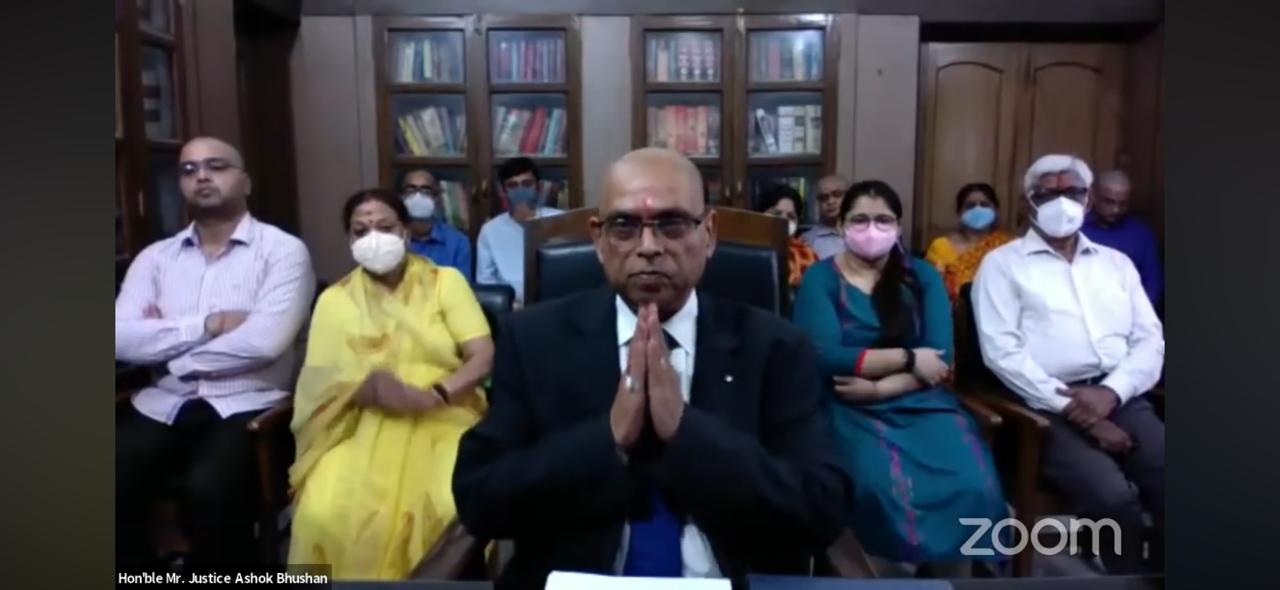
During his farewell from the Supreme Court in 2021, Justice Bhushan reflected on the bond between the Judiciary and the Bar by stating that
“
“The relationship between judges and lawyers is like that of sea and clouds. The judges come from the sea, and merge in the sea after that. Today, I pay homage and respectful regard to members of the Bar, both senior and junior.”
As he steps away from the bench, his influence lingers in the precedents he set and the quiet, unwavering integrity he brought to every deliberation. He leaves the Indian judiciary not just with a collection of rulings, but with a more defined sense of purpose and compassion.