
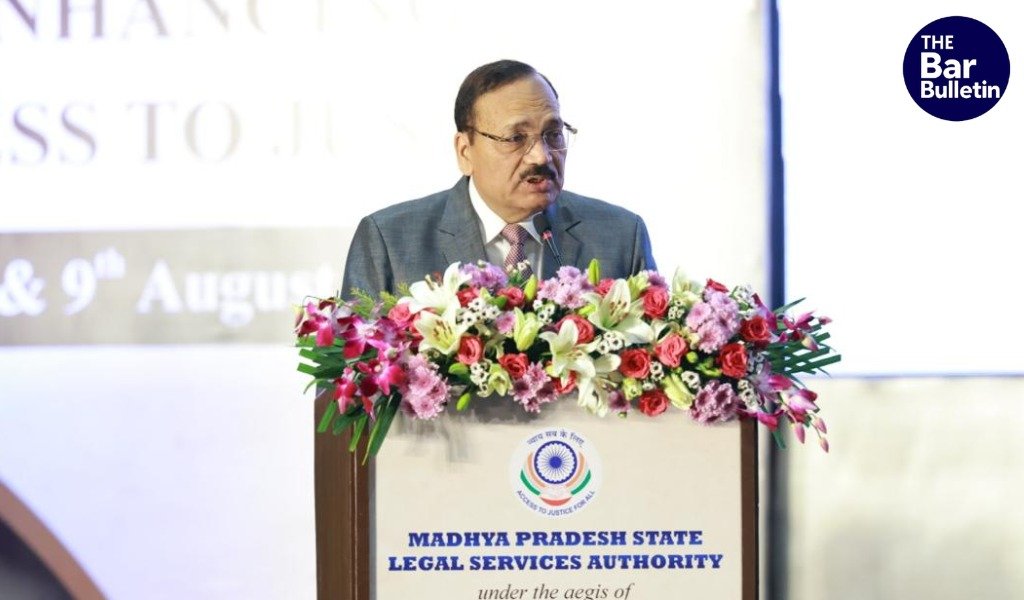

Chief Justice of India, Justice Surya Kant, has called for a more inclusive legal-aid system that reaches citizens who are unable to approach the justice system themselves, stressing that the success of legal services must be measured by their ability to reach the most vulnerable.
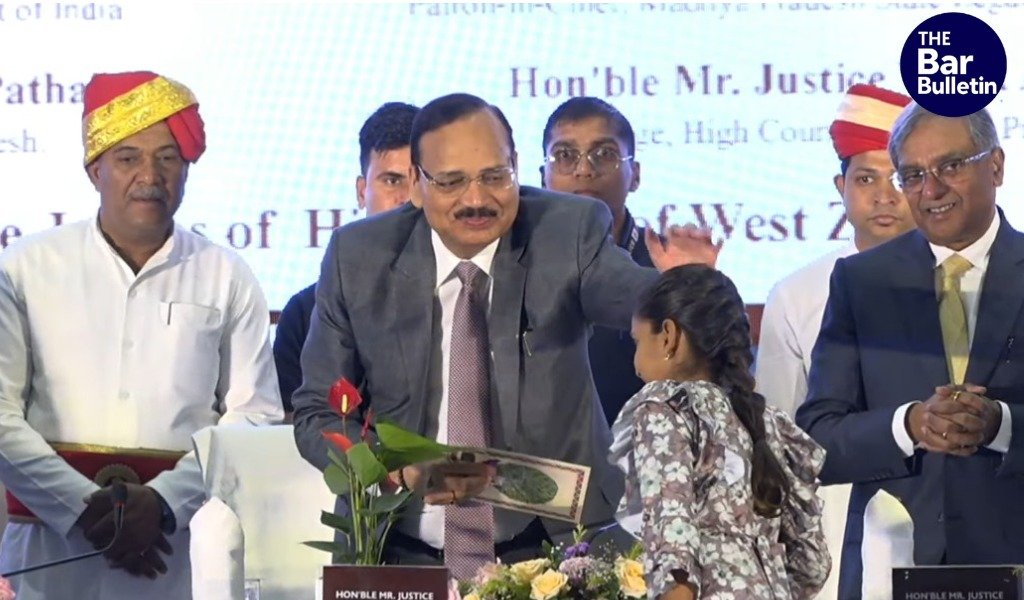
Addressing the West Zone Regional Conference of NALSA in Indore on August 8, 2026, themed “United Voice, Stronger Tomorrow: Advancing Access to Justice through Dialogue, Dignity & Inclusion,” CJI Surya Kant said the three words on which the theme rests, i.e. Dialogue, Dignity and Inclusion, should not remain mere slogans but should define how legal aid functions in practice. He said effective legal aid means people being “spoken to and not merely spoken at,” treated as citizens rather than case numbers and reached wherever they are.
Emphasising dialogue as the first pillar, the CJI said access to justice has never been built by laws alone and begins with a conversation. He said every legal-aid application starts with someone narrating a problem, while mediation begins when parties agree to listen. He added that NALSA’s different levels must remain connected by their common constitutional purpose.
“
“A united voice does not emerge because everyone says the same thing; it emerges because everyone is working towards the same objective while responding to the needs of the people they serve.”
He further stressed that legal services in different parts of the country cannot follow a uniform model, as the needs of a tribal family in Madhya Pradesh, a fisherfolk community in Goa, a migrant worker in Gujarat or a woman seeking assistance in Mumbai may be entirely different. Legal awareness, he said, must therefore be rooted in local realities and communicated in language that people understand.
On dignity, the CJI said a person’s experience of justice begins much before a judicial order is passed. It begins when they enter a legal-aid clinic, court complex or Taluka Legal Services Authority and form an impression from the way they are received and treated.
“
“We often evaluate access to justice by looking at the outcome of a case. Was relief granted? Was compensation awarded? Was the accused acquitted or convicted? These are undoubtedly important questions. Yet, for the ordinary citizen, the experience of justice begins much earlier. It begins the moment they walk into a legal aid clinic, a Court Complex or the office of a Taluka Legal Services Authority. Long before a judicial order is passed, they have already formed an opinion about the justice system from the manner in which they are received, heard and treated…They may be unfamiliar with court procedures, uncertain of their rights, and often hesitant to speak. At that moment, a patient explanation, a respectful conversation and the assurance that someone is willing to listen can make all the difference. Dignity is not always expressed through grand constitutional principles; more often, it is reflected in these small yet deeply meaningful acts of empathy and respect.”
He said the Legal Services Authorities Act recognises that certain sections of society require greater institutional support not as charity but as a constitutional entitlement, adding that every legal-aid lawyer, para-legal volunteer and Judicial Officer who treats people with patience and courtesy contributes to public confidence in the justice system.
Turning to inclusion, CJI Surya Kant said access to justice cannot be considered meaningful if even a single citizen remains beyond the justice system’s reach because of distance, poverty, disability, language or lack of awareness. He said the question before legal services institutions must be not merely whether their schemes are available, but who is still being left behind and what barriers continue to prevent them from accessing those services.
He highlighted initiatives such as Tele-Law, the Nyaya Bandhu platform and mobile legal-aid clinics as examples of efforts to carry legal assistance to people in remote and tribal areas. At the same time, he cautioned that inclusion cannot be reduced to expanding schemes or improving statistics; institutions must continually identify another village to reach, another vulnerable community to engage with, another language in which legal rights need to be explained and another barrier that can be removed.
“
“The real test of an institution is not how well it serves those who are able to reach it, but how effectively it reaches those who never can. That is precisely the direction in which the legal services movement has steadily evolved. Whether through Tele-Law, which has enabled over a crore pre-litigation consultations across the country, the Nyaya Bandhu platform that has connected thousands of pro bono advocates with those in need, or the mobile legal aid clinics that travel to remote and tribal areas, the underlying objective remains the same, to ensure that justice travels to the citizen, rather than expecting the citizen always to travel to justice.”
The CJI also cautioned against treating technology as a substitute for human interaction in legal aid. While technology has shortened distances and expanded outreach, he said it should remain a means rather than an end.
Concluding his address, CJI Surya Kant urged Judicial Officers, District Legal Services Authorities, legal-aid counsel and para-legal volunteers to ensure that the conference’s deliberations translate into concrete action. He said the constitutional promise under Article 39A ultimately rests in their hands.
“
“Whatever is resolved here will only matter if it reaches the household it was meant for.”
He concluded by saying that a stronger tomorrow is not something to be awaited but something being built in the present.