
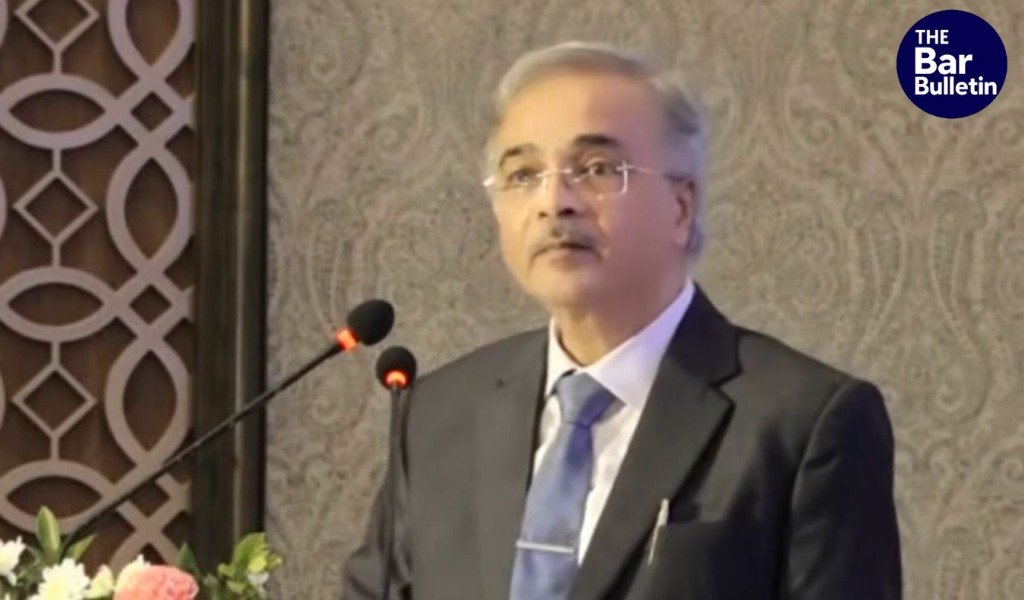
Justice N.V. Anjaria, Judge of the Supreme Court of India, called for a renewed focus on the fundamental spirit of arbitration, cautioning that the growth of arbitration as a global dispute-resolution mechanism has also brought with it drawbacks and inherent pitfalls that risk undermining its original purpose.
Addressing the opening ceremony of GHAC Arbitration Week 2026, Justice Anjaria said arbitration was originally conceived as a dispute-resolution mechanism free from the costly and cumbersome processes of court litigation. While arbitration has since acquired global dimensions and developed into an institution in itself, he observed that the mechanism today appears to have “misdirected itself” from the purpose for which it was conceived.
“
“Arbitration has grown up in age, but the stakeholders have not grown up in the wisdom and in the spirit of arbitration.”
Justice Anjaria said the occasion provided an opportunity to reflect on the journey of arbitration, its present destination and the state of the dispute-resolution regime. Referring to the need to “revive the spirit of arbitration,” he emphasised that the dominant feature of arbitration should be mutual understanding and cooperation aimed at achieving justice, rather than merely deriving a decision against one of the parties from the applicable law.
He identified five areas that require attention if the spirit of arbitration is to be revived.
First, arbitration must remain cost-effective, not only in monetary terms but also in terms of time and procedure. Second, it must remain a party-centric process and should not become arbitrator-centric. Third, Justice Anjaria stressed that arbitration must not become an “elitist club of rich litigants”, but should retain its character as an accessible and readily available dispute-resolution mechanism.
Fourth, he called for greater use of mediation and conciliation within arbitration, pointing to Section 30 of the Arbitration and Conciliation Act, 1996, which encourages settlement through mediation, conciliation or other procedures during arbitral proceedings. He suggested that properly used, these tools could produce significant results.
“
“Somebody said that in the concerns of every arbitration, there is a conciliator who is asleep. We must wake him up.”
Fifth, Justice Anjaria emphasised that judicial intervention in arbitration must remain minimal, noting the Supreme Court’s recent emphasis on limiting court intervention in arbitral proceedings and arbitral decision-making to compelling circumstances.
Justice Anjaria also highlighted the significance of the Gujarat High Court Arbitration Centre, describing the conference as a “prognostication of the future” of the Centre. He noted that although the Centre was yet to come up physically, its organisation of the Arbitration Week demonstrated the vitality and activity it could bring to the arbitration ecosystem.
He concluded by congratulating the Chief Justice, officers of the Gujarat High Court and all those associated with the Gujarat High Court Arbitration Centre for organising the conference.