
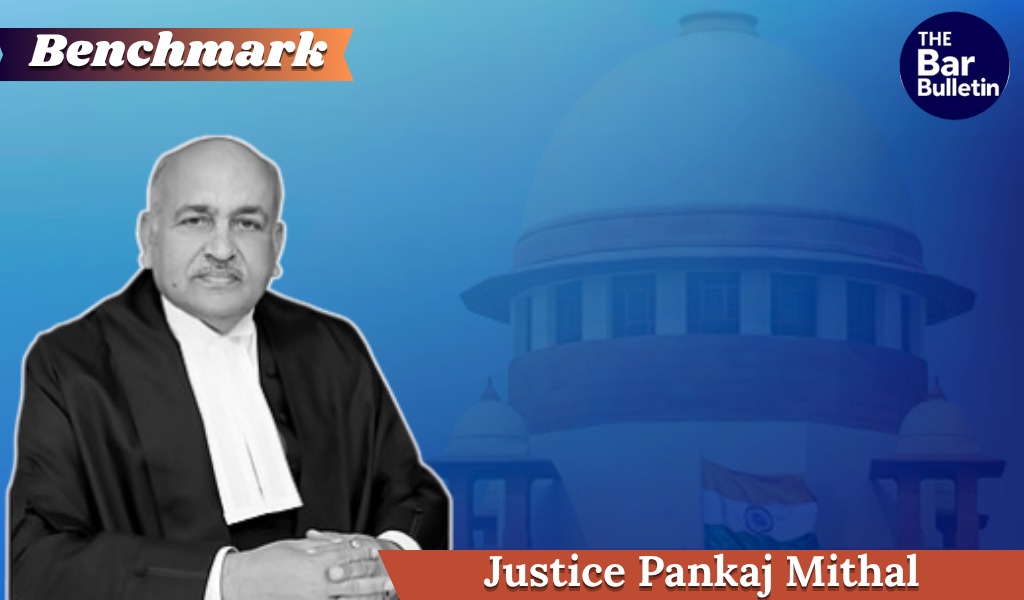
The retirement of Justice Pankaj Mithal on June 16, 2026, marks the conclusion of a distinguished judicial career spanning over four decades in the legal profession and nearly two decades on the Bench. His journey, from the Bar at Allahabad to the Supreme Court of India, reflects not only steady professional advancement but also a sustained engagement with constitutional questions and institutional development.
Early Life and Entry into the Legal Profession
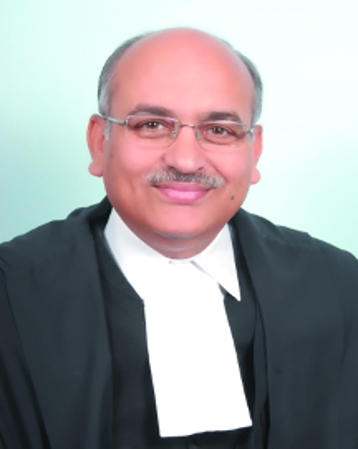
Justice Pankaj Mithal was born on June 17, 1961, in Meerut, Uttar Pradesh, into a family deeply rooted in the legal profession. A third-generation lawyer, he inherited a rich legal legacy from his father, Justice Narendra NathMithal, who served as a judge of the Allahabad High Court, and his grandfather, Babu Brij Nath Mithal, a distinguished lawyer in western Uttar Pradesh who also served as the honorary head of the Law Department at Meerut College. He completed his schooling at St. Mary’s Academy, Meerut, and graduated with a B.Com. (Honours) degree from the University of Allahabad in 1982, and subsequently obtained his law degree from Meerut College, Chaudhary Charan Singh University.
Enrolled with the Bar Council of Uttar Pradesh in 1985, Justice Mithal began his legal practice under the guidance of Senior Advocate Sudhir Chandra, who later became a judge of the Allahabad High Court and Lokayukta of Uttar Pradesh. Primarily a civil lawyer, he handled a wide range of matters relating to land acquisition, rent control, education, labour and service law, motor accident claims and constitutional issues. He also served as standing counsel for the Uttar Pradesh Avas Vikas Parishad and Dr B.R. Ambedkar University, Agra. Elevated as an Additional Judge of the Allahabad High Court in July 2006, he later served as Chief Justice of the Jammu & Kashmir and Ladakh High Court and the Rajasthan High Court before being elevated to the Supreme Court of India on February 6, 2023.
Journey at the Bench
As mentioned, Justice Pankaj Mithal’s elevation to the Bench came in July 2006 with his appointment as an Additional Judge of the Allahabad High Court; he was confirmed as a permanent judge in 2008. His tenure at Allahabad was marked by a consistent engagement with public law questions and matters concerning governance and educational administration, areas in which he had already developed considerable expertise during his years at the Bar.
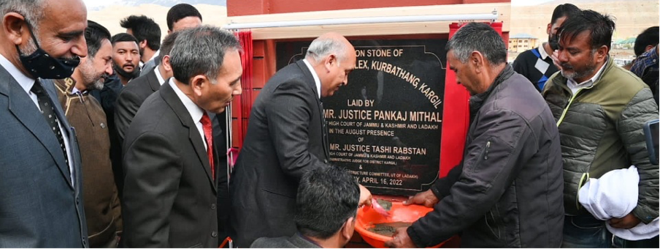
His administrative acumen led to his appointment as Chief Justice of the High Court of Jammu & Kashmir and Ladakh in January 2021, a period of considerable constitutional significance for the region. He was subsequently transferred as Chief Justice of the Rajasthan High Court. In both jurisdictions, his tenure was characterised by a focus on strengthening judicial administration, promoting digitisation, and addressing case backlog, priorities that have increasingly come to define effective court leadership in contemporary India.
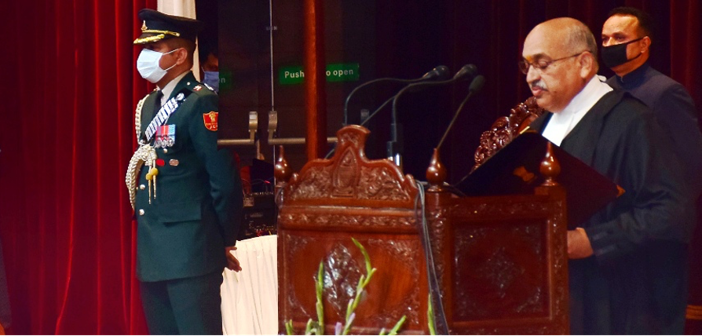
Justice Mithal was elevated to the Supreme Court of India on 6 February 2023. His tenure coincided with a period marked by significant constitutional litigation, and he served on benches that decided far-reaching constitutional matters.
Notable Judgements and Orders
• High Court Bar Association, Allahabad v. State of Uttar Pradesh, 2024 INSC 770: Overruling the Automatic Vacation of Stay Doctrine
Justice Pankaj Mithal was part of the Constitution Bench that overruled the directions issued in Asian Resurfacing of Road Agency Pvt. Ltd. v. CBI, (2018) 16 SCC 299, holding that interim stay orders granted by High Courts do not automatically lapse after six months. The Bench reaffirmed the constitutional status and supervisory jurisdiction of High Courts, observing that litigants cannot be made to suffer due to delays attributable to the courts. The judgment restored judicial discretion in deciding whether interim relief should continue and strengthened the principles of natural justice and judicial review.
“
“No litigant should be allowed to suffer due to the fault of the Court. If that happens, it is the bounden duty of the Court to rectify its mistake.”
• State of Punjab v. Davinder Singh, (2024) 9 SCC 1: SC Sub-Classification
Justice Pankaj Mithal, in his separate concurring opinion in the seven-judge Constitution Bench decision in State of Punjab v. Davinder Singh, upheld the constitutional validity of sub-classification within the Scheduled Castes for the purpose of reservation. He observed that reservations are intended as a means to advance genuinely disadvantaged communities and that sub-classification is permissible to ensure the benefits of affirmative action reach those who have remained the most deprived despite the existing reservation framework. Concluding his opinion, Justice Mithal observed:
“
“Our predecessors, not only the Judges but also the former Prime Minister have appeared to be against providing reservation to any class or caste of persons on purely caste basis and wanted to take the country forward on merit basis. Despite the views so expressed, the Constitutional amendments envisaged to promote the depressed and the backward classes of persons to bring them to the level of the privileged class enjoying the status of an urban elite. Thus, the reservation policy was rightly applied and since its implementation faced difficulties as some in the backward classes have marched ahead, it has become imperative to uplift the backward of the backwards, for which purpose sub-classification has become the order of the day.”
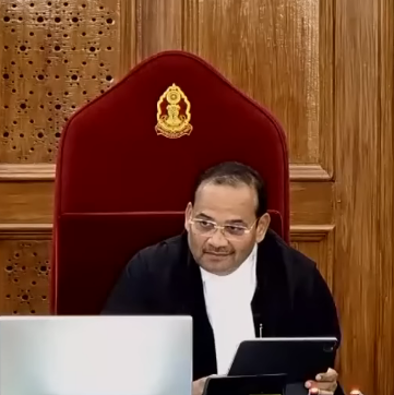
• My Preferred Transformation & Hospitality Pvt. Ltd., 2025 INSC 55: Section 34 Time Limit Cannot Be Extended Beyond Statutory Period
Justice Pankaj Mithal, as part of the Bench, reaffirmed the strict limitation regime governing challenges to arbitral awards under Section 34 of the Arbitration and Conciliation Act, 1996. The Court held that while Section 4 of the Limitation Act applies when the initial three-month limitation period expires on a court holiday, it does not extend the additional 30-day condonable period. Consequently, an application filed after the expiry of the condonable period, even if the court was closed during that period, remains barred by limitation. The Bench also urged Parliament to revisit the existing framework, observing that the current legal position unduly curtails the valuable remedy of challenging an arbitral award. The Court observed:
“
“The remedy under Section 34 is precious, and courts will keep in mind the need to secure and protect such remedy while applying limitation provisions.”
• Bhopal Municipal Corporation v. Dr. Subhash C. Pandey & Ors. (2026): Nationwide Compliance with Solid Waste Management Rules
In Bhopal Municipal Corporation v. Dr. Subhash C. Pandey & Ors. (2026), the bench comprising Justice Pankaj Mithal and Justice SVN Bhatti authored an important order on solid waste management, constituting a Supreme Court-empowered Monitoring Committee to supervise nationwide implementation of the Solid Waste Management Rules, 2026. The Bench observed:
“
“The singularity of obligation and compliance under the SWM Rules, 2026, is that every human being and their activities result in pollution, yet all contributors expect a minuscule percentage of sanitary workers to handle it. This perception shall be eradicated, and it shall be the responsibility of all contributors for Waste Management. As a test case, the District Collectors can specifically engage with households and educational institutions. Let the students be the guides and mentors in their respective households, and the Special Cells in each district educate them in this regard. The Constitution can operate in its full vigour only when there is participation and compliance from all.”
• Available on: https://api.sci.gov.in/supremecourt/2023/39110/39110_2023_9_53_71499_Order_25-May-2026.pdf
Beyond his judicial pronouncements, Justice Mithal consistently advocated value-based legal education, ethical legal practice and the importance of maintaining quality in judicial work. In his public addresses, he emphasised that law is not merely a profession but a public duty, while also supporting the use of technology in the justice delivery system without compromising fairness, accessibility and human judgment.
Farewell Ceremony and Legacy of Institutional Contributions
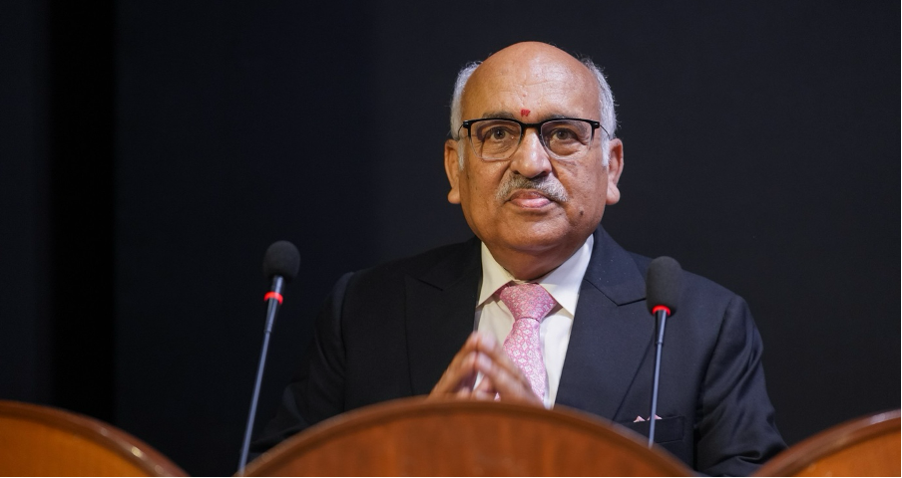
At farewell ceremonies organised by the ceremonial bench of the Supreme Court, the Supreme Court Bar Association (SCBA), and the Supreme Court Advocates-on-Record Association (SCAORA), tributes were paid to Justice Mithal’s judicial career across institutional forums.
During the ceremonial bench proceedings of the Supreme Court, the Chief Justice of India, Justice Surya Kant, reflected on Justice Mithal’s tenure on the Bench with his consistent clarity in approaching complex questions of law and his ability to balance doctrinal rigour with practical realities.
In his own address before the ceremonial bench, Justice Mithal spoke candidly about the pressures facing the justice delivery system. Expanding on these pressures, he said that pendency is not an abstract problem but one that directly impacts individuals, observing that every pending case represents “a human life suspended in uncertainty.” Furthermore, in his reflections on the future of the legal profession and the role of technology, he stated:
“
“True professional success does not arrive through shortcuts, superficial presentation, or quick fixes. It comes entirely through relentless hard work, continuous dedication, and unwavering commitment to your clients and the court. Technology may assist us, but no software can substitute the trained human mind, ethical responsibility, and judicial consciousness that the justice system requires.”
He also cautioned against the growing tendency to rely uncritically on artificial intelligence in legal practice, warning that convenience must not replace careful reasoning or professional responsibility. Equally significant was his articulation of the lawyer’s role beyond adversarial litigation. He described lawyers as “architects of peace,” emphasising that the profession’s deeper function lies in resolving disputes and restoring social balance rather than merely contesting claims.
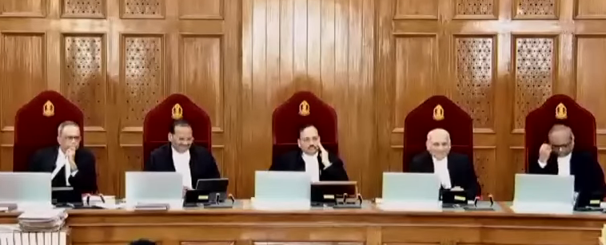
At the farewell organised by the Supreme Court Bar Association, the Chief Justice described him as a judge marked by remarkable judicial temperament and a deeply human understanding of the judicial role, noting that he approached even routine matters with seriousness and care. He further observed that Justice Mithal consistently treated the Constitution not merely as a legal text but as a “living promise to be fulfilled,” particularly in matters involving due process and fairness.
At the farewell hosted by the Supreme Court Advocates-on-Record Association, members of the Bar similarly acknowledged Justice Mithal’s clarity in court, his accessibility, and his consistent emphasis on discipline and preparation in advocacy.
As he demits office, he leaves behind a legacy defined by clarity in reasoning, administrative foresight, and a sustained commitment to the rule of law, one that will continue to shape India’s constitutional landscape.
Tribute from the Bar
As Justice Pankaj Mithal demitted office, members of the Bar paid heartfelt tributes, recalling his patience, warmth and the welcoming atmosphere of his courtroom, where lawyers of all levels felt equally heard and respected.
Attorney General R. Venkataramani:
Unsettled and never in your court unruffled you could be,
Questions soft, with all the ease, your answers could be.
Be sure, but you could be quietly pulled up for remiss and homework.
Leave granted or not, with a leave of comfort,
We left your court with a gift of smile you gave us.
We wonder how our noise and decibels high
Did wear not the patience you wore on your words.
Teacher-like, you spent your time on the Bench;
Those who had a mind to learn, many a treasure did gather.
Our memories will never fade.
Solicitor General Tushar Mehta:
“
“The atmosphere was so conducive that whether an eminent counsel is appearing or a small lawyer is appearing, Lord, all of us were feeling at ease.”
Senior Advocate Mukul Rohatgi:
“
“It seems as if it was just six months ago that His Lordship came here, but five years have gone by. The other day Justice Mithal told me, ‘Why are you appearing? It should be for juniors.’ That’s something I like.”
Additional Solicitor General Aishwarya Bhati:
“
“Your court, Your Lordship, was always very calm. You were professor-like in your demeanour. Always teaching us, encouraging the younger members of the Bar.”
SCBA President Senior Advocate Vikas Singh
“
“Justice Mithal, when we appeared before him, most of the time we were pleasantly surprised by him noticing a point which the junior lawyer had probably not thought of in his favour. That is something remarkable in the judiciary, that a judge is so well prepared that he is able to take out and bring out points in favour of the litigant which the lawyer appearing is not aware of. Of course, sometimes he used to also bring out some surprises which we were not prepared for, because he used to find something hidden against us. But those were rare.”