
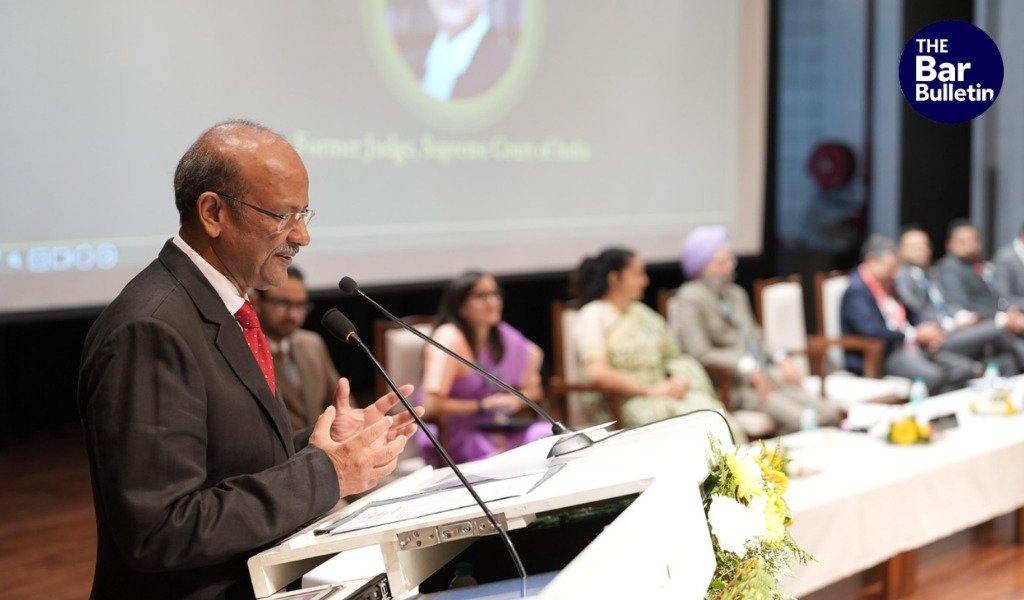

The Society of Indian Lawyers (SIL), in collaboration with INSOL India and the International Women’s Insolvency & Restructuring Confederation (IWIRC) India Network, organised “IBC Turns 10: A Decade of Resolution” at the Chandigarh Judicial Academy, bringing together members of the judiciary, senior advocates, insolvency professionals, academics and industry experts to reflect on a decade of the Insolvency and Bankruptcy Code, 2016 (IBC), and examine the priorities for its next phase.
The conference examined the Code’s contribution to India’s insolvency ecosystem, its impact on credit discipline and economic activity, and the reforms required to strengthen insolvency resolution in the coming decade. Discussions also explored cross-border insolvency, mediation in insolvency proceedings, tribunal capacity and the need for timely and predictable outcomes.
Justice Rajesh Bindal Highlights IBC’s Contribution to Economic Growth
Former Supreme Court judge Justice Rajesh Bindal, addressing the inaugural session, reflected on the wider economic impact of the IBC and the importance of ensuring that insolvency resolution contributes to the productive use of capital.
Justice Bindal highlighted improvements in the banking sector, particularly the decline in non-performing assets (NPAs), and discussed the role of technology in strengthening tax collection and regulatory administration. Referring to the increase in tax collections since the introduction of the Goods and Services Tax (GST), he described technological progress as a positive development in improving the efficiency of public administration.
He emphasised the need for a practical, data-driven approach to economic policymaking, suggesting that available data could help identify industry-specific challenges, assess economic performance and guide targeted interventions. He also underscored the importance of constructive participation by professionals and institutions in supporting economic development.
His address placed insolvency reform within the broader context of economic growth, credit discipline and the need to ensure that capital tied up in distressed businesses can be put to productive use.
Justice Anupinder Singh Grewal Emphasises Mediation in Insolvency Resolution
Hon’ble Justice Anupinder Singh Grewal, President of the National Company Law Tribunal (NCLT), highlighted the role of mediation in resolving financial disputes, preserving businesses and protecting the interests of stakeholders.
Speaking about the need to maximise enterprise value, Justice Grewal observed that insolvency matters must be resolved promptly to prevent the erosion of assets. He referred to the recent performance of the resolution process, noting that 78 resolution plans had been approved in the first quarter, followed by 107 in the second quarter. According to his remarks, nearly 200 plans had been approved over the two quarters, with the value of the plans amounting to approximately ?17,000 crore.
Justice Grewal also drew attention to the practical challenges of meeting statutory timelines in insolvency proceedings. He noted that issuing notices, ensuring service and providing the opposing party an adequate opportunity to respond can make it difficult to complete admission-related processes within the prescribed period.
Drawing on his experience handling matters under the Securitisation and Reconstruction of Financial Assets and Enforcement of Security Interest (SARFAESI) Act, he explained how mediation had helped resolve disputes, particularly during the financial difficulties that followed the COVID-19 pandemic.
He recounted a case involving two young borrowers whose property had been mortgaged. Through mediation, the lender agreed to waive the outstanding dues and sponsor their education as part of its corporate social responsibility initiatives.
Justice Grewal stated that approximately 25 matters had been resolved through mediation, helping businesses avoid liquidation. He emphasised that the consequences of insolvency extend beyond companies and lenders to employees, homebuyers and other stakeholders whose livelihoods and interests may depend on the survival of a business.
He also highlighted the responsibility of insolvency professionals in preserving enterprise value, identifying and collating claims, inviting resolution plans, presenting relevant financial information to the Committee of Creditors and seeking expert assistance where necessary. He described insolvency practice as a profession carrying significant responsibility and having an important role in the country’s economic development.
A Decade of Institutional Transformation
The inaugural session commenced with the traditional lighting of the lamp, followed by welcome remarks and addresses reflecting on the journey of the IBC since its enactment in May 2016.
The discussions examined how the Code replaced a fragmented framework of overlapping insolvency and recovery laws with a unified, time-bound, creditor-in-control process. Over the past decade, the IBC has reshaped the approach to corporate distress by strengthening creditor rights, changing the incentives of defaulting promoters and creating a structured mechanism for resolving financially distressed businesses.
The conference also reflected on the Code’s impact beyond courtroom proceedings, including the settlement of claims before formal admission, the preservation of going concerns and the recycling of capital into productive economic activity.
Panel Discussions Examine the Next Phase of Insolvency Reform
The afternoon programme featured three panel discussions addressing key questions for the next decade of insolvency law.
1. Cross-Border Insolvency: India’s Next Frontier
The session examined the emerging framework for cross-border insolvency, including the UNCITRAL Model Law, recognition of foreign proceedings and lessons from matters such as Jet Airways, where parallel proceedings highlighted the importance of coordination between courts and practitioners across jurisdictions. The discussion considered the implications of the enabling framework introduced by the 2026 Amendment and the practical preparations required as cross-border insolvency disputes become more prominent.
2. Mediation Meets Insolvency
The second session explored the role of mediation and out-of-court settlements in insolvency-related disputes. Panellists examined how negotiated solutions can complement formal proceedings, the potential of hybrid settlement mechanisms and the circumstances in which mediation can help parties resolve disputes while preserving value.
3. What the Next Decade Holds for Us
The concluding panel considered the structural and operational reforms needed to strengthen the insolvency ecosystem. Discussions focused on tribunal capacity, procedural timelines, the predictability of judicial outcomes and the respective roles of the Bench, the Bar and insolvency professionals in ensuring effective resolution.
Distinguished Panellists and Industry Participation
The panel discussions brought together legal practitioners, insolvency professionals, academics and industry experts, including Senior Advocate Anand Chhibbar; Senior Advocate Manish Jain; Dr. Siddharth Srivastava, INSOL representative and Partner, Khaitan & Co.; Prateek Kumar, Partner, Khaitan & Co.; Krishan Vrind Jain; CA Gurdev Bassi; Utkarsh Joshi, Chambers of Utkarsh Joshi; Savar Mahajan, Counsel, Chandhiok & Mahajan; Atul V. Sood, Advocate; Adv. Pranjit Bhattacharya, Founder, Chambers of Pranjit Bhattacharya; Navneet Kumar Gupta, Resolution Professional; Adv. Eshna Kumar, Vice Chair, IWIRC; Prachi Johri, Johri & Associates; Anil Katia, Director, Resolution Professionals; Pulkit Deora, Advocate; Raveena Rai, Partner, Khaitan & Co.; Dr. Akash Gupta, Associate Professor, Jindal Global Law School
The conference was convened by Komal Abrol, Pulkit Goyal, Nahush Jain, Gaurav Goel, Karan Bhardwaj, Mahir Sood and Harleen Mattewal.
Chandhiok & Mahajan, Advocates and Solicitors, was the Principal Partner, while Khaitan & Co. was the Associate Partner. Johri Associates and Chambers of Pranjit Bhattacharya supported the event.