
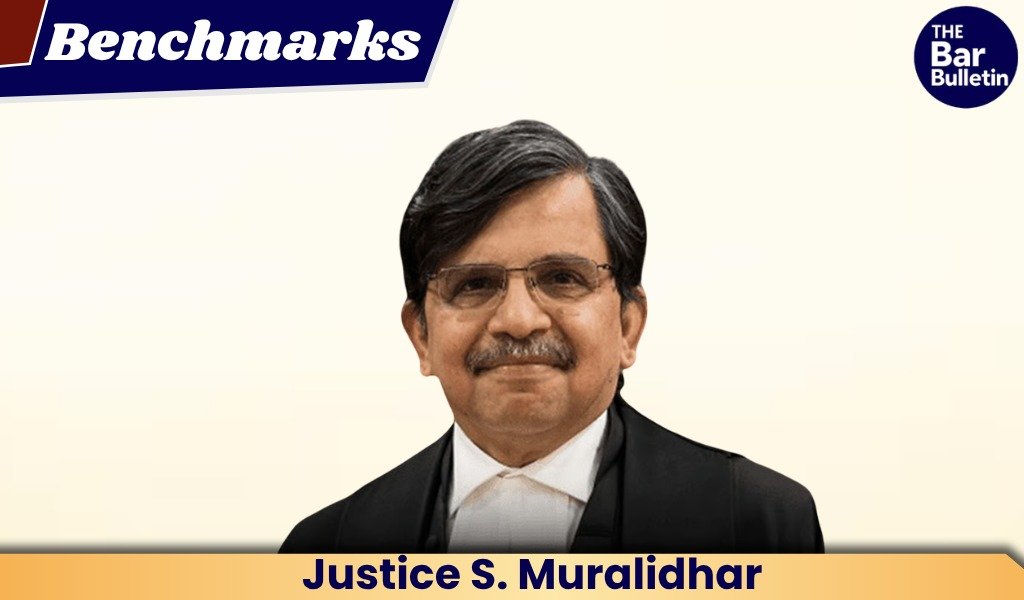

Nearly three years after retiring from the judiciary, former Chief Justice of the Orissa High Court, Justice S. Muralidhar, has once again found himself at the centre of public attention. As Chair of the United Nations Independent International Commission of Inquiry on the Occupied Palestinian Territory, including East Jerusalem and Israel, he recently led the Commission that released a report examining the impact of the conflict on Palestinian civilians, particularly children and the education system in Gaza. The Commission concluded that Israeli authorities had committed serious violations of international humanitarian and human rights law, including acts that it found amounted to genocide against Palestinians in relation to children. The report has attracted widespread international attention and sharply divided reactions across governments, legal experts and civil society.
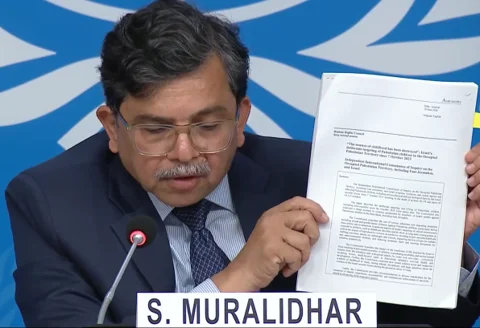
Read the report at- Indisputable Evidence Shows Deliberate Killing of Palestinian Children, Amounting to Genocide: Justice (Retd.) S. Muralidhar Presents UN Report
For many in India, however, Justice Muralidhar’s name evokes memories of another defining moment. In February 2020, while serving as a Judge of the Delhi High Court, he presided over an urgent late-night hearing on the communal violence unfolding in Northeast Delhi. During the proceedings, the Bench questioned the Delhi Police over allegations that no action had been taken against political leaders accused of delivering inflammatory speeches. Hours later, the Central Government issued the notification implementing the Supreme Court Collegium’s earlier recommendation transferring him to the Punjab and Haryana High Court. Although the transfer had already been recommended by the Collegium, its timing sparked widespread debate within the legal and political fraternity, and brought Justice Muralidhar into the national spotlight.
Long before these events, Justice Muralidhar had established himself as one of India’s foremost constitutional judges. Across nearly two decades on the Bench, first at the Delhi High Court and later as Chief Justice of the Orissa High Court, he authored landmark decisions on housing rights, access to justice, custodial accountability, maternal healthcare, caste violence and environmental protection. His judicial philosophy, marked by a strong emphasis on constitutional values and the protection of individual rights, now finds expression on an international platform through his work with the United Nations.
Let’s know more about Justice Murlidhar’s Journey.
Early Life and Education
Justice Dr. S. Muralidhar, whose full name is Srinivasan Muralidhar, was born on August 8, 1961 and is from Chennai, Tamil Nadu.
He completed his B.Sc. in Chemistry from Vivekananda College, University of Madras, in 1981, securing first class. He then pursued law at the University of Madras and completed his Bachelor of Laws in 1984, securing first rank. As a law student, he was part of a two-member team from Madras Law College which won the All India Moot Court Competition and subsequently represented India at the 25th Philip C. Jessup International Law Moot Court Competition in Washington, D.C., in April 1984.
He subsequently obtained an LL.M. in Constitutional and Administrative Law from Nagpur University in 1990, again securing first rank. In 2003, he was awarded a Ph.D. by the University of Delhi for his doctoral work on Legal Aid and the Criminal Justice System in India.
He is married to Usha Ramanathan, a prominent independent legal researcher and human-rights scholar. Their relationship is rooted in their shared engagement with law and social-justice issues; they met during Justice Muralidhar’s years in Delhi.
Lawyer and legal-aid work
Justice S. Muralidhar enrolled as an advocate on September 12, 1984 and began practising in Chennai. He practised in the civil courts before moving to Delhi in 1987, where he appeared before the Delhi High Court and the Supreme Court.
An important early influence on his career was G. Ramaswamy, who was then Additional Solicitor General of India. In May 1987, Ramaswamy took him on as his junior, after which Justice Muralidhar shifted to Delhi. He later described those two years as an extraordinary period of learning and credited Ramaswamy with teaching him the fundamentals of advocacy and court craft.
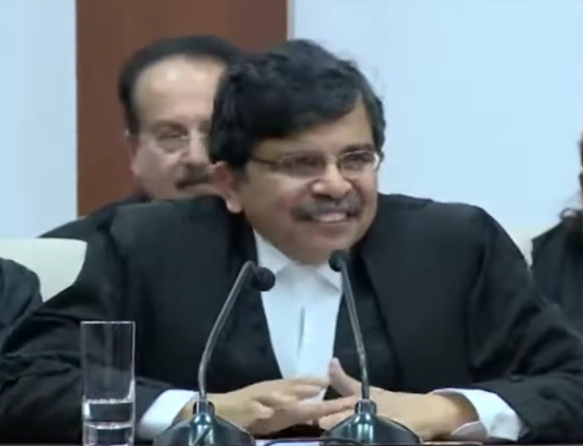
His practice increasingly centred on constitutional law, human rights, criminal law and public interest litigation. He represented victims of the Bhopal Gas Disaster and persons displaced by dams on the Narmada, and was appointed amicus curiae by the Supreme Court in several PILs, including matters concerning prisoners on death row.
He also appeared for institutions including the Election Commission of India and the National Human Rights Commission and served as a member of the Supreme Court Legal Services Committee from 2000 to 2004. He was also a part-time member of the Law Commission of India from December 2002 to May 2006.
His academic engagement also continued alongside his practice. He authored Law, Poverty and Legal Aid: Access to Criminal Justice, published in 2004. He also wrote and spoke extensively on subjects including access to justice, the Bhopal litigation, the death penalty and the right to water.
From Advocate to Judge: Judicial Tenure Marked by Reforms
After more than two decades at the Bar, Muralidhar was appointed an Additional Judge of the Delhi High Court on May 29, 2006, and became a permanent judge in 2007. He served on the Delhi High Court until March 2020.
Over his nearly 14 years at the Delhi High Court, his judgments covered an unusually broad range of constitutional, criminal, human-rights and commercial questions.
Among the notable decisions associated with his Bench were:
● Naz Foundation v. Government of NCT of Delhi, 160 (2009) DLT 277: Justice S Muralidhar was part of the Bench along with the then Chief Justice Ajit Prakash Shah that held that consensual sexual relations between adults in private could not be criminalised under Section 377 IPC, making the judgment an important milestone in India’s constitutional rights jurisprudence.
● State through CBI v. Sajjan Kumar, 2018 SCC OnLine Del 12930: In December 2018, a Bench of Justices Muralidhar and Vinod Goel overturned the acquittal of former Congress leader Sajjan Kumar in a 1984 anti-Sikh riots case and convicted him in connection with the killing of five persons.
● Zulfikar Nasir & Ors. v. State of Uttar Pradesh & Ors., CRL.A. 574/201): The Bench overturned the acquittal of 16 PAC personnel in the 1987 Hashimpura massacre and convicted them, sentencing them to life imprisonment. The case involved the killing of 42 Muslim men.
● Gautam Navlakha v. State (NCT of Delhi), 2018 SCC OnLine Del 11598: The Bench of Justice S Murlidhar and Justice Vinod Goel set aside the transit-remand order against Gautam Navlakha in the Bhima Koregaon case after finding non-compliance with mandatory safeguards concerning arrest and remand.
● Ajay Maken v. Union of India, (2019) 260 DLT 581: The Bench of Justice S. Muralidhar and Justice Vibhu Bakhru dealt with the eviction of nearly 5,000 residents of Shakur Basti and held that the right to housing extends beyond the bare provision of shelter, encompassing rights connected with livelihood, health, education, food, water and other basic facilities. Senior Congress leader Ajay Maken filed a landmark legal petition challenging the forced evictions.
___________________________________________________________________________
Justice Muralidhar assumed office as a judge of the Punjab and Haryana High Court on March 6, 2020. He remained there for less than a year before being appointed Chief Justice of the Orissa High Court on January 4, 2021.
His tenure in the Odisha High Court was marked not only by judicial work but also by an aggressive push towards digitisation and modernisation of the judiciary.
The Odisha High Court’s own annual report records that Justice Muralidhar came to the Court with a reputation for having promoted digitisation in Delhi. Under his leadership, the High Court moved from ad hoc virtual hearings during the pandemic towards a more systematic virtual and paperless system. Court records were digitised, and an e-custody certificate module was introduced.
During his tenure, Odisha High Court expanded its network of paperless courts dramatically. By July 2023, 100 courts across the State had become paperless, and by his retirement the number had reached 141.
He also inaugurated Fast Track Special Courts dealing with POCSO and rape cases, while regional judicial academies were used to train judicial officers in the new technology-driven court system. An account of his tenure noted that his Bench disposed of 33,322 cases in 31 months and delivered 545 judgments.
___________________________________________________________________________In September 2022, the Supreme Court Collegium recommended Muralidhar’s transfer as Chief Justice of the Madras High Court. The recommendation remained pending with the Central Government. In April 2023, with his retirement approaching, the Collegium formally recalled the recommendation, noting that it had remained pending without response since September 2022.
Thus, Muralidhar retired as Chief Justice of the Orissa High Court on August 7, 2023, without having served on the Supreme Court Bench.
Why Justice Muralidhar was not elevated to the Supreme Court remains unanswered. Despite his long tenure as a High Court judge, extensive work in constitutional and human-rights law and his eventual elevation as Chief Justice of the Orissa High Court, the Supreme Court Collegium never recommended him for appointment to the top court. His non-elevation drew pointed questions after his retirement in August 2023.
Landmark Judgements of Justice S. Murlidhar
[1] 1984 Anti-Sikh Riots: A 203 Page Judgment Authored by Justice Murlidhar
One of the most enduring aspects of Justice Muralidhar’s judicial writing is not merely the outcome of his judgments, but the language in which they were delivered. His opinion in the 1984 anti-Sikh riots case[State (Through CBI) v. Sajjan Kumar & Ors.,2018:DHC:7927-DB], which reversed the acquittal of Congress leader Sajjan Kumar, is widely regarded as one of the most powerful judicial pronouncements on communal violence in India. Opening the 203-page judgment with a reflection on Partition and the failure of the criminal justice system, the Bench described the 1984 killings as “crimes against humanity” and highlighted the legislative gap. The Bench observed:
“
“This Court is of the view that the mass killings of Sikhs in Delhi and elsewhere in November 1984 were in fact ‘crimes against humanity’. They will continue to shock the collective conscience of society for a long time to come. While it is undeniable that it has taken over three decades to bring the accused in this case to justice, and that our criminal justice system stands severely tested in that process, it is essential, in a democracy governed by the rule of law to be able to call out those responsible for such mass crimes. It is important to assure those countless victims waiting patiently that despite the challenges, truth will prevail and justice will be done….
Common to the instances of mass crimes are the targeting of minorities and the attacks spearheaded by the dominant political actors facilitated by the law enforcement agencies. The criminals responsible for the mass crimes have enjoyed political patronage and managed to evade prosecution and punishment. Bringing such criminals to justice poses a serious challenge to our legal system. Decades pass by before they can be made answerable. This calls for strengthening the legal system. Neither ‘crimes against humanity’ nor ‘genocide’ is part of our domestic law of crime. This loophole needs to be addressed urgently.”
Justice Muralidhar’s recent role at the United Nations is, in many ways, an extension of concerns that have long featured in his judicial work: the pursuit of accountability for mass violence, and the need for legal systems to respond effectively to grave human rights violations.
[2] The Bhima Koregaon Case: Examining the legality of Gautam Navlakha’s arrest
JusticeS. Muralidhar, while deciding Gautam Navlakha v. State of Maharashtra & Ors. (2018), set aside the transit remand granted to activist Gautam Navlakha in the Bhima Koregaon case, holding that the Magistrate had failed to satisfy the mandatory constitutional and statutory safeguards before authorising his detention. The judgment reinforced that personal liberty cannot be curtailed through a mechanical remand process and that courts must act as vigilant guardians of individual freedom. Holding that the Magistrate had failed to comply with mandatory requirements under Articles 22(1) and 22(2) of the Constitution and the CrPC, he observed:
“
“The departure from the mandatory requirement of the Constitution and the CrPC ought not to be lightly countenanced… With there being several non-compliances of the mandatory requirement of Article 22(1), Article 22(2) of the Constitution and Section 167 read with Section 57 and 41(1)(ba) of the CrPC… the order passed by the learned CMM… granting transit remand to the Petitioner is unsustainable in law.”
[3] Hashimpura Massacre: Justice Muralidhar Reverses Acquittal of 16 PAC Personnel After 31 Years
Another defining judgment authored by Justice S. Muralidhar came in the Hashimpura massacre case (Zulfikar Nasir & Ors. v. State of Uttar Pradesh & Ors., CRL.A. 574/201), where a Division Bench of the Delhi High Court reversed the trial court’s acquittal and convicted 16 Provincial Armed Constabulary (PAC) personnel for the abduction and killing of 38 Muslim men during the 1987 communal riots in Meerut. Calling it a case of “targeted killing” of innocent and defenceless members of a particular community, the Court held that the evidence, including additional evidence permitted during the appellate stage, established the guilt of the accused beyond reasonable doubt. The judgment also acknowledged the extraordinary delay in securing justice, observing that the victims’ families had waited over three decades for accountability. The Bench observed:
“
“We hold that this was targeted killing by armed forces of the unarmed, innocent and defenceless members of a particular community. We are conscious that for the families of those killed, this is perhaps too little, too late. They have had to wait for 31 years for justice. The monetary compensation they have received cannot make up for the lives lost. This case points to the systemic failure that results, not infrequently, in a miscarriage of justice.”
[4] Uttarakhand Fake Encounter Case: Conviction of 7 Police Officers
One of Justice S. Muralidhar’s significant judgments during his tenure at the Delhi High Court was the Ranbir Singh fake encounter case (Santosh Kumar Jaiswal & Ors. v. Central Bureau of Investigation, CRL.A. 1115/2014), decided in 2018 along with Justice I.S. Mehta. The appeals arose from the 2009 killing of 20-year-old Ranbir Singh in Dehradun, where 18 Uttarakhand police personnel had been put on trial after the CBI alleged that the encounter was fabricated and that the policemen had conspired to murder him.
The Delhi High Court confirmed the conviction and sentence of seven police officials for criminal conspiracy and offences relating to murder and abduction, while acquitting the remaining accused. Justice Muralidhar described such killings as fundamentally incompatible with the rule of law:
“
“This was a tragic case of the killing of a 20 year old by the Uttarakhand police in a fake encounter. A fake encounter is a form of extra judicial killing which has no place in a legal system governed by the rule of law. It is a manifestation of the impunity with which armed forces, including the police, are prone to act in utter disregard of the rule of law. It also is symbolic of the cynicism with which the police themselves view the efficacy of the criminal justice system. The police, in this perception, are not just the accusers, but the prosecutor, the judge and the executioner.
The lawlessness of a police force, which is what a fake encounter represents, is not a new phenomenon. It is universal too…”
Justice Muralidhar also highlighted the larger institutional concerns exposed by the case, particularly the lack of effective witness and victim protection. Although the investigation had been handed over to the CBI, the trial itself had to be transferred from Dehradun to Delhi pursuant to orders of the Supreme Court. Even after the transfer, several prosecution witnesses turned hostile.
“This is yet another case that underscores the urgent need for a robust scheme of protection to witnesses and victims. Although the Law Commission of India gave its recommendations in that regard more than a decade ago, little has been done to implement them.”
[5] Naz Foundation Case: Decriminalisation of Adultery
One of the most consequential judgments of Justice S. Muralidhar’s tenure at the Delhi High Court was the Naz Foundation v. Government of NCT of Delhi, 160 (2009) DLT 277, decided on July 2, 2009, by a Division Bench comprising Chief Justice Ajit Prakash Shah and Justice S. Muralidhar. The PIL, filed by the Naz Foundation, challenged the constitutional validity of Section 377 IPC to the extent that it criminalised consensual sexual acts between adults in private. The petition contended that the provision violated Articles 14, 15, 19 and 21 of the Constitution.
The Division Bench of Chief Justice Ajit Prakash Shah and Justice S. Muralidhar ultimately held that criminalising consensual sexual conduct between adults in private could not be justified on grounds of public morality. The Court stressed that constitutional morality, rather than majoritarian disapproval, must govern the protection of fundamental rights. The Court observed:
“
“Moral indignation, howsoever strong, is not a valid basis for overriding individuals’s fundamental rights of dignity and privacy. In our scheme of things, constitutional morality must outweigh the argument of public morality, even if it be the majoritarian view. In Indian context, the latest report (172nd) of Law Commission on the subject instead shows heightened realisation about urgent need to follow global trends on the issue of sexual offences. In fact, the admitted case of Union of India that Section 377 IPC has generally been used in cases of sexual abuse or child abuse, and conversely that it has hardly ever been used in cases of consenting adults, shows that criminalisation of adult same-sex conduct does not serve any public interest.”
The Bench, while examining the constitutional validity of Section 377 IPC, placed the rights to equality, liberty and dignity within the broader constitutional commitment to social transformation. It held that the Constitution’s protection of individual freedom cannot be curtailed merely because a person’s sexual orientation does not conform to the majority’s notions of morality.
“
“The core of the commitments to the social revolution lies in Parts III and IV, in the Fundamental Rights and in the Directive Principles of State Policy. These are the conscience of the Constitution. The Fundamental Rights, therefore, were to foster the social revolution by creating a society egalitarian to the extent that all citizens were to be equally free from coercion or restriction by the state, or by society privately; liberty was no longer to be the privilege of the few. The Constitution of India recognises, protects and celebrates diversity. To stigmatise or to criminalise homosexuals only on account of their sexual orientation would be against the constitutional morality.”
The Court further held that sexual orientation is analogous to sex for the purposes of Article 15, meaning that discrimination against a person on the basis of sexual orientation falls within the constitutional prohibition against discrimination. It also connected this protection with Articles 14 and 21, emphasising that equality, dignity, privacy and personal autonomy are integral to the constitutional protection of individuals.
The Bench ultimately read down Section 377 IPC, holding that its criminalisation of consensual sexual acts between adults in private could not be sustained constitutionally.
‘Longest Working Day of My Life’: Justice Murlidhar’s Transfer from Delhi High Court
In his farewell reference, Justice Muralidhar clarified the sequence surrounding his controversial transfer from the Delhi High Court in February 2020. He explained that the Collegium’s decision had first been communicated to him on February 17 and that he had told the Chief Justice of India that he did not object to being transferred to the Punjab and Haryana High Court.
He recalled February 26, 2020 as “perhaps the longest working day of my life as a judge of this court”, describing how he sat at his residence around midnight to hear a PIL seeking safe passage for ambulances carrying riot victims, and later dealt with another PIL seeking registration of FIRs concerning hate speeches.
“
“26th February 2020 was perhaps the longest working day of my life as a judge of this court. I had sat at home around midnight to hear a PIL seeking safe passage for ambulances carrying riot victims. The next morning I was in court as usual. In the course of the day, we dealt with another PIL seeking registration of FIRs in respect of hate speeches. That evening, I received the communication regarding my transfer to the Punjab and Haryana High Court.”
The Moment He Remembered Most: Among all the cases he handled, Muralidhar identified the Naz Foundation judgment of July 2, 2009, delivered with then Chief Justice A.P. Shah, as his most moving moment on the Bench. The Court had held that consensual same-sex relations between adults in private were not criminal. Recalling the day, he said:
“
“The most moving moment as a judge was in this very court sitting where I am today then on 2nd July 2009 Justice AP Shah and I delivered our judgment in Naz Foundation. Even as we held that consensual same sex between adults in private was not a crime, the relief that swept through the courtroom amongst those waiting to hear the verdict was palpable. Many broke down here in front of us. At that moment we knew that something irreversible had happened.”
Post-Retirement Life
After retiring in August 2023, Justice Muralidhar resumed practice before the Supreme Court. In October 2023, the Supreme Court designated him as a Senior Advocate.
His post-retirement work has largely continued along the same themes: constitutional accountability, criminal justice, judicial independence, prison reform, technology and access to justice.