
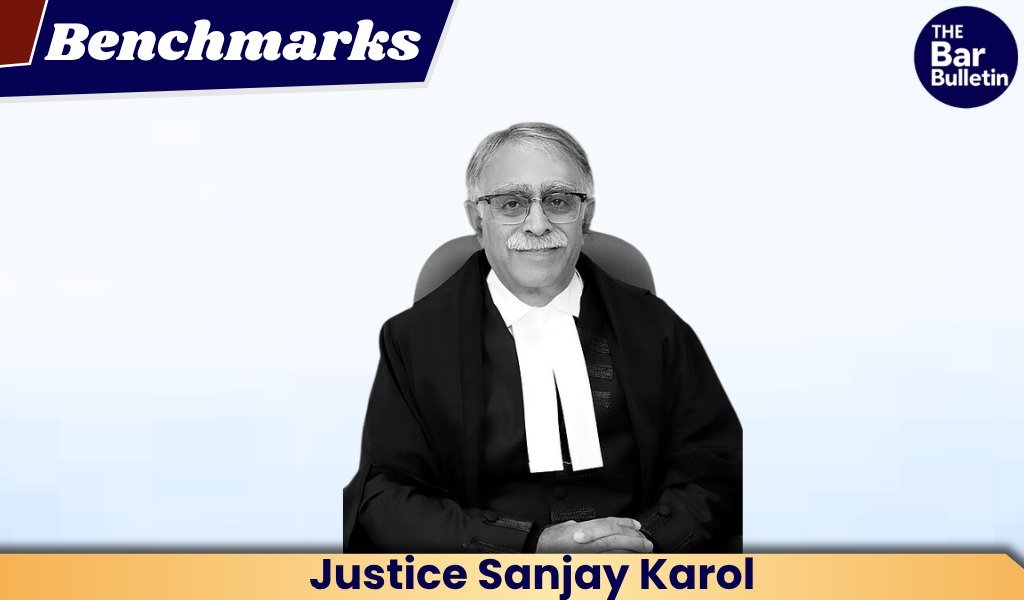

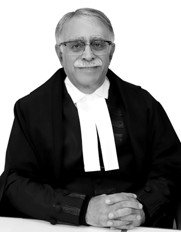
From the misty valleys of Himachal Pradesh to the Supreme Court of India, Justice Sanjay Karol’s journey across the Indian judiciary stands out for its blend of institutional efficiency, constitutional commitment, and pragmatic decision-making. Known equally for his active case management and his jurisprudence balancing individual rights with institutional policy, Justice Karol’s career spans over decades of legal practice and judicial leadership.
Early Life and Career
Justice Karol was born on 23-08-1961 to a family rooted in Garli, Kangra, Himachal Pradesh, India’s first designated heritage village. He spent his formative years in Shimla and completed his schooling at St. Edward’s School. Thereafter, he completed his bachelor’s degree with History Honours from Government College, Sanjauli, and enrolled in the Faculty of Law at Himachal Pradesh University where he earned his degree in LL.B.
After being enrolled as an advocate, Justice Sanjay Karol established a wide legal practice. He handled cases across domains, including constitutional, civil, criminal, corporate, and taxation law in various High Courts and the Supreme Court. Before Justice Karol became a Senior Advocate in 1999, he became the Advocate General of Himachal Pradesh in 1998, a position he held until 2003.
Judicial Journey
On 08-03-2007, Justice Karol was elevated as a permanent Judge of the Himachal Pradesh High Court, and served as the Acting Chief Justice from April 2017 till October 2018. He was also appointed as the patron-in-chief of Himachal Pradesh Legal Services Authority as well as the Chancellor of the Himachal Pradesh National Law University.
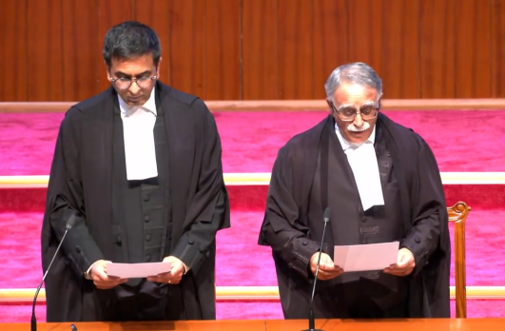
In November 2018, Justice Karol assumed office as the 4th Chief Justice of the Tripura High Court, where under his administration, pendency-reduction drives significantly brought down backlogged cases across the state. He was thereafter transferred to lead the Patna High Court as its 43rd Chief Justice. In Patna, he was also the patron-in-chief of the Bihar Legal Services Authority and the Chancellor of the Chanakya National Law University.
On 06-02-2023, Justice Sanjay Karol was elevated as Judge of the Supreme Court of India. His opinions highlight a commitment to statutory clarity, social welfare, and deference to expert policy domains.
Notable Judgments
● Sri Subhas Bhattacharjee v. State of Tripura [2019 SCC OnLine Tri 441]
Leading a Division Bench alongside Justice Arindam Lodh at the Tripura High Court, Justice Karol legally prohibited both the State Government and individual citizens from sacrificing animals or birds within the precincts of all temples across Tripura. He applied the essential religious practices test, prioritised constitutional morality, and expanded Article 21 of the Constitution while ruling that animals possess a fundamental right to live with dignity as well as being free from unnecessary pain.
● The National Highway Projects v. State of Bihar [2022 SCC OnLine Pat 1332]
In this landmark case, Justice Karol expansively interpreted Article 21 to rule that the fundamental right to life includes an enforceable right to basic civic amenities and sanitation for citizens travelling on public highways. Strict directives were issued to the State of Bihar, NHAI, and oil companies to establish functional toilets and basic sanitation facilities at regular intervals along highways.
● Bharatiya Kamgar Karmachari Mahasangh v. M/s Jet Airways Ltd. [2023 INSC 646]
Justice Sanjay Karol alongside Justice Abhay S. Oka held that any employee who completes 240 days of continuous service in an establishment qualifies for permanent status under the Bombay Model Standing Orders, and employers cannot bypass this statutory protection using temporary or fixed term agreements. It was also emphasized that beneficial social legislation such as the Industrial Employment (Standing Orders) Act, 1946 takes precedence over private employer-employee agreements.
● Arup Bhuyan v. State of Assam [2023 SCC OnLine SC 338]
As part of the three-judge Bench which overturned the 2011 precedent, Justice Karol ruled that mere membership in a banned or unlawful organisation is sufficient to constitute an offence under Section 10(a)(i) of the Unlawful Activities (Prevention) Act, 1967 (UAPA). The Supreme Court also established that before an Indian Court relies on a foreign judgment, it must comprehensively evaluate the distinct social, political, and historic conditions under which those foreign policies were formulated.
● Gene Campaign v. Union of India [2024 INSC 545]
Justice Sanjay Karol and Justice B.V. Nagarathna delivered a split verdict on the commercial release on GM Mustard (DMH-11). Justice Karol upheld the clearance given by the Genetic Engineering Appraisal Committee and the Ministry of Environment, Forest and Climate Change. It was emphasized that scientific and economic approvals tied to food security and national technological goals were policy matters that did not warrant active judicial interference.
● Rousanara Begum v. S.K. Salahuddin & Anr. [2025 INSC 1375]
As part of a two-judge Bench, Justice Karol ruled that a divorced Muslim woman can recover marriage gifts and gold given to her husband under the Muslim Women (Protection of Rights on Divorce) Act, 1986. It was emphasized that protective laws must favour social justice, interpreting Section 3(1)(d) of the Act broadly to safeguard the long-term dignity and financial security of divorced women.
● Sivaraman Nair & Ors. v. State of Kerala & Anr. [2026 INSC 412]
Justice Sanjay Karol alongside Justice Augustine George Masih emphasized that mere passive knowledge of a husband’s second marriage is not enough to hold relatives liable for bigamy under Section 494 or cruelty under Section 498A of the Indian Penal Code, 1860 (IPC). It was held that vague, general, or omnibus allegations are insufficient to pull extended family members into a trial.
● Sheetal Vasant Thakur v. Chirag Arora [2026 INSC 638]
Justice Karol co-authored this landmark verdict, setting aside a Bombay High Court order whereby a 10-year-old child had been subjected to a multi-expert psychological evaluation panel. 20 systemic child protection principles were laid down for family courts across India. The ruling heavily restricted adversarial, overlapping, or repeated psychiatric evaluations of minors involved in custody battles, particularly when sensitive allegations like child sexual abuse under the POCSO Act are pending.
● Shishu Pal & Ors. v. Surjeet & Ors. [2026 INSC 634]
Alongside Justice N. Kotiswar Singh, Justice Sanjay Karol set a landmark precedent by recognizing homemakers as nation builders and formally instituted “Loss of Domestic Care” as a separate, independent head of compensation in motor accident claims, assigning a base stand-in amount of Rs. 30,000/- per month which is slated for a cumulative 10% increase every three years.
● Lokesh B.H. & Ors. v. State of Karnataka & Anr. [2026 INSC 784]
As part of a Division Bench, Justice Karol held that denying Section 498A protection to women in stable, marriage-like live-in arrangements, with an intent to marry, would defeat the reformative and protective object of the penal provision.
● State of Uttar Pradesh & Anr. v. Brijlal Singh & Anr. [2026 INSC 901]
Heading a Division Bench on 20-08-2026, Justice Karol ruled that police authorities do not have power to register a FIR or conduct investigation for offences under the Pre-Conception and Pre-Natal Diagnostic Techniques (PCPNDT) Act. It was established that even though PCPNDT Act offences are cognizable and non-bailable, Section 28 of the Act strictly mandates that a court can only take cognizance of an offence upon a complaint filed by the “Appropriate Authority” designated under the Act. Consequently, general police intervention, FIR registration, and subsequent police charge sheets are legally impermissible for statutory violations restricted to the PCPNDT Act.
SCBA Bids Farewell to Justice Karol
As Justice Sanjay Karol demits office on 22-08-2026, after a distinguished tenure at the Supreme Court of India and across various High Courts, the farewell ceremony hosted by the Supreme Court Bar Association resonated with deep institutional reverence. Bidding him adieu, Chief Justice of India Surya Kant expressed that Justice Karol’s impartiality, integrity, independence, and humility were not just personal virtues as they found equal expression in the way that he conducted himself in public office. The CJI went on to remark that “Justice Karol’s courtroom has never been an intimidating place” and that instead of readily using the word ‘dismissed’, he has an art of saying “I have heard you, thank you”.
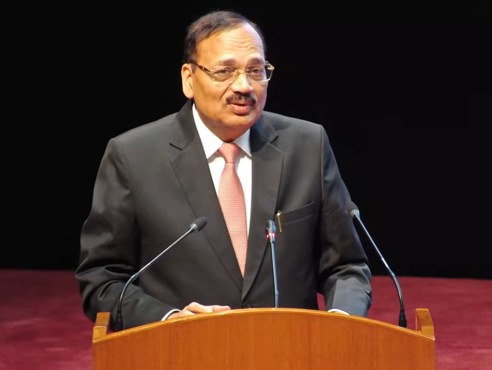
Thanking Justice Karol for reminding us that “firmness and kindness are not opposites”, the CJI perfectly encapsulated a legacy where a common-man’s judge blended legal rigor with profound human compassion, leaving an indelible imprint on India’s constitutional jurisprudence.
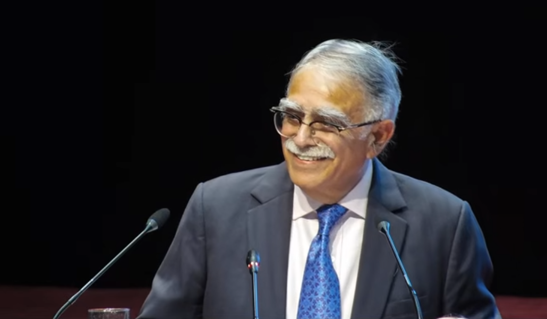
Justice Sanjay Karol commenced his address by saying that “there are always people in the shadows who make it possible” and expressed his gratitude to his entire staff as well as his law clerks. Talking about his experience in Patna, Justice Karol asserted that ‘the lathi and the whistle of a constable standing at the intersection of a road, carry the voice of the Constitution of India’. Elaborating on the relationship between lawyers and judges, Justice Karol stated that “Judges come and Judges go. It is the Bar only who is there. The stronger the Bar, the stronger the Bench.” Towards the end of his address, Justice Karol also advised young lawyers to utilise opportunities that come in their way to the fullest, while remaining courteous to the senior members and to the Bench.
Tracking Justice Karol’s Legacy
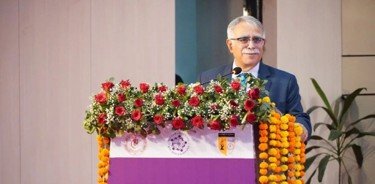
Justice Sanjay Karol leaves a lasting legacy in the Indian judiciary, defined by legal rigor, administrative reform, and deep empathy for the common man. Throughout his distinguished career, he remained deeply committed to reducing case backlogs and humanising the law. As a highly prolific author of over 270 judgments, his rulings consistently championed the vulnerable. Beyond his legal acumen, Justice Karol’s hands-on approach to civic grievances such as personally inspecting Shimla’s water crisis and his emphasis on balancing systemic data governance with constitutional ethics, solidify his reputation. Ultimately, his judicial journey stands as an exemplary standard of institutional integrity, showing future generations of legal minds that the law is, above all, a powerful instrument for social justice.