
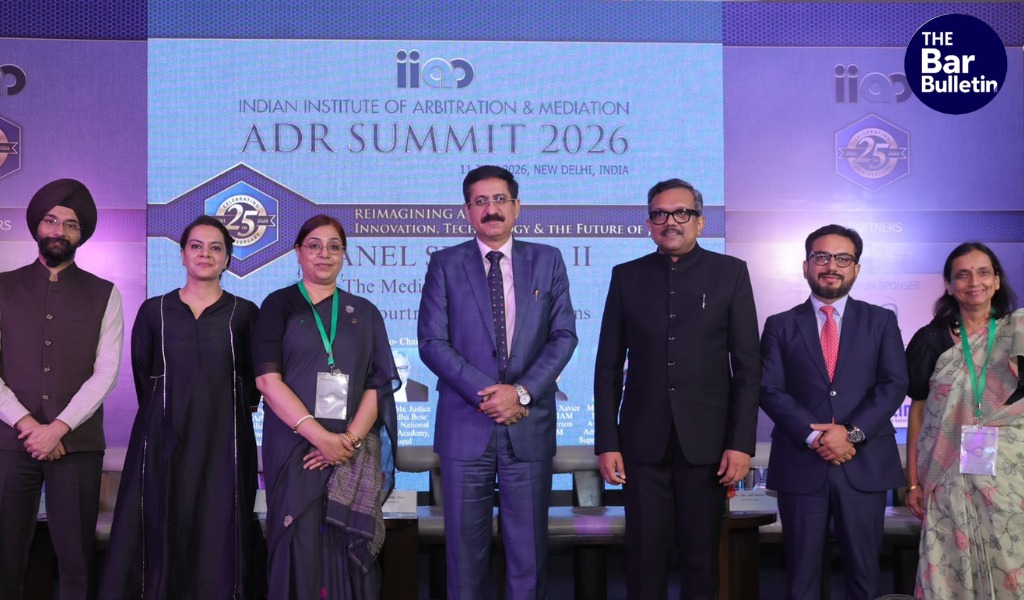
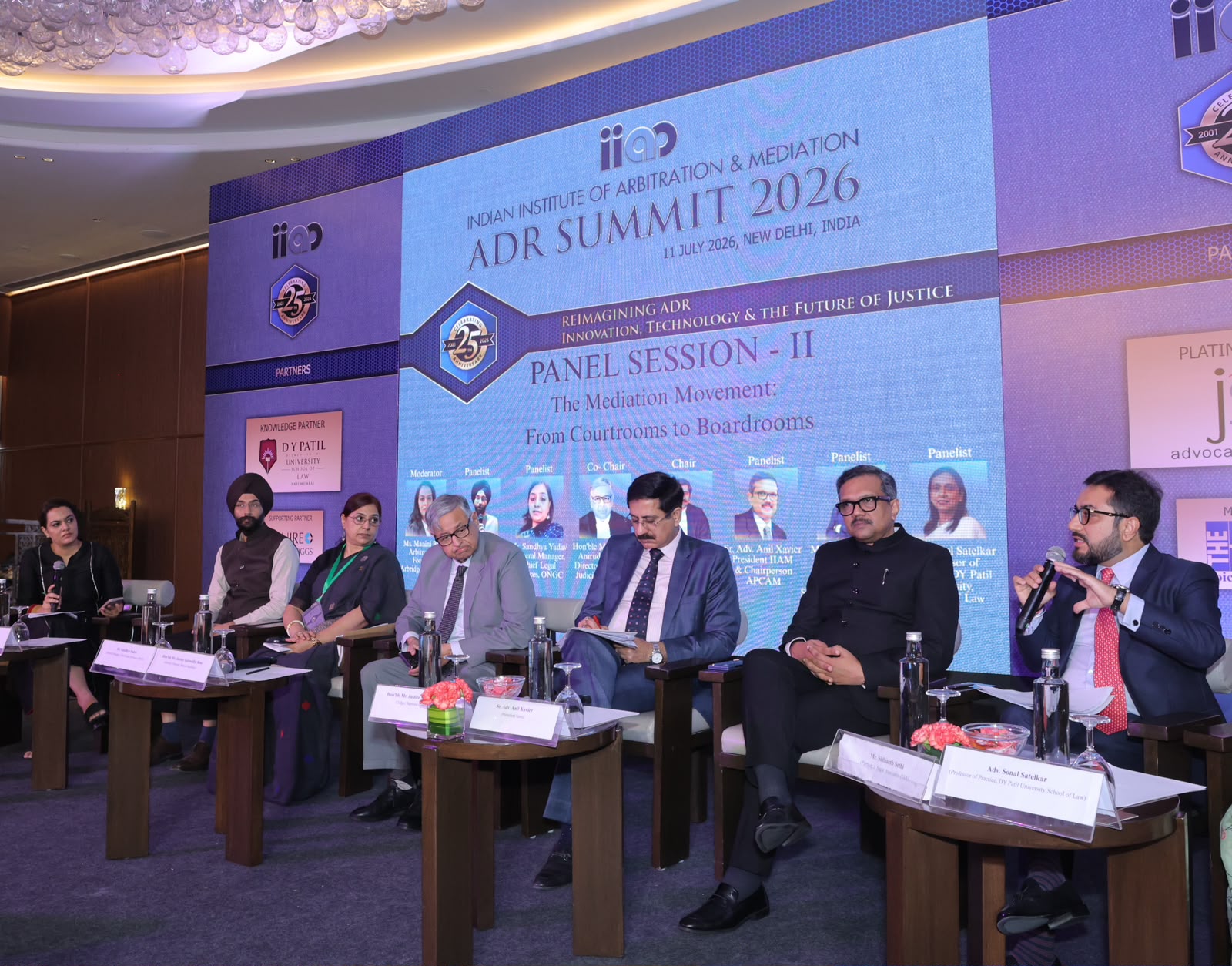
The second panel discussion at the IIAM ADR Summit 2026, titled “The Mediation Movement: From Courtrooms to Boardrooms,” witnessed an engaging discussion on the future of mediation in India, with judges, policymakers, corporate counsel and practitioners unanimously emphasising that mediation must evolve from being a court-annexed mechanism to becoming the preferred method of resolving commercial disputes.
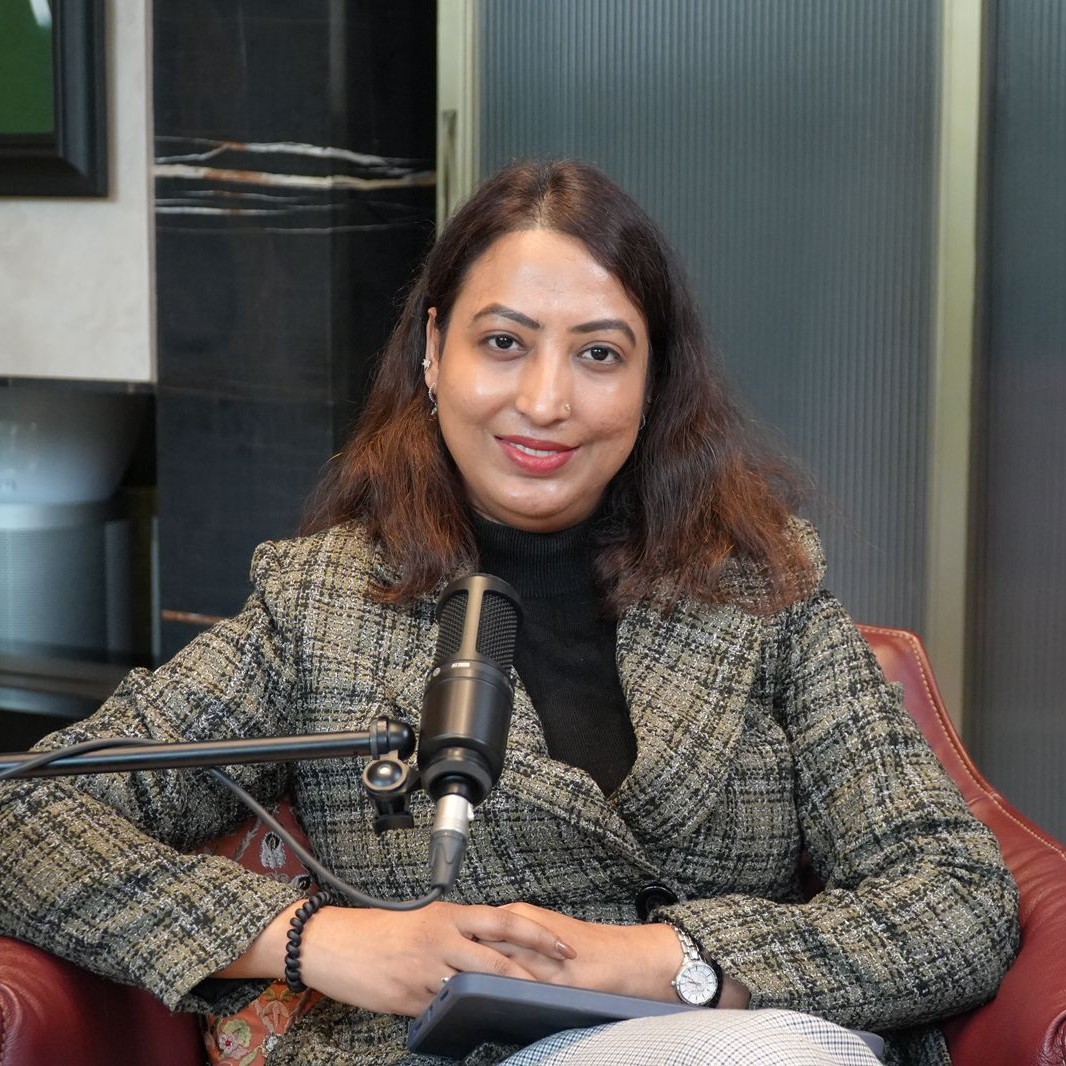
The session was chaired by Justice Sanjeev Sachdeva, Judge, Supreme Court of India, and co-chaired by Justice Aniruddha Bose, Director, National Judicial Academy and former Judge of the Supreme Court. The panel featured Senior Advocate Anil Xavier, Siddharth Sethi, Partner at J. Sagar Associates, Avnit Singh Arora, Director (Arbitration & Conciliation), Department of Legal Affairs, Government of India, Sandhya Yadav, General Manager & Chief Legal Services, ONGC, and Adv. Sonal Satelkar, Professor of Practice, DY Patil University School of Law. The discussion was moderated by Manini Brar, Founder, Arbridge Chambers.
Opening the discussion, Justice Sanjeev Sachdeva observed that India’s rapidly growing economy requires a dispute resolution framework that matches the pace of business.
“
“The mediation movement is not a temporary phase or a superlative alternative. It is a structural realignment of the Indian legal system.”
He noted that businesses no longer seek merely a favourable judgment years later but increasingly value timely commercial certainty.
“
“The entrepreneur does not need a victory medal on the wall. What he needs is liquidity today rather than the possibility of a victory tomorrow.”
Drawing a comparison with arbitration, Justice Sachdeva remarked that arbitration, initially conceived as a speedy alternative to litigation, has itself become increasingly time-consuming and expensive.
“
“Arbitration has slowly progressed into another long-drawn and expensive battle. What truly brings an end to litigation, with both parties walking away satisfied, is mediation.”
At the same time, he cautioned that India’s mediation ecosystem remains at an early stage.
“
“We are still far away from a mediation movement. At present, it is only a ripple in the ocean, it has not yet become a wave.”
Justice Sachdeva stressed that mediation would flourish only when businesses, lawyers and litigants begin to understand its commercial value and when mediation develops into a full-fledged professional practice.
Co-chair Justice Aniruddha Bose highlighted that mediation should not merely be viewed as an alternative to litigation but as an integral component of dispute resolution itself.
“
“The movement has to begin from law universities and from the Bar.”
Referring to a recent study conducted by the National Judicial Academy, Justice Bose observed that a significant proportion of pending disputes possess the potential to be resolved through mediation if stakeholders adopt the appropriate mindset. He illustrated how mediation focuses on identifying the underlying interests of parties rather than merely adjudicating legal rights.
Speaking from the perspective of mediation policy, Senior Advocate Anil Xavier, President, IIAM and Chairperson, APCAM, explained that the Mediation Act, 2023 deliberately adopts a model of mandatory engagement rather than mandatory settlement.
“
“The idea was never to make settlement compulsory; the idea was to make parties engage with mediation and understand its benefits.”
He identified one of the most significant reforms introduced by the Mediation Act as the statutory recognition and enforceability of mediation agreements, enabling businesses to include binding agreements to mediate within their commercial contracts.
Sharing the perspective of commercial parties, Siddharth Sethi observed that although arbitration continues to remain the default dispute resolution clause in commercial contracts, businesses are increasingly experiencing arbitration fatigue.
“
“Businesses are increasingly viewing arbitration as expensive and time-consuming.”
He noted that mediation is steadily finding space within modern joint venture and shareholders’ agreements through tiered dispute resolution clauses, particularly where preserving long-term commercial relationships is as important as resolving disputes.
Presenting the government’s perspective, Avnit Singh Arora explained that the Mediation Act, 2023 seeks to institutionalise mediation by creating mediation service providers, mediation institutes and a dedicated regulatory framework. He emphasised that the legislation aims to build confidence in mediation through structured institutions, professional training and protection for participants, while encouraging greater participation by public sector organisations.
Offering a practical corporate perspective, Sandhya Yadav highlighted ONGC’s long-standing experience with conciliatory dispute resolution, explaining that the organisation has institutionalised mediation-like mechanisms over the past two decades.
She revealed that ONGC has achieved an overall settlement success rate of approximately 82%, which has increased to over 93% in the last five years, significantly reducing arbitration proceedings and preserving commercial relationships with contractors.
On legal education, Adv. Sonal Satelkar stressed that while law schools have introduced ADR as part of their curriculum, significantly greater emphasis is required on practical mediation training.
She observed that mediation demands competencies such as empathy, active listening, patience and negotiation, which cannot be developed solely through classroom teaching. She called for greater participation in mediation competitions, simulation exercises and dedicated mediation clubs within law schools to foster a mediation-oriented mindset among future lawyers.
Moderator Manini Brar steered the conversation towards the practical challenges of transforming mediation from a legislative reform into an accepted business practice. Panellists broadly agreed that while India has established a strong statutory foundation through the Mediation Act, 2023, the next phase requires cultural change among lawyers, businesses, educational institutions and government agencies alike.
Concluding the session, Justice Sachdeva reiterated that mediation’s success ultimately depends on changing professional attitudes.
“
“Mediation is not about giving parties a solution. It is about enabling them to believe they have found the solution themselves.”