
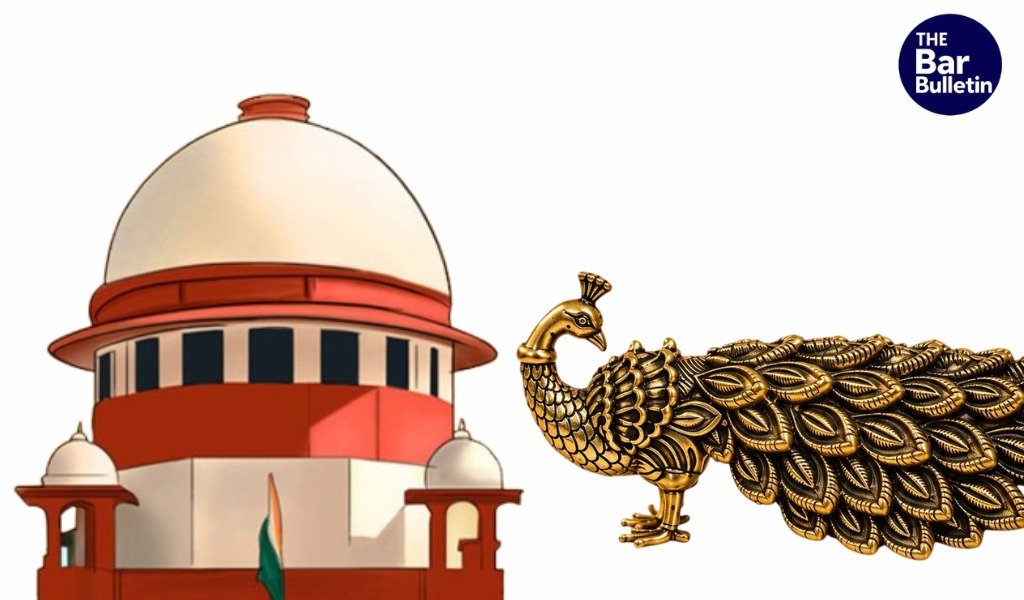

The Supreme Court continued hearing a plea filed by M. Muthiah Sthapathy, a sculptor facing criminal proceedings in the alleged replacement of an antique peacock idol at Chennai’s Kapaleeshwarar Temple. The matter was heard by Justice Aravind Kumar and Justice Vipul M Pancholi.
During the hearing, he argued that the complaint had been lodged after an unexplained delay of nearly 14 years and the prosecution had failed to establish that the idol was entrusted to the accused.
“
The fact that a complaint is filed after 14 years is in itself staggering, it’s unheard of,” it was submitted.
The prosecution’s case concerns allegations that an antique idol depicting a peacock with a flower in its beak was removed and replaced with another idol depicting a snake in its beak. The alleged replacement is said to have taken place around 2004, in connection with renovation works at the temple.
The case arose from a complaint filed by temple devotee and activist Rangarajan Narasimhan with the Idol Wing CID on July 23, 2018. The complaint alleged that the original idol had been removed and replaced. An FIR was registered under Sections 403, 406, 409 and 202 read with Section 120-B of the Indian Penal Code. A chargesheet was subsequently filed against six persons, including M Sthapathy and industrialist Venu Srinivasan, who had been associated with the temple’s renovation.
While the Madras High Court, in its February 16, 2024 order, quashed the proceedings against Venu Srinivasan, it refused to grant similar relief to M. Muthiah Sthapathy, who subsequently approached the Supreme Court challenging the continuation of the criminal proceedings against him.
During the Supreme Court hearing, petitioner relied on the delay in filing the complaint and argued that the prosecution could not establish the necessary element of entrustment. Referring to a document dated August 13, counsel submitted that the peacock idol had not been entrusted to the renovation committee or trust.
Referring to a Prashnam conducted by Padmanabha Sharma between October 7 and 9, 2002, counsel pointed to a representation or requisition made by the temple’s archakas on March 31, 2003, concerning the replacement of a damaged peacock idol before the consecration ceremony. Counsel questioned why a further replacement was allegedly said to have taken place in August 2004 if the documents already recorded action concerning the damaged idol in 2003.
Counsel argued that the July 25, 2003 letter issued by the Special Commissioner permitted works recommended by Sthapathy but did not include the peacock idol. He questioned how the alleged replacement could be attributed to Sthapathy when the permitted works did not cover the idol.
The complainant, however, opposed the plea to quash the proceedings, arguing that the limitation period should be reckoned from the date on which the alleged offence came to light. Relying on the Supreme Court’s decision in Sarah Mathew, Narasimhan submitted that he discovered the alleged replacement of the idol in August 2017 and lodged the complaint in 2018. He urged the Court to allow the trial to proceed, maintaining that the accused knew what had happened to the original idol.
Urging the Court not to terminate the proceedings, he said he had pursued the matter for 15 years and that the courts remained the final hope for devotees seeking accountability over the alleged loss of a temple idol.
“
“For devotees like me, the courts are the last and final hope..After 15 years, my Lords, I am very tired. I am here because I still believe that the hope is not misplaced, Lordships,”
he added.
Also Read: Supreme Court Dismisses Challenge To Casual Vacancy Election In Punjab & Haryana Bar Council
The further arguments will be held next Thursday.