
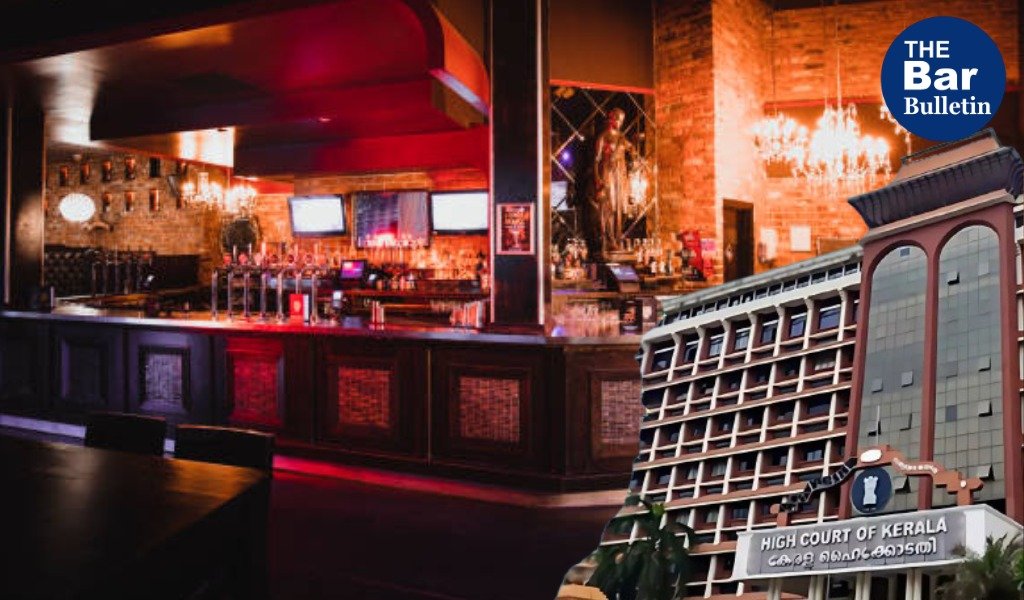

While upholding police powers to act against noise pollution and actual illegal activities, the Kerala High Court (Ernakulam Bench) has held that mere possibilities of law-and-order issues, drug use, or crime cannot justify curtailing extended operating hours lawfully granted under the Foreign Liquor Rules. The Court held that the licence extension granted under the amended Foreign Liquor Rules cannot be nullified through administrative police directions.
The High Court clarified that if high-decibel music violates the Noise Pollution Rules or prescribed ambient noise standards, authorities can take preventive action under the Kerala Police Act and Noise Pollution Rules after following due procedure. The possibility of narcotics offences, assaults, or other criminal activity during DJ parties cannot by itself justify curtailing operating hours permitted under statutory rules.
The Court observed that if illegal activities are taking place under the guise of DJ programmes, the duty of the police is to investigate and take stringent action against wrongdoers in accordance with law. Such orders cannot operate as permanent restrictions and ordinarily remain effective only for the statutory period unless extended in accordance with law.
Briefly, a five-star hotel owner in Ernakulam holding an FL-3 bar licence, obtained permission under the amended Foreign Liquor Rules, 1953 to keep his bar hotel open for an additional three hours beyond midnight, up to 3:00 a.m., after paying the prescribed additional annual fee of Rs. 5 lakhs. The permission was granted specifically to promote MICE tourism, destination weddings, international conferences and similar events.
Despite the extension granted by the Excise Department, the local police issued notices directing the hotel not to conduct DJ parties, requiring closure of entertainment activities by 11:00 p.m. and normal bar operations by midnight. The police justified the restrictions on grounds of public order concerns, alleged drug abuse, noise pollution, crowd management issues and reported criminal incidents connected with late-night DJ events. An FIR was also registered alleging violation of the police directions.
The hotel owner challenged the police notices before the High Court, contending that once the State itself had granted extended operating hours under the Foreign Liquor Rules, the police could not effectively nullify that permission through executive directions.
A Single Judge Bench of Justice Murali Purushothaman observed that the petitioner had a valid statutory permission to operate the hotel till 3:00 a.m. and that this entitlement was not disputed even by the police authorities. Therefore, the central issue was whether the police could restrict DJ programmes and entertainment activities during the extended hours allowed under the Rules.
The Court noted that DJ programmes are not prohibited activities. Participation in such events is protected by the constitutional right to peaceful assembly under Article 19(1)(b), while the hotel operator has a right to carry on business under Article 19(1)(g), subject to reasonable restrictions imposed by law.
At the same time, the Court emphasised that residents living nearby also enjoy a fundamental right under Article 21 to live free from noise pollution and environmental disturbances. Therefore, authorities are justified in regulating noise pollution where statutory limits are breached.
Also read Settlement with the Bank and the Prosecution under the Prevention of Corruption Act
Examining the Kerala Police Act and the Noise Pollution (Regulation and Control) Rules, 2000, the Court held that the police possess authority to regulate or prohibit noise pollution and can take preventive action where high-decibel music violates ambient noise standards or night-time restrictions. However, such powers must be exercised in accordance with the statutory procedure and cannot be used as a blanket prohibition on DJ events.
On the issue of public order, crime and alleged drug abuse, the Court found that the police had relied largely on the possibility or apprehension of unlawful activities occurring during DJ parties. The Court observed that if criminal activities are taking place, the police must investigate and take action against offenders. Mere apprehension that crimes may occur cannot be used to curtail otherwise lawful business activities permitted under statutory rules.
The Court also observed that if crowd gatherings create traffic congestion, it is the duty of the police to regulate traffic and maintain law and order rather than force hotels to shut down before the legally permitted closing time. Further, powers under Section 79 of the Kerala Police Act are temporary in nature and cannot be exercised through indefinite or permanent restrictions.
