
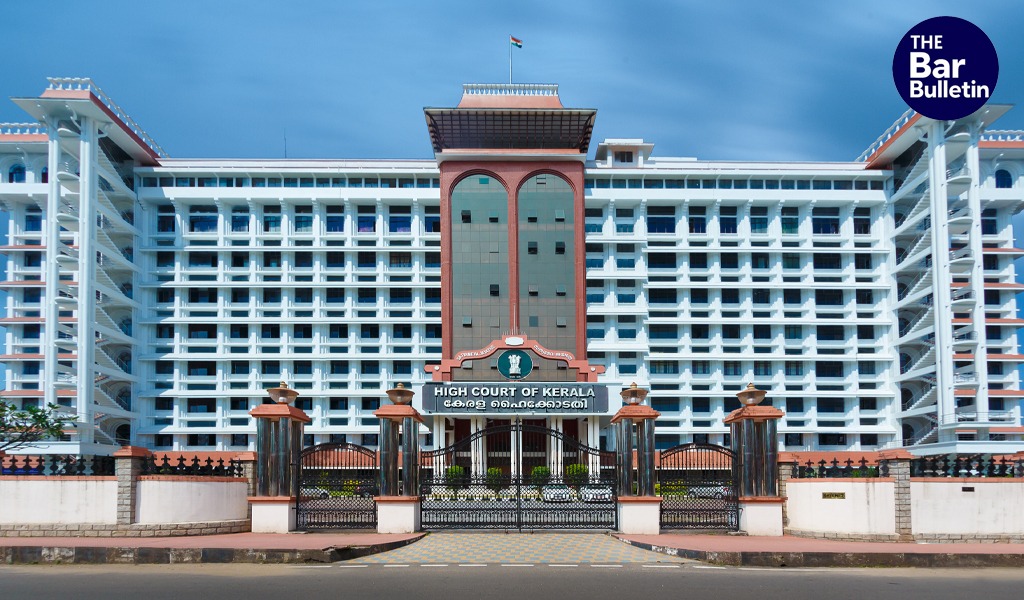

The Kerala High Court (Ernakulam Bench) has held that an accident insurance claim cannot be rejected merely because the deceased had an underlying medical condition, where the medical evidence shows that injuries sustained in the accident “could have accelerated or precipitated death,” thereby establishing the necessary proximate causal relationship between the injury and the accident. The Court also held that a policy exclusion applicable when the insured is “under the influence of intoxicating liquor or drugs” cannot be invoked merely on proof of alcohol consumption; there must be evidence to show that the insured was actually under the influence of alcohol.
Finding no error in the Permanent Lok Adalat’s conclusions on either issue, the High Court held that the award did not warrant interference. The petition filed by the insurer was therefore dismissed, and the Lok Adalat award granting Rs. 15 lakhs to the legal heirs were left undisturbed.
A Single Judge Bench of Justice Harisankar V. Menon observed that the post-mortem report could not be read partially. While it recorded “occlusive coronary artery disease” as the cause of death, it also clearly stated that the “injuries could have accelerated or precipitated death.” The Bench emphasized that this finding had to be read together with the seven injuries noted in the post-mortem report and the further observation that the brain was congested. On that basis, the Bench found force in the legal heirs’ case that the death was mainly on account of the accident, and it held that the mere absence of a reference in the FIR attributing death to an accident could not by itself justify denial of the insurance claim.
On the alcohol exclusion, the Bench drew a clear distinction between mere consumption of alcohol and being “under the influence of intoxicating liquor or drugs,” which was the expression used in the policy exclusion clause. The toxicology report only showed that alcohol tested positive in the sample collected on 1 December 2020. The Bench held that this alone was insufficient. The Bench reiterated that mere consumption of alcohol is not enough to deny a claim and it must be shown on record that the person was under the influence of alcohol. It also reiterated that such claims must be assessed in light of the circumstances of the accident, evidence regarding consumption before or during travel, and the impact of such consumption on the driver.
Briefly, the United India Insurance Company challenged an award dated 14 September 2022 passed by the Permanent Lok Adalat, Thiruvananthapuram, by which the legal heirs of deceased Babu were held entitled to compensation of Rs. 15 lakhs under a motorcycle/scooter package policy. Babu was found unconscious on the roadside on 30 November 2020, was taken to hospital in an ambulance, and died on 1 December 2020. His legal heirs claimed that he had met with a motorcycle accident and later died because of that accident. The insurer resisted the claim on two grounds: first, that the accident was not the cause of death and that the cause of death was “occlusive coronary artery disease”; and second, that the deceased had consumed alcohol and therefore the policy exclusion applied.
The Permanent Lok Adalat rejected both defences. On causation, it held that the injuries sustained in the accident could have accelerated the death. On intoxication, it held against the insurer. The insurer then approached the Kerala High Court contending that the FIR, treatment summary and wound certificate did not refer to an accident, and that the toxicology report showed alcohol consumption.
