
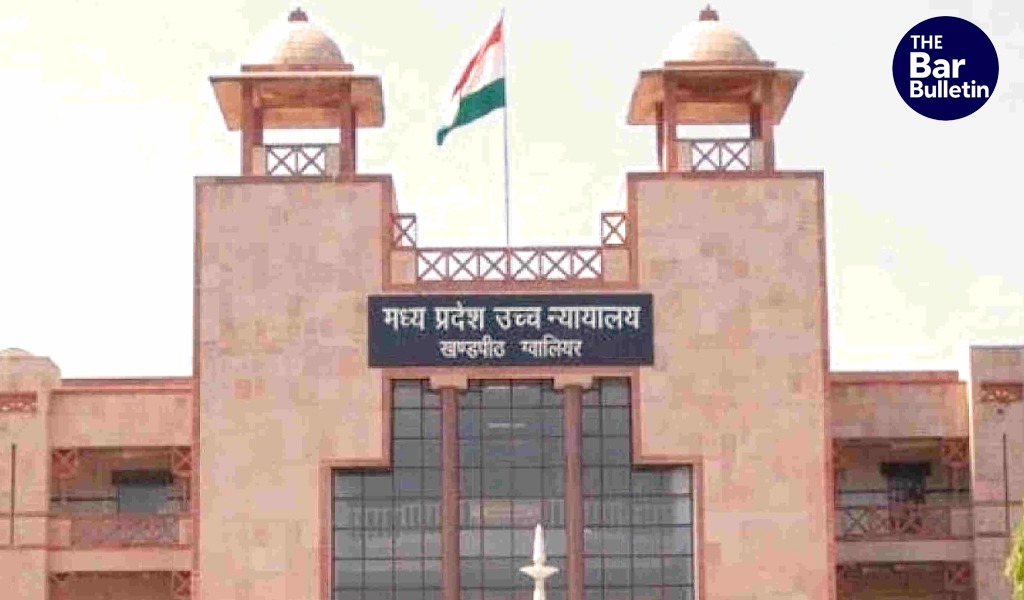

In a petition filed before the Madhya Pradesh High Court under Section 528 of the Bharatiya Nagarik Suraksha Sanhita, 2023 (BNSS) for quashing proceedings for offences under Section 13(1)(e) read with Section 13(2) of the Prevention of Corruption Act, 1988 and Section 109B of the Indian Penal Code, 1860, pending before the Special Judge (Prevention of Corruption Act), Ujjain, a Division Bench of Justice Subodh Abhyankar and Justice Alok Awasthi refused to quash the proceedings but directed the Special Judge to conclude the trial within six months.
Applicant 1 was posted as Chief Executive Officer, District Antyavasayi Sahkari Vikas Samiti, while applicants 2 and 3 were his wife and son respectively. A raid was conducted by the Lokayukta, Ujjain on 23-01-2014 regarding allegations against applicant 1, following which sanction for prosecution was repeatedly sought from the Managing Director, Rajya Sahkari Anusuchit Jati Vitta Evam Vikas Nigam, but the Enquiry Report was never furnished to the sanctioning authority. Applicant 1 retired from service on 29-02-2016, and the charge sheet was eventually filed on 18-01-2017, with cognizance taken thereafter and charges framed on 08-02-2017.
The applicants argued that no valid sanction under Section 19(1)(c) of the Prevention of Corruption Act (PC Act) had been obtained despite applicant 1 being in service during the relevant period, that the delay in the sanction process was attributable to the investigating agency, and that continuation of the trial violated the applicants’ right to speedy trial under Article 21, given that only nine of ninety-eight witnesses had been examined by 07-02-2020. The respondent opposed stating that the applicants’ assets were found disproportionate to their income by 253.92%, that investigation was completed within seven months, that no sanction was required since the final report was filed after applicant 1’s retirement, and that the delay in trial was partly attributable to the COVID-19 pandemic.
The Court stated that the question was whether prior sanction for prosecution was mandatory before proceeding against the applicants and noted that the department concerned had not yet conveyed its opinion regarding the refusal to grant prosecution sanction to the Lokayukta. It was said that the contention regarding sanction could not be a sufficient ground for quashing the entire proceedings and that the questions raised could not be permitted to result in termination of a serious corruption case at the threshold unless a clear and patent legal bar to the prosecution is demonstrated.
Referring to precedents, the Court said that the protection of a prosecution sanction is strictly conditional upon the exact office held by the public servant at the time when cognizance is taken by court. It was found that prior sanction is necessary only if the accused continues to hold the exact same office that he is alleged to have abused, and that if the accused has retired, changed officer or moved to a completely different legislative term by the time the court takes cognizance, the requirement of a sanction under Section 19 of the PC Act ends.
Noting that the charge sheet against the accused was filed after his retirement from public service, the Court held that the requirement of sanction for prosecution did not exist. It was also stated that since the investigation was completed with a comparatively short period, the applicants could not equate the time consumed in investigation with the delay in the conclusion of the trial court proceedings.
On the question of delay, the Court stated that under Article 21 no inflexible period of limitation is prescribed for conclusion of every criminal trial, merely based on the constitutional guarantee of speedy trial. It was stated that before concluding any criminal trial, the Court should have to examine the totality of circumstances including the gravity of the offence, examination of documentary evidence, reasons for delay and the extent to which the delay is attributable to the prosecution or the accused.
The Court found that the allegations under the PC Act, involving possession of disproportionate assets of more than actual income, required examination of ninety-eight witnesses, and that the trial could not be quashed merely because it had taken considerable time, though it was acknowledged that the case had remained pending since 2017. It was stated that at this stage, apart from quashing of proceedings, steps to ensure that trial is concluded expeditiously could be taken and opined that the prosecution is required to take necessary steps to produce and examine all important witnesses without seeking unnecessary adjournments.
Regarding the impleadment of applicants 2 and 3, the Court noted that this issue had already been decided against them by a Division Bench in another case, where it was observed that the wife and son had rightly been made accused, with any grounds to be raised before the trial court at the conclusion of trial. Hence, the Court declined to quash the proceedings but disposed of the petition with directions that the Special Judge make every endeavour to conclude the trial within six months, and that the prosecution take all necessary steps to secure and examine the remaining witnesses without seeking unnecessary adjournments.
