

The Patna High Court has ruled that acquiring domicile through marriage does not automatically entitle a candidate to Scheduled Caste reservation benefits in another State, and recruitment conditions and State reservation policy remain binding. The Court held that while a woman may acquire her husband’s domicile after marriage for civil purposes, that does not automatically confer entitlement to reservation benefits under Article 16(4) of the Constitution.
The Bench reiterated that Scheduled Caste reservation benefits are linked to the State where the social disadvantage was historically suffered and cannot be carried to another State merely because of marriage or migration. Since the advertisement and interview instructions specifically required caste and residence certificates to be based on the father’s residence for claiming Bihar reservation benefits, the Commission acted in accordance with those conditions.
Having participated in the recruitment process with full knowledge of the eligibility conditions, the candidate could not challenge those conditions after the selection process had concluded, added the Court.
Also read Compounding of Companies Act Violation Wipes Out Auditor’s Prosecution: Patna High Court
Briefly, the appeal arose from the recruitment process for the post of Assistant Prosecution Officer conducted by the Bihar Public Service Commission (BPSC) under Advertisement No. 01/2020. The appellant, Vidyawati Kiran, had applied as a Scheduled Caste candidate, successfully cleared the preliminary examination, mains examination, and interview. However, when the final result was published, she was declared unsuccessful because her caste and domicile certificates were not based on her father’s permanent residence. Her father was a resident of Uttar Pradesh, while she had been living in Bihar since her marriage in 1996.
After her representation and review application were rejected by the Commission, she approached the High Court. The appellant argued that she belongs to the Dushadh caste, which is recognised as a Scheduled Caste in both Uttar Pradesh and Bihar. She contended that after her marriage she acquired the domicile of her husband and had been permanently residing in Bihar for more than 28 years. Relying on Sections 15 and 16 of the Indian Succession Act, 1925, she submitted that she should be treated as a Bihar domiciled candidate and be entitled to reservation benefits in the State.
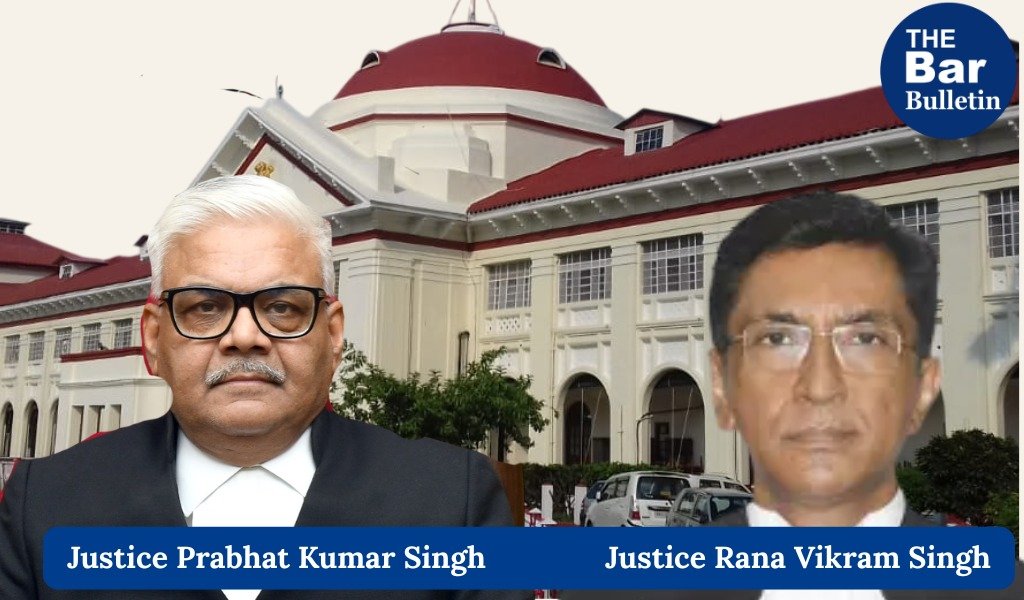
The Division Bench comprising Justice Prabhat Kumar Singh and Justice Rana Vikram Singh observed that the appellant’s reliance on the provisions relating to domicile under the Indian Succession Act was misplaced. The Court observed that civil domicile acquired through marriage is different from eligibility for reservation under Article 16(4) of the Constitution. Merely because a woman acquires the domicile of her husband after marriage does not automatically entitle her to claim Scheduled Caste reservation benefits in another State.
The Court emphasised that reservation benefits are linked to the historical social disadvantages suffered by members of Scheduled Castes and Scheduled Tribes in a particular State. A person who belongs to a Scheduled Caste in one State cannot, after migration or marriage, claim reservation benefits in another State solely on that basis.
The Court further noted that the BPSC advertisement clearly provided that reservation benefits were available only to permanent/original residents of Bihar. The advertisement as well as the interview instructions specifically required relevant certificates to be based on the candidate’s father’s residence and not the husband’s residence. Therefore, the Commission had acted strictly in accordance with the recruitment conditions and State policy.
The Bench also reiterated the settled principle that the ‘rules of the game’ cannot be changed after the selection process has begun. Since the eligibility conditions and reservation requirements were known to candidates before participation in the recruitment process, the appellant could not challenge those conditions after taking part in the examination.
