
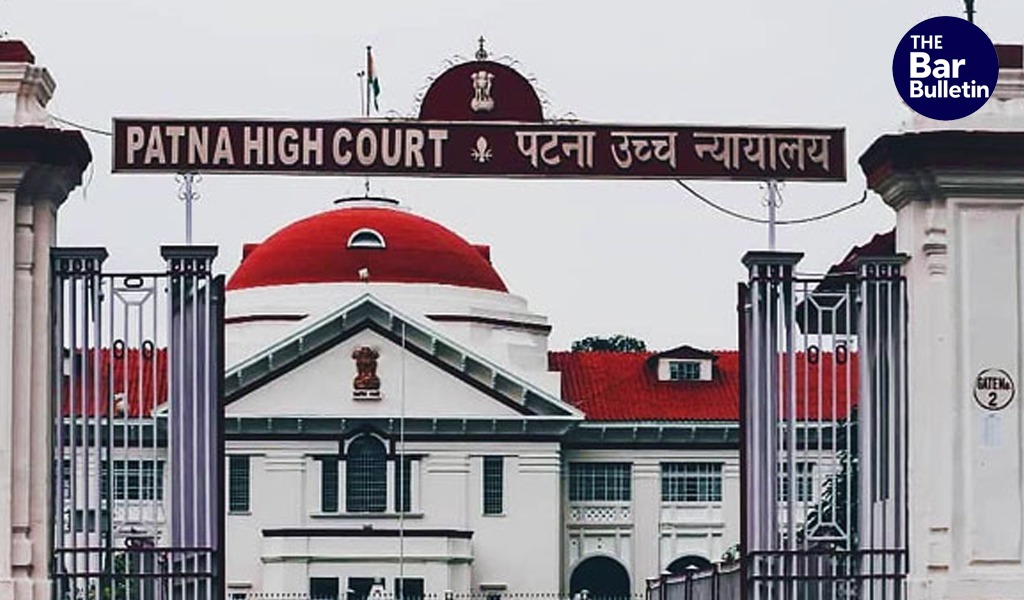

The Patna High Court has declined to revive a claim brought after a nine-year delay, holding that an internal departmental letter seeking action on the claim did not establish acceptance of liability. Aim of People sought Rs. 43.28 lakhs, interest, and release of a Rs. 5.21 lakhs performance bank guarantee for community mobilisation and livelihood work under Bihar’s SPUR programme. However, the Court held that the society, having failed to assert its alleged rights within a reasonable period, could not revive the claim through extraordinary jurisdiction under Article 226.
The Court said that the letter dated 16 April 2019 was part of an internal examination process, not a final decision accepting liability, hence, it could not revive the claim. The Court expressly clarified that it had not examined the merits of the society’s claim, and refused to permit revival of the society’s stale contractual payment claim, while dismissing the petition on delay and laches alone, expressly leaving its merits unexamined.
Briefly, Aim of People, a registered society, approached the Patna High Court seeking payment of Rs. 43.28 lakhs, interest, and release of a performance bank guarantee of Rs. 5.21 lakhs for community mobilisation and livelihood work undertaken in Bhagalpur and Katihar under Bihar’s Support Programme for Urban Reforms. The society claimed that it had completed the work under the contract executed on 6 February 2012 but had received only part of the contractual payment.
The State maintained that further payment depended on verification of completion reports and supporting documents. Katihar Municipal Corporation opposed the petition on the ground of prolonged delay in approaching the Court. The State said a committee had assessed a payable amount subject to deductions and verification, while the Corporation pointed out that the society approached the Court only in 2024 despite claiming completion within the extended period ending in 2015.
A Single Judge Bench of Justice Girijish Kumar observed that contractual money claims are not absolutely barred from consideration under Article 226, but entertaining them remains a matter of judicial discretion. In this case, the claimed dues were disputed, the contract contained an arbitration mechanism under Clause 9.2, and the society had approached the Court after what the Court described as a nine-year delay without using that remedy.
The Court rejected the argument that the departmental letter dated 16 April 2019 amounted to acceptance of liability. It held that the letter merely sought further action on the claim and formed part of an internal examination process, and no final order accepting liability had been communicated to the society. The letter therefore could not revive the claim.
The Court held that, although the Limitation Act does not strictly apply to proceedings under Article 226, unreasonable delay and laches can independently justify refusal of writ relief. A claimant who fails to assert alleged rights within a reasonable period cannot use extraordinary writ jurisdiction to revive a stale claim. Here, the disputed contractual money claim fell within private law, involved no public-law element, and was brought after prolonged delay.
