
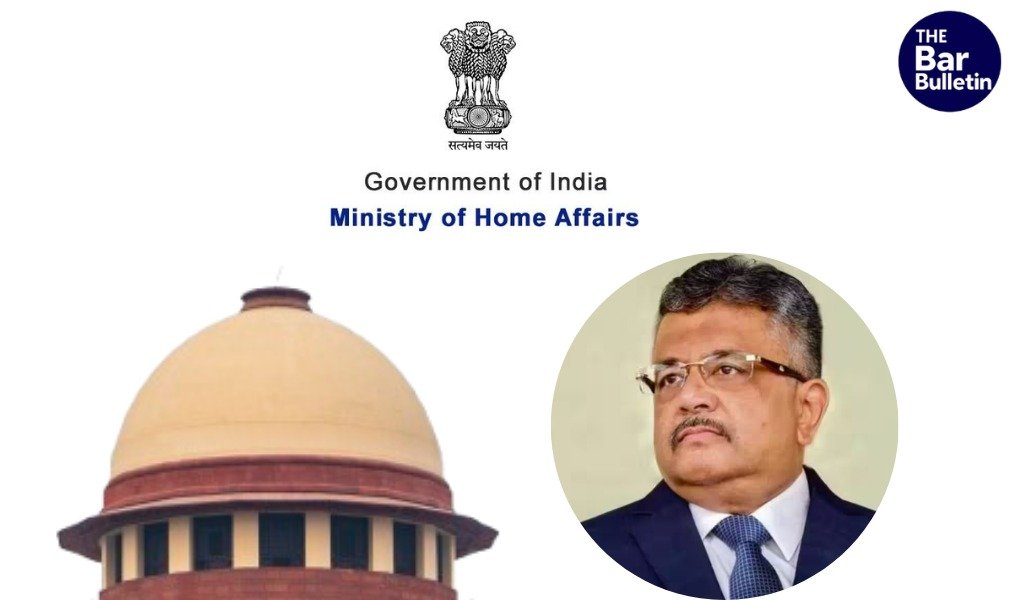

The Solicitor General of India Tushar, Tushar Mehta, on Thursday clarified before the Supreme Court that the unconditional apologies tendered by the Union Home Secretary and the Delhi Police Commissioner in response to contempt notices should not be construed as an admission of wilful disobedience of the Court’s orders.
A Bench of Chief Justice of India Surya Kant and Justice Joymalya Bagchi was hearing contempt proceedings arising from alleged non-compliance with the Court’s directions concerning restrictions imposed during protests in Delhi on October 10.
The Solicitor General submitted that the opening paragraph of the affidavits followed the established practice in contempt proceedings and was not an admission that the authorities had deliberately violated the Court’s directions.
“
“I want to say something at the outset. Not on merits. Your Lordships have issued notice in contempt. We have filed responses in contempt. Your Lordships’ law is well-settled that whenever we file a response to contempt notices, the first sentence we write is that we hereby tender an unconditional apology. Thereafter, we explain how the contempt is not made out. It is with reference to compliance with that law that in every affidavit this is the first paragraph,” he submitted.
Chief Justice Surya Kant observed that the Court had not examined the media reports being referred to by the Solicitor General and clarified that it was not taking cognisance of those reports.
Justice Joymalya Bagchi, in turn, observed that the Court was not taking cognisance of either the reports or the unconditional apologies in isolation, adding that the Solicitor General’s subsequent submissions had qualified the context in which the apology was offered.
The Ministry of Home Affairs has also clarified that the unconditional apology in the affidavits follows established practice in contempt proceedings, not an admission of contempt. It further stated that the affidavits establish the Government and police acted in compliance with the law and that no contempt is made out.
This controversy arose after affidavits filed by Union Home Secretary Govind Mohan and Delhi Police Commissioner Anurag Kumar in response to contempt notices issued over the restrictions imposed ahead of the October 10 protest called by the Cockroach Janta Party against Chief Election Commissioner Gyanesh Kumar.
In his affidavit, the Home Secretary tendered an unconditional and unqualified apology while maintaining that the temporary suspension of cellular internet services was necessary to maintain public order. He stated that the suspension operated from 10 PM on October 9 to 10 PM on October 10 within a four-kilometre radius of Raisina Hill and did not extend to Wi-Fi, broadband or other telecommunication services.
The Home Secretary had stated that the measure was proportionate to the circumstances and sought modification of the Supreme Court’s October 11 order to permit internet suspension in situations of necessity, subject to applicable legal safeguards.
The Delhi Police Commissioner had also tendered an unconditional apology while denying wilful or deliberate non-compliance with the Court’s directions. He defended the preventive measures taken during the protests as necessary to maintain public order.