
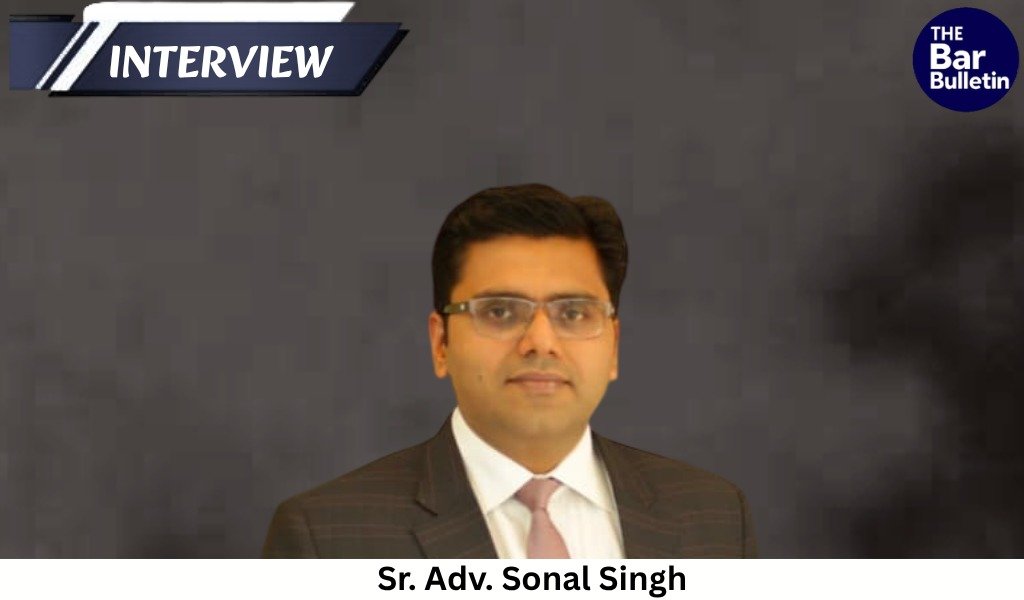
1. Congratulations on your designation as Senior Advocate. Looking back at your journey, what do you think were the defining moments that shaped your practice and prepared you for this recognition?
Thank you very much!
Looking back, I think the defining moments have been a combination of early opportunities, challenging disputes and the decision to take responsibility early in my career. Choosing to start independently at a relatively early stage gave me the opportunity to learn by handling matters closely and developing my own approach to advocacy. I was fortunate to get exposure early on to complex commercial and arbitration matters, including international disputes involving foreign parties and cross-border issues.
Opportunity to pursue my Master in Laws from Kings College London, qualifying as a Solicitor in England and exposure to international practice also helped broaden that perspective. Working on high-stakes matters, and with seniors, colleagues and clients who were willing to give me responsibility as well as constructive feedback, shaped my approach considerably. If there is one lesson I have carried through, it is that good advocacy ultimately comes down to preparation, clarity and knowing the record.
“
Therefore, I see the designation not as the culmination of my journey, but as the beginning of a greater responsibility, to uphold the standards expected of a Senior Advocate, contribute meaningfully to the profession, and continue learning and evolving as an advocate.
2. You have practised extensively in arbitration and commercial disputes. In your view, what are the three biggest changes that have transformed arbitration in India over the last decade?
There have been several changes and transformation in field of Arbitration in India, and it is encouraging to see how the ecosystem has evolved over the years. To my understanding, it reflects a clear and positive intent to strengthen arbitration and make the process more efficient, credible and internationally competitive.
I would say that the first significant change is the statutory timeline discipline introduced by the Legislature vide the 2015 Amendment to the Arbitration & Conciliation Act, 1996, particularly the introduction of Section 29A, was a significant shift in the way arbitration was approached in India. It brought a sense of time discipline into the process to a large extent and reinforced the idea that arbitration must be an efficient and commercially viable alternative to litigation, rather than an open-ended process.
The second is the evolution of the law by the Hon’ble Courts on arbitrator neutrality. In the decisions such as TRF and Perkins Eastman, Bhadra International etc. the Supreme Court has progressively strengthened the principles of independence and impartiality under Section 12(5). More recently, Bhadra International has carried that principle further. I think this has been particularly important in building confidence in the arbitral process.
The third, and something I personally find very encouraging, is the emergence of a stronger arbitration community. The establishment of the Arbitration Bar of India in 2024, along with the growth of institutions such as MCIA, DIAC and IAMC, reflects the increasing scope of arbitration in India.
3. There is often a debate between ad hoc and institutional arbitration. Do you believe India has reached a stage where institutional arbitration is becoming the preferred choice, or is there still a long way to go?
“
I think there’s still a long way to go. India is at a stage where institutional arbitration is gaining greater acceptance and is increasingly being considered, particularly for commercial, infrastructure and high-value disputes.
But I would not say that we have reached a point where institutional arbitration has clearly become the default choice. We speak quite a lot on public platforms about the need to promote institutional arbitration, and there is certainly growing awareness around it. However, when it comes to actually incorporating an institutional arbitration clause into a contract, there is still some hesitation and lack of initiative, both on the part of clients and, at times, lawyers.
In my experience, even large corporates and government entities do not always seek specific legal advice when drafting their arbitration clauses. As a result, we often continue to see standard ad hoc arbitration clauses being incorporated in contracts, sometimes clauses that have been in use for decades. So, while the intent to move towards institutional arbitration is certainly there, I think the next step is to translate that intent into actual contractual practice.
But, I think the awareness and intent to move towards institutional arbitration are certainly there. The institutions are also working hard to build credibility and improve their processes. However, translating that awareness into actual adoption will take some time. A large number of government and commercial contracts still contain ad hoc arbitration clauses, and there is also a perception that institutional arbitration can be more expensive, particularly for smaller disputes. So, while the direction is encouraging, there is still considerable ground to cover.
Ultimately, I don’t see the issue as simply being a choice between institutional and ad hoc arbitration. The real question is whether the system can consistently deliver speed, neutrality, predictable costs and effective case management. If institutions continue to deliver on these aspects, I think parties will naturally move towards them.
“
But for now, Ad hoc arbitration continues to remain deeply embedded in Indian practice and is likely to remain relevant for some time.
4. As someone who has acted both as counsel and arbitrator, what are the most common mistakes lawyers make in arbitration that can significantly affect the outcome of a case?
One of the most common mistakes that I have noticed is that, sometimes lawyers do not strive enough to lay a proper foundation of their case at the pleading stage. Counsel should endeavour to place all relevant facts and essential documents on record. I have seen situations where a completely new line of argument is attempted at the stage of final arguments. In arbitration, the strategy has to be clear from the very beginning, because the way the case is pleaded ultimately determines how the evidence and arguments will develop.
Second, I think counsel sometimes overcomplicate the evidence process. Not every dispute requires extensive factual evidence, particularly where the issues can be decided on the contract and the documents. Sometimes, unnecessary fact witnesses are introduced, and a witness may end up making a statement that was neither necessary nor helpful to the case. Evidence should therefore be purposeful and directed towards proving the issues that actually arise for determination.
Third, arbitration should not be conducted like a civil trial. There is sometimes a tendency to replicate the procedures and approach of traditional litigation, extensive pleadings, unnecessary applications, voluminous evidence and prolonged cross-examination. That can defeat one of the fundamental purposes of arbitration, which is to provide a more efficient and focused mechanism for resolving disputes. The procedure should be tailored to the complexity and requirements of the particular dispute.
“
And finally, perhaps the biggest mistake is losing sight of the Tribunal. Counsel sometimes argues for the client rather than assisting the Tribunal in deciding the dispute.
The best advocacy, in my view, is when you make the Tribunal’s job easier i.e., you identify the real issue, take them to the relevant evidence, explain the law and tell them precisely what conclusion you say should follow. It is important for the reason that commercial disputes are always complex and voluminous.
5. Courts today are increasingly called upon to balance minimal judicial intervention with ensuring fairness in arbitral proceedings. Do you think Indian courts have struck the right balance?
I think, broadly, Indian courts have moved in a very positive and pro-arbitration direction, and the arbitration community has good reason to be encouraged by that approach. At the same time, our expectations from the courts are understandably very high, and sometimes we overlook the sheer volume and complexity of commercial matters that Indian courts deal with.
Courts in several jurisdictions such as Delhi, Bombay, Ahmedabad and more have, in my view, done well in developing a more arbitration-friendly approach, including specialised commercial benches and greater familiarity with commercial and arbitration disputes.
I think the principle of minimal judicial intervention is also closely connected with the quality of arbitral awards, and the quality of an award ultimately depends on the quality and suitability of the arbitrator. India has a very strong pool of experienced arbitrators, but the selection of arbitrators should ideally be driven by their expertise, experience and suitability to the subject matter of the dispute, rather than primarily by personal familiarity or existing professional relationships. In complex commercial disputes, the right arbitrator can make a significant difference to the quality of the proceedings and the award. So, in my view, careful and objective selection of arbitrators is itself an important part of strengthening the principle of minimal judicial intervention. Having said that, the courts have, by and large, maintained the principle of minimal judicial intervention, while at the same time ensuring that parties have the confidence that there is an independent judicial forum available if something goes wrong in the arbitral process.
Ultimately, I would say that the direction is clearly positive. The arbitration community should also recognise that the courts are dealing with a very large commercial docket, and within that reality, the progress towards a more pro-arbitration judicial culture has been significant.
6. International arbitration is becoming increasingly competitive. What reforms whether legislative, institutional, or cultural would help position India as a preferred global arbitration hub?
We speak about making India a preferred Arbitration hub a lot, but that dream is still far away. I think India has the legal expertise, commercial volume and institutional foundations to emerge as a global arbitration hub. What we need now is to strengthen the ecosystem in a coordinated manner so that people trust India as a safe jurisdiction to carry out their arbitrations.
First step in this direction could be to develop their faith in the judicial system of the country. If the parties to the Arbitration will have faith that the challenge to the award or execution of the award will be dealt in an expedited and fair manner, it would change the perception of India as safe jurisdiction for Arbitration disputes. We need more dedicated arbitration benches within the Commercial Courts and High Courts. This could bring greater consistency, efficiency and predictability to arbitration-related proceedings.
“
Further, we should promote one state / jurisdiction as the seat of Arbitration, may be Delhi, Mumbai, Ahmedabad, Hyderabad.
According to me, it is the biggest mistake to make efforts to promote entire India as a preferred jurisdiction for Arbitration. For instance in England, London is considered as a preferred seat, while in France, Paris is widely regarded as the seat for arbitration. This will enable us to concentrate our efforts in one or two jurisdictions. At the same time, these cities should be developed as credible and internationally competitive seats of arbitration, supported by specialised courts, experienced arbitrators, efficient institutions and arbitration-friendly infrastructure. The objective should be to make cities such as Delhi, Mumbai or other states as genuine alternatives to established international seats, rather than promoting India as the preferred jurisdiction of Arbitration.
Second, we need to develop a wider and professionally trained pool of arbitrators. Arbitration today requires not only legal expertise, but also an understanding of complex commercial transactions, technology, construction, infrastructure and other specialised sectors. There should therefore be greater emphasis on structured training and accreditation, including appropriate training for professionals who seek to develop their practice as arbitrators.
Third, the legislative framework should continue to evolve with international practice. The Arbitration Act could provide greater clarity on areas such as emergency arbitration and the recognition of emergency relief, while also introducing a clearer framework for third-party funding, particularly in relation to disclosure and conflicts of interest.
Fourth, Indian arbitral institutions must continue to strengthen their professional and administrative capabilities. Institutions such as MCIA, DIAC, IAMC and IIAC have an important role in developing India as an international arbitration centre. Continued investment in professional case management, modern rules, transparent fee structures, technology and internationally benchmarked administrative standards will be critical.
Ultimately, becoming a global arbitration hub is not dependent on any single reform. Parties look at the entire ecosystem i.e., the seat, courts, arbitrators, institutions, enforcement, costs and predictability. If these components develop together, I believe India can offer a genuinely competitive and credible alternative to established international arbitration centres.
7. Artificial intelligence is beginning to influence legal research, drafting, document review and even case strategy. How do you see AI changing arbitration, and where should lawyers draw the line between technology and human judgment?
I think AI will have its greatest immediate impact on the document-intensive aspects of arbitration. In construction and infrastructure disputes, where the record can run into thousands of pages, AI can assist with document review, identifying patterns in correspondence, extracting key events and preparing preliminary chronologies. That can significantly improve efficiency and allow counsel to focus more on substantive analysis.
However, strategy and advocacy will continue to require human judgment. AI can identify patterns, summarise authorities and assist in developing arguments, but understanding the commercial context, assessing evidence and witnesses, responding to the dynamics of a hearing and making strategic choices require experience and judgment.
The other important consideration is confidentiality and verification. Sensitive contracts, privileged communications and arbitral records must be handled with appropriate safeguards. Equally, every legal proposition or citation generated with AI must be independently verified. AI can produce a very convincing answer which may nevertheless contain an incorrect citation or an inaccurate statement of law.
So, I see AI primarily as an augmentation tool rather than a replacement for lawyers. It can take away a substantial amount of repetitive work, but the value of counsel will increasingly lie in judgment, strategy, advocacy and, importantly, knowing what is legally possible and what is commercially sensible.
8. You have built a distinguished commercial practice over the years. What advice would you give young advocates who aspire to establish themselves in arbitration, particularly when the field can seem difficult to break into?
I would say the first thing is to choose the right firm and the right mentors. The chamber or firm you work with in the early years can have a significant influence on how you develop as a lawyer. You should look for people who will give you responsibility, expose you to good work and, importantly, tell you when you are getting things wrong. I had the opportunity work with Prof. Martin Hunter, at Essex Court Chambers, during my initial years, which helped me shape my journey and my perspective towards this profession.
The second is to build strong fundamentals. Know the facts before you know the case law. Read the contract, understand the correspondence, the documents and the numbers. Spend time in court, work on your drafting and develop an understanding of the commercial and technical aspects of the disputes you are handling.
I would also say, always be prepared. In the early years, you may sometimes feel that you are doing work that is not immediately visible or that opportunities are taking too long to come. But you never know when an opportunity will come your way, and when it does, you should be ready to make the most of it. A reputation is built through consistency in the small things long before the big opportunities arrive.
And finally, be patient. There will be days when the profession feels exciting and days when it feels uncertain or frustrating. That is part of the journey.
“
Arbitration is not a field where you become established overnight. Use those early years to develop your skills, read, write, learn from every matter and gradually build credibility. If you stay patient, keep learning and remain consistent, opportunities tend to follow.
9. Having now been designated as a Senior Advocate, do you think the designation changes the responsibilities that come with the role? Beyond courtroom advocacy, what do you believe senior members of the Bar owe to the next generation of lawyers?
Yes, definitely designation brings great responsibility towards the Courts, your clients and colleagues. The designation also brings with it a greater responsibility towards the administration of justice. Advocacy is not merely about winning a case; it is about assisting the Court or Tribunal fairly. A Senior Advocate has to set that professional standard, particularly because younger members of the Bar inevitably learn by observing how seniors conduct themselves.
For me, one of the most important responsibilities of a Senior Advocate is to mentor the next generation of lawyers. That means not only giving young advocates work, but giving them meaningful exposure to good matters, involving them in the process and helping them understand how a case is actually built and argued. If a junior who has worked with you eventually develops the confidence and ability to stand on their own feet, that is perhaps the most meaningful contribution a senior can make.
Ultimately, I think the responsibility is to create opportunities for the next generation and help them become better advocates than the generation before them. If we can do that while contributing meaningfully to the development of the profession, I think that is one of the most valuable responsibilities that comes with being a Senior Advocate.
10. Looking ahead, what do you believe will define the next decade of arbitration in India, and what legacy would you personally like to leave in the field?
I think the first major change will be the gradual shift from ad hoc arbitration towards institutional arbitration. Arbitral Institutions have the opportunity to develop into strong, professionally managed institutions that can offer parties efficient case management, predictable costs and greater procedural certainty.
Second important factor could be adoption of AI/ Technology. Technology will also become increasingly integrated into the arbitral process. Electronic records, virtual hearings and technology-assisted document review are already becoming part of arbitration, and with the growing volume of documents in construction, infrastructure and energy disputes, AI will increasingly assist with tasks such as document review, chronology building and analysis. The key will be to use technology to improve efficiency while retaining human judgment at the core of advocacy and decision-making.
I also think there is considerable scope for a cultural shift in the way public sector disputes are approached. Government departments and PSUs are significant participants in arbitration, and greater institutionalisation, better internal dispute-resolution mechanisms and more strategic decision-making on disputes can have a meaningful impact on the overall arbitration ecosystem.
At the same time, I expect the arbitration Bar to become younger and more specialised. We will see more lawyers building dedicated practices in arbitration and developing expertise in particular sectors and areas of dispute resolution. That specialisation can only strengthen the quality of advocacy and the overall maturity of the profession.
As for my own legacy, I would like mentorship to be an important part of it. I would like to help young lawyers develop their careers by giving them meaningful exposure, proper training and the right guidance at different stages of their professional journey. A good chamber, in my view, should not only produce good cases; it should produce good lawyers. If, over time, the people who have worked with me are able to handle important matters independently, make sound professional decisions and contribute meaningfully to the Bar, I would consider that a far more meaningful legacy than any individual case or appearance.
I would like to argue important legal issues which may help in shaping up the law .
Though we have a brilliant pool of lawyers and arbitrators but our representation in international matters is not as much as of lawyers from other jurisdictions. Endeavour would be to increase the representation of Indian lawyers both as arbitrators and counsel in international matters and international forum.