
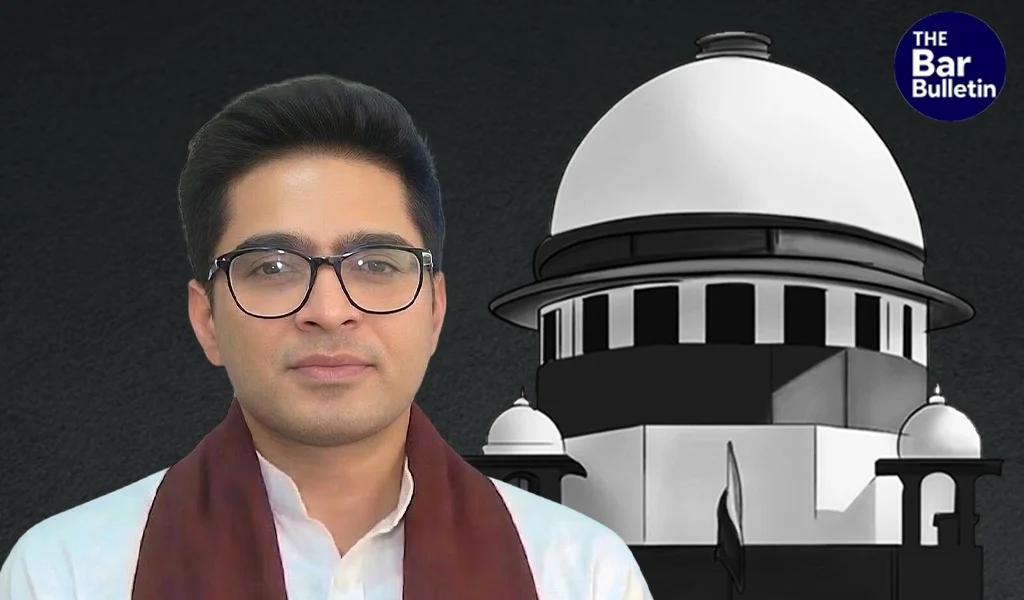

The Supreme Court on Monday allowed Trinamool Congress leader Abhishek Banerjee to travel abroad for three weeks for medical treatment, while imposing conditions to ensure his return and continued cooperation with the investigation.
During the hearing, ASG S.V. Raju along with Advocate Nishant Awana, appearing for the State, said the State was not opposed to Banerjee travelling if his medical requirement was genuine. However, he sought verification of the medical certificate and expressed apprehension that Banerjee might not return to India, pointing out that 16 criminal cases were pending against him.
“
“We are not saying no. But let us… we want to see the genuineness of the certificate. We want to test what has been stated, whether he actually requires any consultation or not… If his medical condition is such, we will not object.”
Senior Advocate Gopal Sankaranarayanan along with Advocate Nipun Saxena submitted that he was travelling on a diplomatic passport, over which the authorities had control. The ASG further submitted that the State’s concern was not the medical treatment itself but ensuring that Banerjee would return and remain available to the investigating agency.
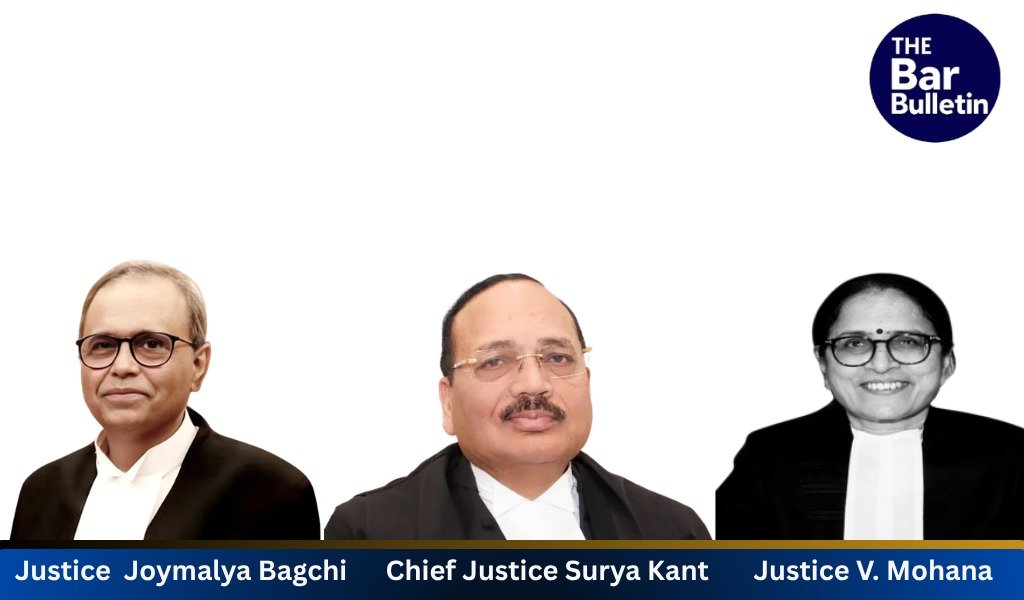
The Bench of Chief Justice Surya Kant, Justice Joymalya Bachi & Justice V Mohana, emphasised that the right to seek medical treatment abroad could not be denied merely because a person was facing investigation. The Court also questioned why the State had not taken steps in relation to the more serious allegations it had referred to.
“
“You have appeared where this individual is involved or alleged to be involved in much graver allegations. And you have not taken any steps against him. So please don’t make a situation in this…Every individual has a right to go abroad. Every individual has a right to choose the medical assistance…”
The Court ultimately allowed Banerjee’s appeal and directed that no impediment be caused to his travel for three weeks. The permission, however, is subject to conditions. He has been directed to furnish an undertaking by affidavit that he does not possess any other passport. He must also provide his travel itinerary, place of residence abroad, details of the hospital and doctor, date of return and flight details. The Bench indicated that these were basic and reasonable safeguards.
The Court also directed that the itinerary furnished by Banerjee should not be published by the authorities, following a request made on his behalf.