
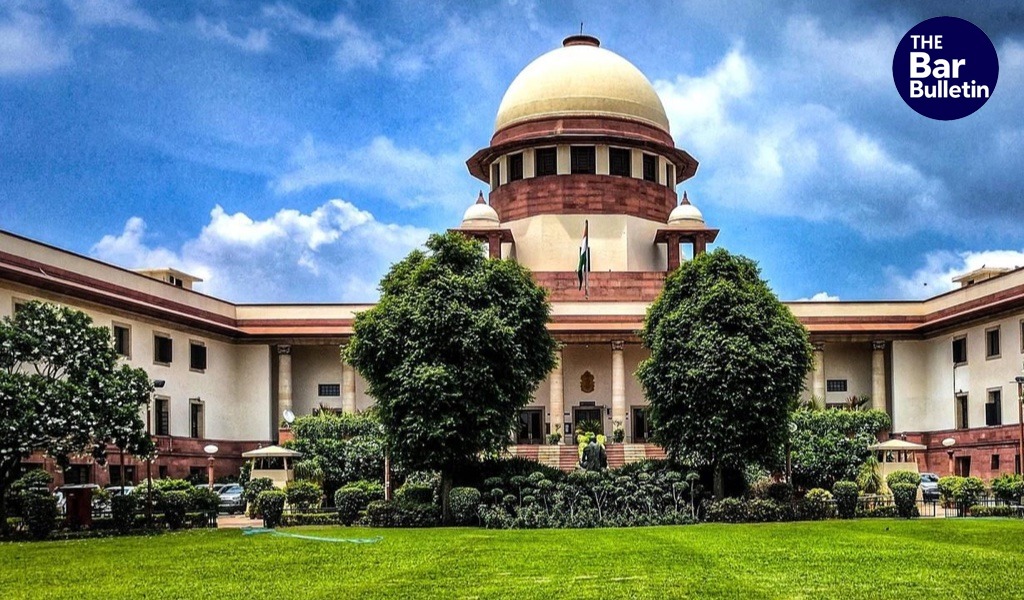

The Supreme Court indicated its willingness to examine the larger issue of prescribing minimum qualifying marks in viva voce for judicial service recruitment, while observing that broader questions concerning judicial appointments and recruitment are already pending before a three-judge Bench.
The matter arose in a plea challenging the Maharashtra Higher Judicial Service recruitment process, where the petitioners contended that despite performing strongly in the written examination, they were excluded after failing to secure the minimum qualifying marks in the interview.
Appearing for the petitioners, Senior Advocate Prashant Bhushan argued that the issue extends beyond the present recruitment and reflects a recurring structural problem in judicial service examinations across states. He submitted that although 42 vacancies were advertised in the Maharashtra Higher Judicial Service recruitment, only 13 candidates were ultimately selected, despite 2,751 candidates appearing in the preliminary examination and 421 qualifying for the mains.
Bhushan pointed out that one petitioner, who allegedly secured the third highest marks in the written examination, was awarded 18 out of 50 in the viva voce, falling short of the minimum qualifying mark of 20, resulting in exclusion despite having aggregate marks higher than at least one selected candidate.
He argued that Supreme Court precedents on the issue are inconsistent, with some judgments disapproving minimum interview cut-offs and others permitting them. Referring to the Kothari Commission recommendations and decisions such as Ashok Yadav, Bhushan submitted that interview weightage should remain limited and that prescribing minimum qualifying marks in viva voce creates scope for arbitrariness.
Bhushan also raised concerns over disproportionately low recruitment outcomes in judicial service examinations, arguing that repeated instances where only a fraction of advertised vacancies are filled point to systemic flaws in the evaluation process.
Chief Justice Surya Kant acknowledged the larger concern, observing that substantial public resources are spent conducting recruitment examinations and that where outcomes remain disproportionately low, the issue merits closer examination. The Bench also referred to concerns, noticed on the administrative side, about candidates facing disadvantages in interviews due to regional or language barriers, while clarifying that such concerns did not directly arise in the present case.
Significantly, the Court observed that it was not unwilling to examine the broader issue, but noted that larger judicial service recruitment questions are already pending before a three-judge Bench. It asked Sr Adv Bhushan to assist the Court by compiling comparative information regarding recruitment practices across states, particularly on interview cut-offs and selection outcomes.