

The Supreme Court on Friday heard a batch of petitions challenging provisions of the Digital Personal Data Protection (DPDP) Act, 2023, including the amendment to Section 8(1)(j) of the Right to Information Act, 2005, with petitioners contending that the amendment disproportionately curtails the right to information by creating a blanket exemption for personal information.
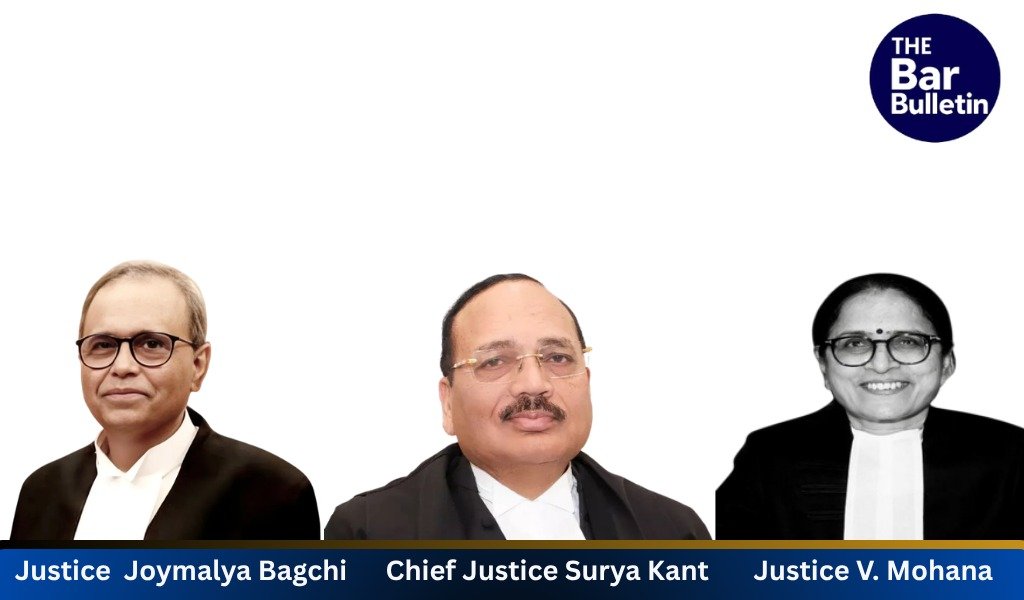
The Bench of Chief Justice Surya Kant, Justice Joymalya Bagchiand Justice V Mohana granted time to the Union to file its reply.
Appearing for one of the petitioners, Senior Advocate Vrinda Grover submitted that the amendment had fundamentally altered the balance previously maintained under the RTI Act by removing the safeguards that permitted disclosure of personal information where public interest outweighed privacy concerns. She argued
“
“Section 8(1)(j) of the RTI Act had inbuilt safeguards on the nature of personal information that would be made available. That has been amended in a manner where all those safeguards stand removed; public interest stands removed. As it now reads, information relating to personal information is exempt from disclosure. Consequently, a whole swathe of information that citizens were entitled to under Articles 19 and 21 now stands excluded.”

In another connected petition, Counsel argued that the DPDP Act failed to carve out any exemption for journalists, with serious implications for investigative reporting. She submitted that journalists would be required to obtain the consent of the data principal before reporting on matters involving personal data and, if the data principal sought erasure, they would be obliged to remove the information. According to her, this would have a direct and chilling effect on investigative journalism.
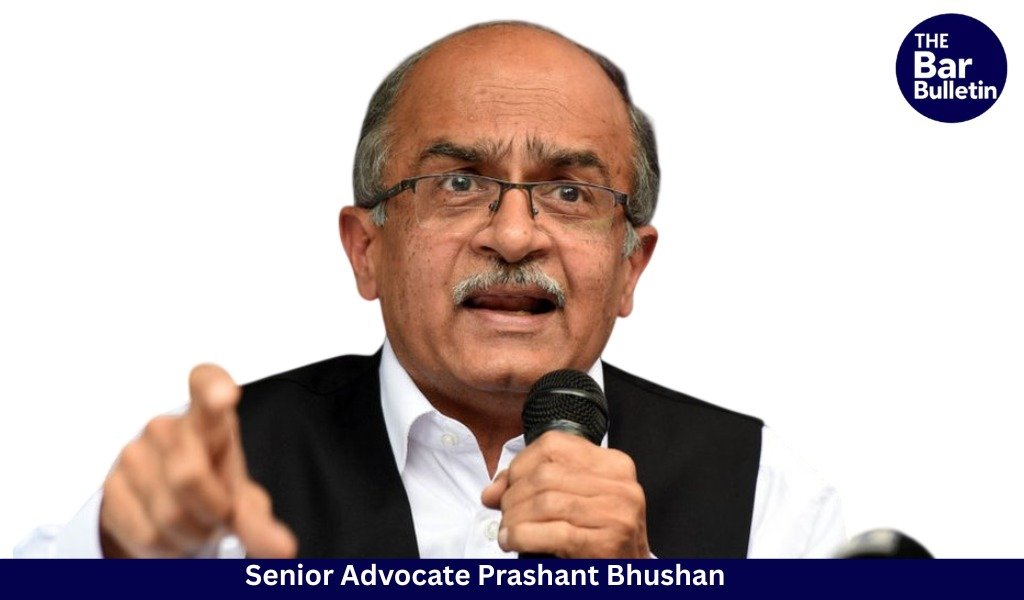
Senior Advocate Prashant Bhushan, appearing for another petitioner, argued that the balance between the right to privacy and the right to information had already been settled by the Supreme Court in Central Public Information Officer, Supreme Court of India v. Subhash Chandra Agarwal, (2020) 5 SCC 481. He submitted that while both privacy and the right to information are fundamental rights, the RTI Act had struck a careful balance by protecting only such personal information that had no nexus with public activity or public interest and whose disclosure would amount to an unwarranted invasion of privacy. Mr Bhushan contended that the DPDP Act disrupted that balance by replacing the nuanced exemption with a blanket prohibition.
“
“Our challenge is to the amendment made to the RTI Act through the DPDP Act by saying that all personal information will be exempt. The result is that even information such as pending charge sheets against a public officer, details concerning welfare schemes or ration cards would not be disclosed. That information is now being prohibited,” he argued.
Appearing for the Union, Solicitor General Tushar Mehta, assisted by Additional Solicitor General K.M. Nataraj, sought additional time to file the Centre’s response. Mehta submitted that the legislature had consciously undertaken a balancing exercise while enacting the DPDP Act and requested that the Court consider the Union’s justification before proceeding with the challenge. SG submitted:


“
“I don’t wish to say anything on the Right to Information Act at this stage, but the legislature has undertaken a balancing exercise. Let that come on record. There has been some delay, but I will file the reply within three weeks.”
During the hearing, Justice Joymalya Bagchi observed that the principal issue before the Court was whether the two central enactments, the RTI Act and the DPDP Act, could be harmoniously construed. He noted that the Court would have to examine whether the distinction drawn in the DPDP Act between digital personal data and other forms of information constituted a reasonable classification, and whether the amendment effectively repealed the earlier RTI regime by implication.
“
“We have to examine whether the classification with regard to digital data has any intelligible differentia. The previous law allowed access subject to conditions, whereas the amended provision appears to impose a blanket embargo. RTI is a Central law and this is also a Central law; we need to harmonise the two. RTI operates in a much larger domain, all forms of information, not merely digital information. The question is whether there can be a blanket ban on personal information or whether a proportionate approach is required.”
Accepting the Union’s request, the Court granted three weeks to file its reply. It also allowed the intervention applications and observed that the Centre could file a common response covering the issues raised in the various connected petitions challenging the legislation. Towards the end of the hearing, the Bench also noted the Solicitor General’s submission on the increasing number of petitions challenging the Act, remarking that by the time the reply was filed, “another ten petitions” might be instituted, prompting a discussion on avoiding unnecessary multiplication of proceedings.