
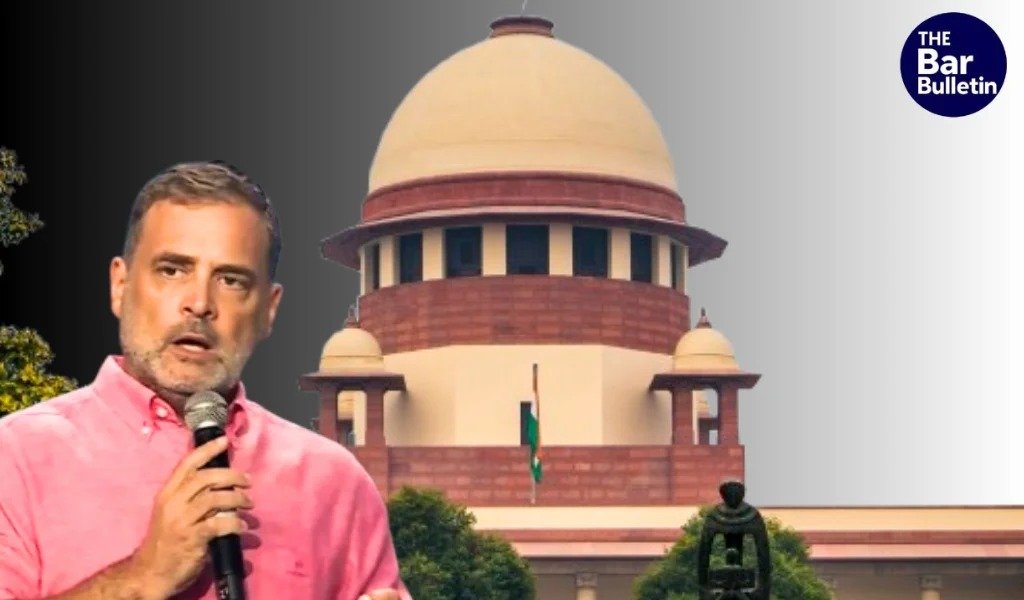
The Supreme Court on Wednesday asked the complainant in the criminal defamation case against Congress leader Rahul Gandhi to move an application for early hearing or de-tagging if he wanted the matter to be taken up on an urgent basis. Chief Justice remarked: “All parties ought to be treated equally.”
The direction came after Senior Advocate Gaurav Bhatia, appearing for the complainant, submitted that the matter had not been listed despite the Court’s December 4, 2025 order directing it to be listed on April 22, 2026. He alleged that there had been repeated adjournments and sought de-tagging of Gandhi’s appeal so that it could be heard on merits.
“
“The last order was, list on a particular date… the order dated 4th of December, 2025 clearly states, list the matters on 22nd of April, 2026. The matter has not been listed after that. So, this is what I am saying, just because a person (Rahul Gandhi) is involved, the matter doesn’t get listed. I make a mention to de-tag, the order is passed, not reflected in the order. And now, what am I asking for? That the matter be heard and de-tagged.”
The case arises from a criminal defamation complaint concerning Gandhi’s remarks about the Indian Army during the Bharat Jodo Yatra in December 2022. Rahul Gandhi had challenged the summoning order before the Allahabad High Court, which declined to interfere, following which he approached the Supreme Court.
Complainant Counsel further objected to the matter remaining unlisted despite a specific date having been fixed by the Court, arguing that Gandhi should not receive any different treatment on account of his status.
“
“If there is an order, mentioning a specific date, which is 5 months prior in time, the matter is not listed, it doesn’t augur very well, even for the institution, Your Lordship. That is what I am saying. This matter ought to be listed, he is not a VVIP that his matter will not be listed…”
However, CJI also remarked that “All parties ought to be treated equally” and if the complainant wants an early hearing or de-tagging, an appropriate application has to be moved.
Counsel appearing for Gandhi also opposed the submissions, saying, “I am not a VIP…These kind of submissions may not be entertained,” and objected to the suggestion that the Registry was not listing the case because of the identity of the petitioner.
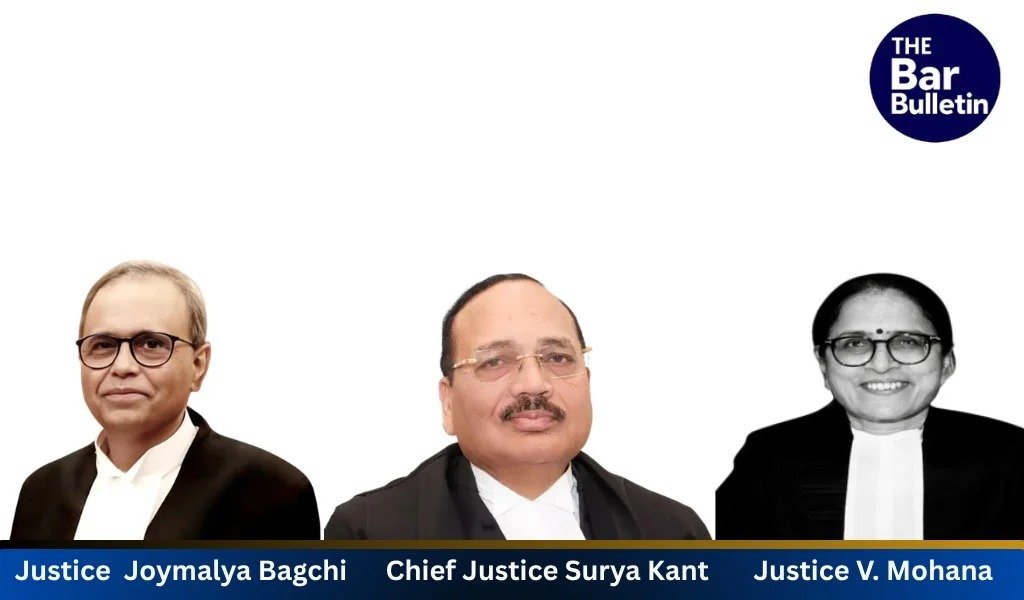
The bench of Chief Justice Surya Kant, Justice Joymalya Bagchi and Justice V Mohana observed that an early-hearing request was not the appropriate recourse for de-tagging and asked the complainant to move an appropriate application and place the issue before the concerned Bench.
______________________________________________________________________
In the connected mattersAjoy Ashirwad Mahaprashta v. Amita Singh, Crl.A. No. 5535/2025, and Foundation for Independent Journalism v. Amita Singh, Crl.A. No. 5536/2025 counsel also sought early hearing, pointing out that the underlying defamation proceedings are nearly a decade old. Counsel submitted that the matter dates back to 2016 and had been delayed after the accused were granted exemption from personal appearance, due to which notice could not be framed in 2023. The High Court subsequently remanded the proceedings to the stage of summons in 2024, following which summons were issued in compliance with the Supreme Court’s order. Counsel further submitted that the issue concerning the accused’s right to an opportunity of hearing under Section 223 BNSS remained unresolved, despite evidence having already been led in the case.
Counsel also submitted that the matters had been tagged with the Rahul Gandhi appeal despite arising from different proceedings and years. The CJI, however, pointed out that the appeals before the Supreme Court were of 2025 and told counsel that if the grievance was regarding a stay, the appropriate course was to move an application seeking vacation of stay. The Court ultimately recorded that the applicant was at liberty to move an appropriate application and disposed of the early-hearing application.
The case arose from a 2016 criminal defamation complaint filed by JNU Professor Amita Singh over an article published by The Wire about a dossier allegedly portraying JNU as a “Den of Organised Sex Racket.” She alleged that the article wrongly attributed preparation of the dossier to her and damaged her reputation. The trial court had initially summoned the accused in 2017, but the proceedings went through subsequent challenges before the High Court and Supreme Court. Following a Supreme Court remand, summons were issued afresh, leading to the present appeals by Journalist Ajoy Ashirwad Mahaprashta and the Foundation for Independent Journalism.