

Reaffirming the ‘purpose test’, the Supreme Court has held that post-production power subsidies calculated as a percentage of energy charges are operational assistance on revenue account, not contributions towards capital outlay. The Court clarified that the ‘purpose test’ governs the character of every subsidy, the object sought to be achieved by the scheme is decisive, not the timing, source, or form of payment.
The Apex Court explained that a subsidy linked to actual electricity consumption and quantified as a percentage of power charges is an operational subsidy. Accordingly, a general policy objective such as ‘fostering industrial growth’ cannot, by itself, convert an operational subsidy into a capital receipt.
The subsidy does not lose its revenue character merely because reduced electricity expenditure leaves more funds available with the assessee for business purposes. Where the scheme does not require the subsidy to be applied towards acquisition of capital assets, repayment of capital borrowings, or creation of any capital asset, the receipt is on revenue account, added the Court.
Briefly, Mepco Industries Ltd., a company engaged in the manufacture of potassium chlorate, received an electricity subsidy of Rs. 16.20 lakhs from the Government of Pondicherry for the Assessment Year 1997-98 under the Scheme of Power Subsidy, which had been in operation since Nov 27, 1975. The scheme was framed to foster industrial growth in the Union Territory and provided subsidy on power charges for a specified period after commencement of production, at the rate of 33⅓% of power charges for the first three years, 20% for the fourth year, and 10% for the fifth year, subject to the applicable ceiling.
The appellant treated the subsidy as a capital receipt not liable to tax, but the Assessing Officer, the CIT (Appeals), the ITAT, and the Madras High Court, all treated it as a revenue receipt liable to tax under the Income-tax Act.
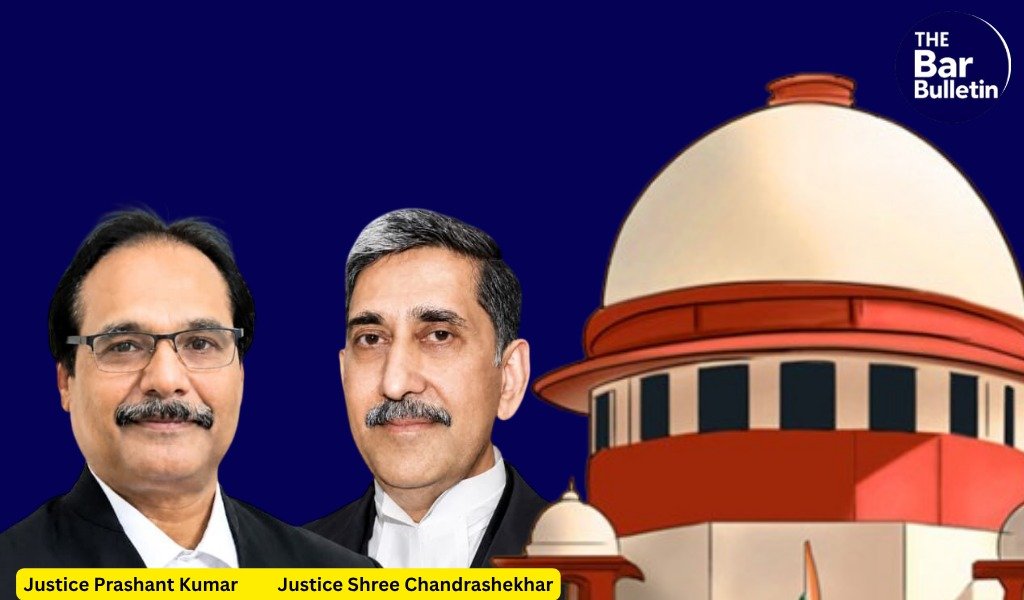
A Two-Judge Bench comprising Justice Prashant Kumar and Justice Shree Chandrashekhar observed that the short question before it was whether the electricity subsidy received by the appellant under the scheme of the Government of Pondicherry was a capital receipt or a revenue receipt, and that the answer must necessarily depend upon the true character and purpose of the subsidy scheme under which the amount was granted.
The Court examined the decision in Sahney Steel & Press Works Ltd., Hyderabad vs. Commissioner of Income Tax, A.P.-I, Hyderabad [(1997) 7 SCC 764] and noted that it does not lay down that every subsidy linked to production or electricity consumption is invariably revenue in nature. Rather, it requires the character of the particular assistance to be determined in the light of the scheme under which it is granted. The Court reaffirmed the ‘purpose test’ as laid down in Commissioner of Income Tax, Madras vs. Ponni Sugars and Chemicals Limited [(2008) 9 SCC 337], clarifying that the point of time at which the subsidy is paid, its source, and its form are not decisive, but the decisiveness lies on the object sought to be achieved by the scheme.
The Court further noted that where the object is to enable the assessee to run its business more profitably, the receipt is held to be on revenue account, and where the object is to enable the assessee to set up a new unit or substantially expand an existing unit, the receipt is on capital account. The Court also referred to Commissioner of Income Tax-I, Kolhapur vs. Chaphalkar Brothers, Pune [(2018) 13 SCC 358], where the subsidy took the form of exemption from entertainment duty, but the Court looked beyond the form and found the object was to encourage setting up of highly capital-intensive multiplex theatre complexes, holding it to be capital in nature.
