
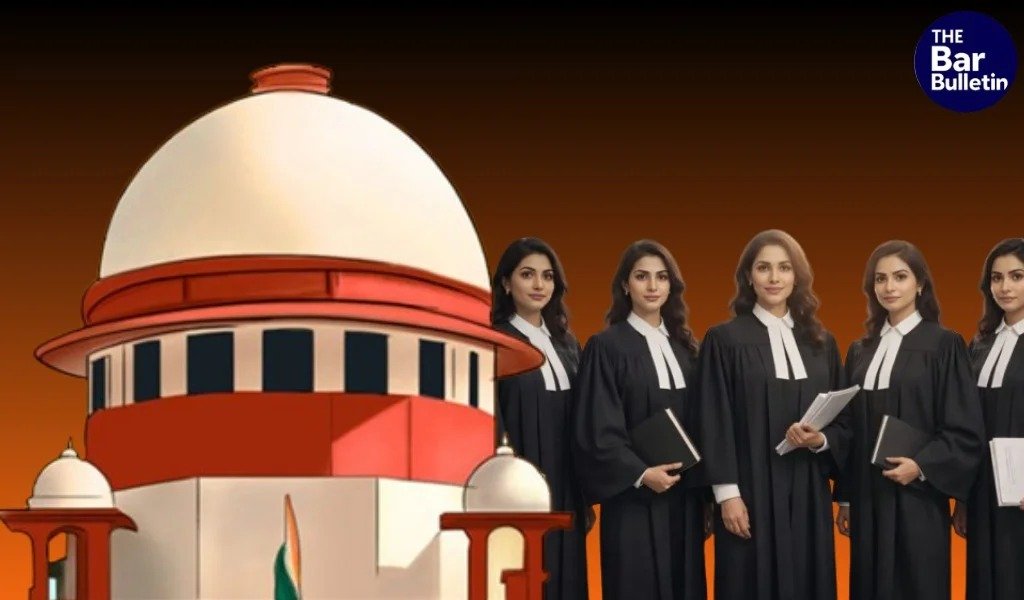

The Supreme Court on Monday directed all State governments and High Courts to ensure that women advocates are provided exclusive bar rooms, washrooms and other basic amenities in district, sub-divisional and taluka courts wherever they practise, irrespective of their numbers.
A bench of Chief Justice of India Surya Kant, Justice Joymalya Bagchi and Justice V Mohana passed the directions while hearing a public interest litigation filed by women advocates. Emphasising that the facilities must be provided even if additional funds or land are required, CJI Surya Kant said:
“
“If there are no ladies’ bar rooms, we strongly disapprove of it. It is the duty of all High Courts and State governments to ensure that wherever women members, young women are practising, they are provided an exclusive women’s bar room with all facilities. This is the mandate. We do not want to deviate from that. It has to be complied with, whether additional funds or additional land are required. Whatever is required must be done.”
The Court directed that a separate and exclusive women’s bar room, proportionate to the strength of women advocates, must be provided wherever they practise in district, sub-divisional and taluka courts, along with washrooms and other basic amenities. It directed State governments to allocate the necessary funds wherever these were not already available.
The bench also asked High Court infrastructure committees to prioritise the creation of such facilities in district and taluka courts. It further appointed Attorney General R Venkataramani as the nodal authority to coordinate compliance by States and Union Territories and consolidate their progress reports.
During the hearing, the amicus curiae informed the Court that only 21 of the 69 respondents had filed status reports. Senior Advocate Monika Gusain, appearing for the petitioners, pointed out gaps in the facilities reported by several States. Punjab, she submitted, had reported washrooms in only nine of its 67 court complexes, while Haryana had not conducted an inspection. She also highlighted the absence of a women’s bar room in the Calcutta City Courts, as acknowledged in the Calcutta High Court’s affidavit.
The Court stressed that the pattern of basic amenities and facilities should preferably be uniform across all States. It directed the Advocates General and standing counsel for Union Territories to submit progress reports to the Attorney General, who would compile the information for consideration by the Court.
The matter is posted for December 2, 2026.