
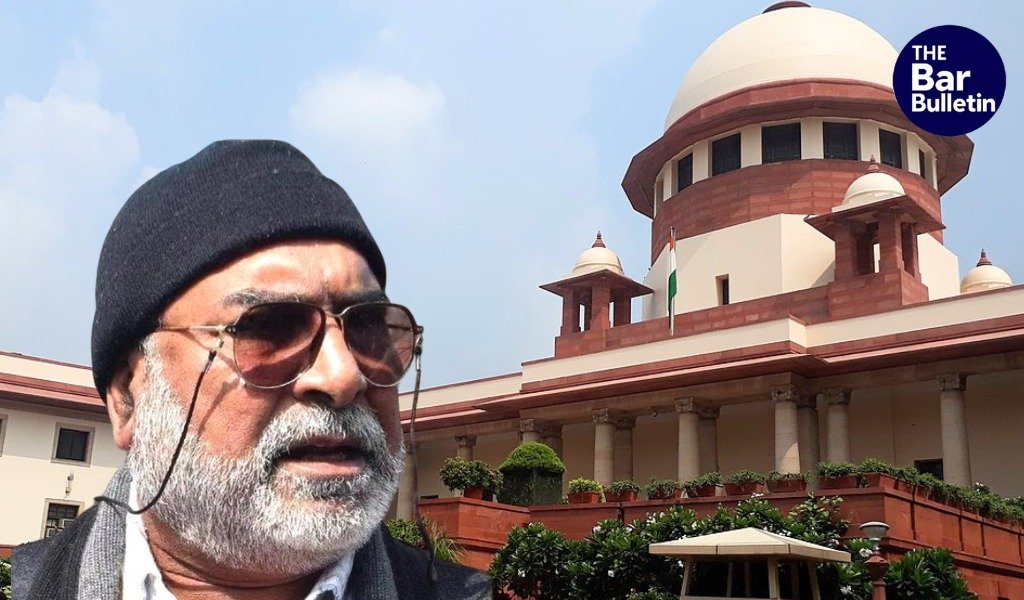

The Supreme Court on Friday declined to interfere with the Uttarakhand High Court’s order granting bail to Abdul Malik, an accused in the 2024 Haldwani Riots case. The Matter was heard by the Bench of Chief Justice Surya Kant, Justice Joymalya Bagchi and Justice V Mohana.
At the outset, the State argued that the case involved the burning of a police station, hurling of petrol bombs and organised violence. The Bench, however, responded that the State should focus its energies on securing a conviction rather than challenging the grant of bail, adding that protecting police stations and prosecuting offenders was ultimately the State’s responsibility.
The State submitted that the provisions of UAPA had rightly been invoked, the chargesheet had already been filed, and Malik was the principal conspirator. It contended that the incident was far more serious than an ordinary case of assault and involved an organised attack on a police station.
The Bench repeatedly questioned the applicability of the anti-terror law, asking how the alleged acts satisfied the requirements of UAPA. During the exchange, it observed that there was a distinction between issues affecting public order and those implicating national security. The Court indicated that it had serious doubts about the addition of UAPA to the case and remarked that this was one of the reasons it was not inclined to entertain the State’s special leave petition.
The State then argued that the High Court had granted bail through a ‘cryptic and unreasoned’ order despite serious allegations of conspiracy. It submitted that Malik’s physical absence from the scene of violence did not dilute the prosecution case since the allegations centred on criminal conspiracy under Section 120B IPC. According to the prosecution, meetings to plan the violence were held at Malik’s residence, several witnesses had identified him as the principal conspirator and his role was distinct from that of co-accused who had also been granted bail. The State urged the Court to remit the matter for fresh consideration if it found the High Court’s reasoning inadequate.
The Bench, however, remarked that personal liberty could not be made dependent upon delays or inertia in judicial proceedings. While acknowledging that bail orders must reflect application of mind, it observed that the Court was dealing with an order granting bail and reiterated that a speaking order did not require elaborate findings akin to a judgment of conviction or acquittal.
The law officer further submitted that releasing the alleged chief conspirator in a case involving the burning of a police station would have a ‘demoralising effect’ on the police force. The Bench was unconvinced. It observed that if the State was genuinely concerned about the morale of the police, it ought to have secured a conviction within the more than two years that the accused had remained in custody. The Court added that the State could not seek to compensate for its failure to conclude the trial by pursuing a challenge to the bail order. It also clarified that securing convictions was the responsibility of the prosecution and, if trial delays were attributable to the court, it was for the prosecutor to approach the Supreme Court seeking appropriate directions for expeditious proceedings.
“
“If you feel demoralisation of the police is your concern, then within two years you should have convicted him. You have abysmally failed in your primary duty… You should not cover up the failure of your primary duty by creating the colour of sneaking an SLP against cancellation.”
The Bench also took note of the pace of the trial. Despite the seriousness of the allegations, it noted that Malik had remained in custody for more than two years and that only one witness had been examined out of a proposed list of 105 witnesses. Questioning why it should interfere with an order granting liberty in such circumstances, the Court indicated that the slow progress of the trial weighed significantly in its consideration.
Towards the end of the hearing, the State made a final attempt to justify the invocation of UAPA and argued that the statutory requirements under Section 43D(5) were attracted. The Bench, however, reiterated that the applicability of UAPA itself appeared to be an arguable issue for the defence and did not appear persuaded by the State’s submissions on that aspect.