

The Supreme Court on Tuesday disposed of a plea filed by Jiostar challenging a Delhi High Court order passed in its challenge to the Telecom Regulatory Authority of India’s (TRAI) regulatory framework governing television channel pricing, asking it to first approach the High Court and clarify that it does not intend to amend its writ petitions.
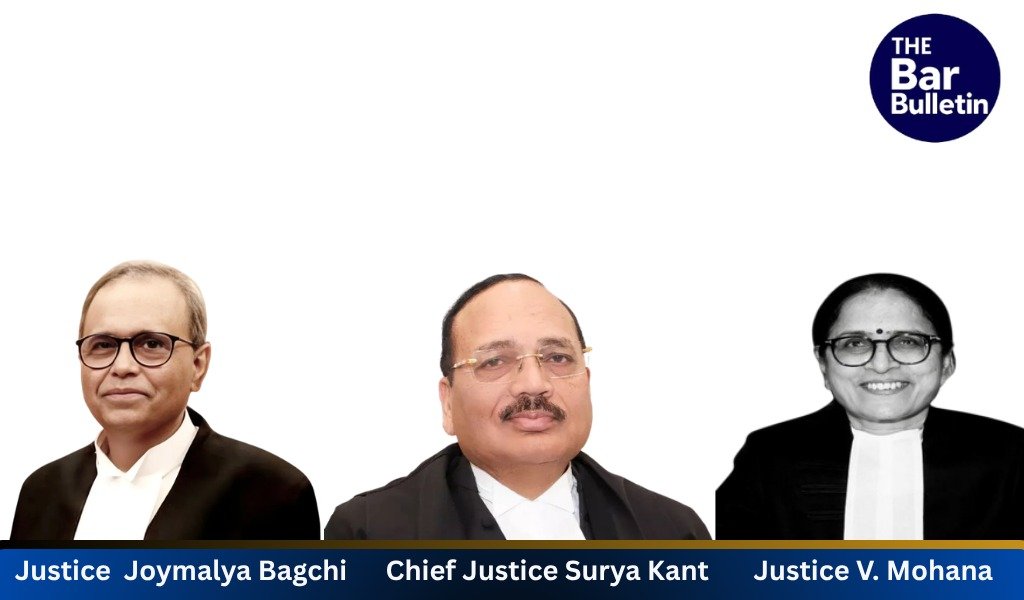
The matter was heard by a Bench comprising Chief Justice Surya Kant, Justice Joymalya Bagchi and Justice V. Mohana.
The dispute arises from TRAI’s regulatory framework governing television broadcasting, including the Tariff Orders, Interconnection Regulations, maximum retail price (MRP) caps and discount structures applicable to cable and DTH services. Broadcasters have challenged the framework, contending that it fails to distinguish between commercial subscribers, such as hotels that commercially exploit television signals across hundreds of rooms, and ordinary residential households, thereby subjecting fundamentally different categories of consumers to the same pricing structure.
Appearing for Jiostar, Senior Advocate Mukul Rohatgi explained that two different legal remedies had emerged because the regulatory framework consisted of both TRAI Regulations, which constitute delegated legislation and are amenable to judicial review before the High Court, and Tariff Orders, whose validity falls within the jurisdiction of the Telecom Disputes Settlement and Appellate Tribunal (TDSAT).
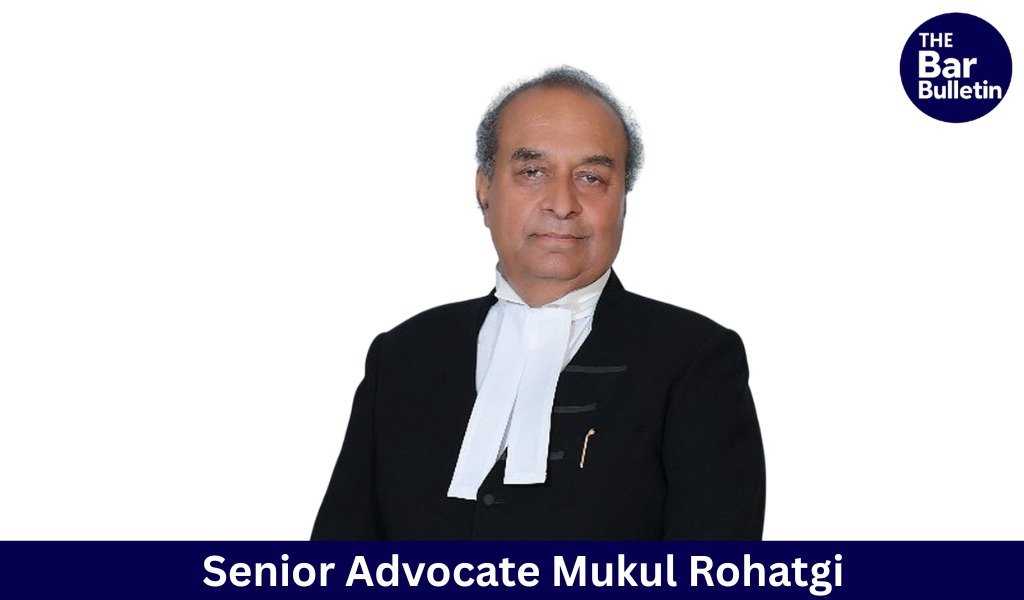
He submitted that while another set of parties challenged the tariff orders before TDSAT, his client filed composite writ petitions before the Delhi High Court in 2014 and 2015, assailing both the regulations and the tariff orders. Explaining the broadcaster’s grievance, Rohatgi said:
“
“Suppose we supply to the Taj Hotel. It has 500 televisions. The question is whether that amounts to one connection or 500 connections. But even if there are 500 connections, the definition equates the hotel with a one-bedroom residential home. We say that if a hotel is charging ₹50,000 per room, there has to be a distinction between commercial exploitation of a signal and a residential household. You cannot have the same tariff. It is apples and oranges.”
According to Mr Rohatgi, the broadcaster’s writ petitions before the Delhi High Court remained pending because similar issues concerning the tariff orders were already under consideration before the Supreme Court in appeals arising from TDSAT proceedings.
He submitted that when the writ petitions were recently listed before the Delhi High Court, the Court proceeded on the assumption that the broadcaster intended to amend its pleadings to seek “consequential relief”, recorded an oral assurance allegedly given by counsel, and imposed costs. Questioning the High Court’s approach, Mr Rohatgi argued:
“
“Our prayer is to quash both the tariff order and the regulation… Why costs? This shows that the Court has already made up its mind that unless I amend the petition, it will reject it. I am not going to amend anything because there is nothing to amend. For 45 years of my practice, if I challenge a law, the Court either strikes it down or upholds it. I cannot tell Parliament or the regulator to remake the law.”
During the hearing, the Bench examined the relationship between the tariff orders and the regulations.
Justice Joymalya Bagchi observed that the regulations constituted the framework within which tariff orders operated, remarking that “the regulation is the shell within which the tariff has been fixed.” He also referred to an earlier decision holding that TDSAT possesses jurisdiction to examine whether regulations conform to the constitutional scheme.
Mr Rohatgi, however, submitted that the broadcaster’s challenge to the regulations could not be relegated to TDSAT, as the tribunal lacked jurisdiction to test the validity of delegated legislation. According to him, the regulations and tariff orders were “intrinsically linked and interconnected”, making the composite challenge before the High Court legally justified.
After hearing the parties, the Bench suggested that instead of continuing the proceedings before the Supreme Court, Jiostar should first clarify its stand before the Delhi High Court. Chief Justice Surya Kant observed:
“
“In light of paragraphs 4 and 5 of the interim order, please go and move an application before the High Court stating that you do not wish to amend your petition. The High Court may decide it one way or the other.”
Accepting the suggestion, Mr Rohatgi agreed to withdraw the proceedings before the Supreme Court and approach the High Court instead. The Supreme Court accordingly disposed of the matter, leaving it open to the Jiostar to move the Delhi High Court.