

The Supreme Court has held that the activity of grouping, pinning, and plugging imported modules together at a warehouse to meet customer specifications described as “kitting” does not amount to “manufacture” within the meaning of Section 2(f) of the Central Excise Act, 1944, where the goods were imported, classified, and assessed as complete machines under a specific tariff heading, and were cleared from the warehouse in their original packing without any physical process of assembly or transformation being performed upon them.
The Court clarified that Note 6 to Section XVI of the Central Excise Tariff Act, 1985, cannot be invoked where the Revenue has failed to establish either that the imported goods were incomplete or unfinished articles, or that any conversion of such articles into complete articles was carried out at the warehouse. The Court also cautioned that the Revenue Department cannot simultaneously treat the same goods as complete machines for the purpose of levying Customs Duty and CVD, and as incomplete articles for the purpose of attracting the deeming provision under Note 6. Rule 2(a) of the General Rules for Interpretation is a rule of classification and does not determine whether a process amounts to manufacture.
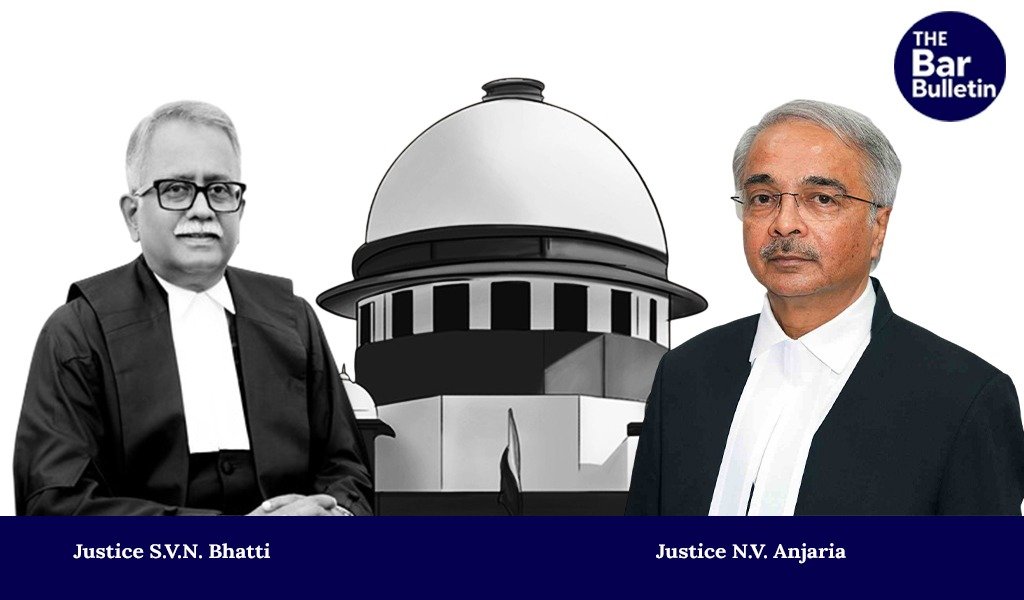
A Two-Judge comprising Justice S.V.N. Bhatti and Justice N.V. Anjaria undertook a comprehensive review of the jurisprudence on “manufacture” under Section 2(f) of the CE Act, and distilled the inner and outer limits of what constitutes “manufacture”: at the inner limit, a process that leaves the commodity commercially the same article is not manufacture, however much labour, skill, or expense may have been bestowed upon it; at the outer limit, a process need not be elaborate, nor need there be any chemical alteration in the constituent material, to be manufacture, if what emerges is an article which the market recognises as different in name, character, and use from that which went in.
The Court observed that the definition of “manufacture” under Section 2(f) is an inclusive definition employing the word “includes,” and therefore encompasses deeming provisions and legal fictions. Each case must be assessed on its own merits, and the Court must be careful while drawing analogies. What is essential is to keep in perspective the ratio that any or every process does not necessarily amount to manufacture, and to see whether a new article having a distinct character, name, and use emerges and is normally bought and sold as a distinct commodity in the market. The Court also noted that the nomenclature employed by the Assessee on the floor of the factory or warehouse, such as “kitting”, is by itself not a conclusive and determinative circumstance.
Also read Misconduct in Court Premises Can Invite Bar Council Action: Supreme Court
The Court observed that the Revenue failed to establish the essential requirements of Note 6 to Section XVI of the CE Tariff Act. Two prongs must be established before the deeming provision can be invoked: first, that what was presented was incomplete or unfinished, and secondly, that a conversion of it into the complete article was carried out by the person sought to be charged. On the Tribunal’s findings, neither was made out. The goods were imported, classified, and assessed as complete machines under Heading 8471, and were cleared from the warehouse in the sets and in the original packing in which they had been received, with no process having been performed upon them there. The Revenue cannot, upon one and the same set of facts, treat the goods as complete machines for the purpose of levying Customs Duty including CVD, and as incomplete articles for the purpose of attracting Note 6.
The Court further observed that Rule 2(a) of the General Rules for the Interpretation of the Schedule is a rule of classification which requires an incomplete or unassembled article having the essential character of the finished article to be classified under the heading of the finished article. It answers the question where an article is to be classified, but it does not answer the question whether a process performed upon the article amounts to manufacture.
The Court noted that conclusions were drawn by the Revenue without inspecting the Assessee’s premises. In an era of technological advancement, the Revenue could have proved through best evidence, such as photographs, that the photocopier is a product of change, not a result of “kitting.” The Court was compelled to observe that what can be proved in a straight and simple way need not be induced from the convenient versions of both sides.
The Court found that the Tribunal’s findings of fact were both brief and correct, and adhered to brevity. The Tribunal considered the record in its entirety, including the depositions of the Assessee’s officers, the purchase orders, the bills of entry, and the storage tickets. It found that the components alleged to have been fitted to the main module were cleared in their original packing, that the HCF and DADF had been fitted at the factory of the Assessee’s sister concerns abroad, and that no deposition of any executive of the Assessee stated that the modules were assembled in the warehouse. The Commissioner had concluded that assembly was undertaken without making any verification whatsoever. These findings were not perverse, rested upon evidence, and had been arrived at by careful consideration of the material on record.
Also read Victim’s Age Raises Arguable Questions: SC Suspends Sentence of Two POCSO Convicts
Briefly, the Assessee, M/s Xerox India Ltd., is engaged in the business of photocopiers, toners, photoreceptors, and digital multi-functional printers. It operates warehouses at Hyderabad (Telangana) and Rampur (Uttar Pradesh). The Assessee imports parts, modules, and accessories of photocopier machines in completely knocked down (CKD) or semi-knocked down (SKD) condition from its sister concern’s warehouses located abroad, after paying Customs Duty and Countervailing Duty (CVD). The dispute between the Revenue and the Assessee relates to the period between April 2002 and November 2006.
On May 04, 2007, the Revenue issued a Show Cause Notice (SCN) to the Assessee, alleging that the activity undertaken at the warehouse, namely, grouping and fitting together imported modules into Xerox Photocopier machines to meet customer specifications, amounts to “manufacture” within the meaning of Section 2(f) of the Central Excise Act, 1944, read with Note 6 to Section XVI of the First Schedule to the Central Excise Tariff Act, 1985. The SCN demanded Excise Duty and Education Cess of Rs. 17,86,47,382/- on clearances effected from the Hyderabad warehouse during the disputed period, along with penalties under the proviso to Section 11A, Sections 11AB and 11AC of the CE Act, and Rule 26 of the Central Excise Rules, 2002.
Also read JSERC Grants Major Tariff Relief to Damodar Valley Corporation; Revises 2024 Tariff Order
The Assessee contested the SCN, contending that what was imported and what was ultimately installed at the customer’s premises were one and the same, shipped in modular form only for ease and safety of transportation. The goods were imported, classified, and assessed to Customs Duty and CVD as complete machines under Tariff Heading 8471, and were cleared from the warehouse as such. The Assessee described its warehouse activity as mere “kitting”, grouping imported modules for packing advantage and to conform to customer specifications, and argued that no new machine came into existence.
The Commissioner of Central Excise, Hyderabad-IV, confirmed the demands in the SCN through Order-in-Original dated March 28, 2008, holding that what was imported was not a complete machine but components and modules, and that manufacture was complete only upon assembly at the warehouse. The Assessee appealed to the CESTAT, South Zonal Bench, Bangalore, which set aside the Commissioner’s order. The Tribunal found that no assembly or fitting of any part took place in the warehouse, that the HCF and DADF components were factory-fitted abroad, and that the components were cleared in their original packing without any process being performed upon them.
