
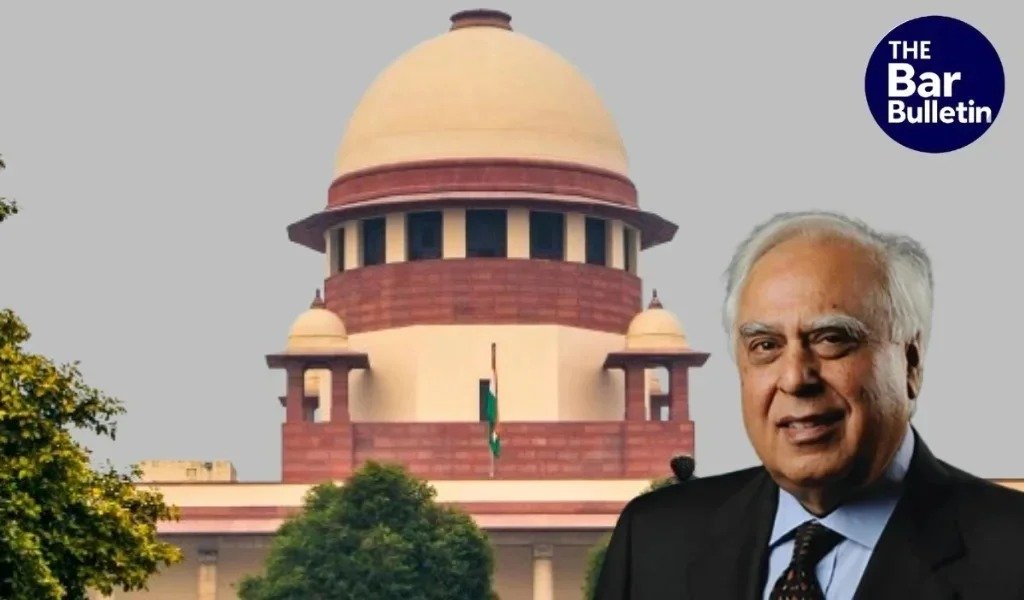
Senior Advocate Kapil Sibal, appearing for Uddhav Thackeray in the ongoing Shiv Sena dispute, on Wednesday made rejoinder submissions before the Supreme Court, arguing that the Speaker had fundamentally erred in treating the legislative majority of Eknath Shinde’s faction as the original Shiv Sena political party. The matter is being heard by a Bench comprising Chief Justice of India Surya Kant and Justices Joymalya Bagchi and V. Mohana.
Mr Sibal argued that the Speaker’s decision, which recognised the Shinde faction as the real political party on the basis of its numerical majority in the Legislative Assembly, was contrary to the Tenth Schedule of the Constitution and the Constitution Bench judgment in Subhash Desai v. Principal Secretary, Governor of Maharashtra. He submitted that an elected legislator continues to belong to the political party that set him up as a candidate and a majority of legislators cannot, by itself, transform a legislative faction into the original political party.
Referring to the events leading to the collapse of the Maha Vikas Aghadi government in June 2022, Mr Sibal argued that the conduct of the Shinde faction MLAs demonstrated an attempt to topple the government rather than an act of ideological dissent. He pointed out that the BJP had declined the Governor’s invitation to form the government in November 2019, following which Shiv Sena formed a post-poll alliance with the Congress and NCP. The Shinde faction MLAs had participated in the government for nearly three years without raising any formal issue of dissent, he submitted.
Mr Sibal further referred to the events of June 21, 2022, when the rebel MLAs allegedly passed resolutions seeking to replace the Chief Whip appointed by the original political party and reaffirm Eknath Shinde as their legislative party leader. He argued that instead of convening a party meeting to resolve their alleged ideological differences, the MLAs refused to recognise the leadership of the political party and subsequently aligned with the BJP to form a government.
He also disputed the respondents’ contention that the disqualification proceedings had become infructuous following the expiry of the 14th Maharashtra Legislative Assembly. Mr Sibal argued that the disqualification petitions were filed, heard and decided while the respondents were sitting MLAs and that the subsequent expiry of the Assembly’s term could not defeat the Supreme Court’s power of judicial review.
He submitted that accepting the respondents’ argument would create an incentive for legislators to delay disqualification proceedings until the expiry of the Assembly’s term, thereby defeating the very purpose of the Tenth Schedule. He submitted:
“
“Holding that the petitions have become infructuous because of expiry of the term would mean that the petitioner is to be denied relief only on account of time spent in the matter being finally heard in this Court. Power of judicial review of this Court is curtailed by and dependent upon the term of the Assembly.
No party can be prejudiced on account of time spent in court proceedings. The scope of judicial review does not get curtailed because of any event that happens after the impugned decision has been rendered. The entire purpose and object behind the Tenth Schedule is to punish and prevent defections. The argument raised by the respondents would create an incentive for delay in adjudication of disqualification proceedings. It would dilute the fear of consequences of defection, thereby violating the constitutional scheme.”
He also cited a judgment of the Punjab and Haryana High Court, in which a member was declared disqualified even after the expiry of the Assembly’s term, to support his submission that declaratory relief could still be granted.
He also argued that the relief sought was not merely academic, as a finding on disqualification would have consequences for the Election Commission’s February 17, 2023 decision recognising the Shinde faction as the real Shiv Sena and allocating the party symbol to it. He submitted that if the legislators were found to have incurred disqualification from June 2022, the legislative majority on which the Election Commission’s decision was based would itself be affected. He submitted:
“
“The entire determination by the Speaker that majority legislators represent the original political party is completely contrary to the Tenth Schedule. The petitioner’s detailed written submissions in this regard have not at all been addressed by the respondents in their oral or written submissions.
The Tenth Schedule recognises the original political party to be the one that sets up a legislator as a candidate. An elected member of a Legislative Assembly has no separate persona. He continues to belong to that party. Legislative majority doesn’t transform the nature of that legislator to be the political party itself. If your Lordships don’t nip this kind of thing in the bud, it is going to have serious consequences. If this is allowed, any group of legislators, even if the majority in the House is just four or five, could have six members from one party say, ‘I dissent. I don’t agree with this. I am going to the other side,’ and the government falls. And then they claim that this was an act of dissent.”
The rejoinder submissions are part of the ongoing hearing challenging the Speaker’s January 10, 2024 decision refusing to disqualify the Shinde faction MLAs. Sibal concluded his submissions by referring to the relevant judicial precedents and the consequences of allowing the Speaker’s interpretation to stand. The hearing is scheduled to continue on Thursday.