
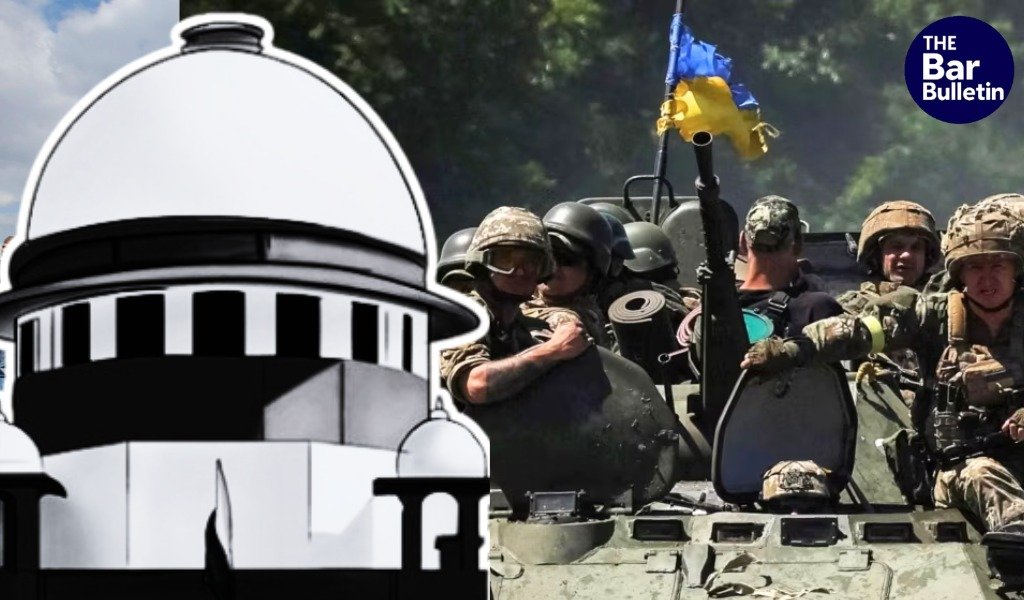

The Supreme Court on Friday issued directions to the Ministry of External Affairs (MEA) to streamline assistance for the families of Indian nationals who were allegedly trafficked to Russia under the promise of civilian employment but were subsequently recruited into the Russian military and sent to the frontlines of the Russia-Ukraine war. The Court directed the appointment of a nodal officer, mandatory DNA verification of mortal remains before their handover, and facilitation of compensation claims with Russian authorities.
The directions came during the hearing of a writ petition filed by families of affected Indian nationals. Counsel for the petitioners alleged that several bodies returned from Russia were in an unidentifiable condition, making it impossible for families to ascertain whether the remains belonged to their relatives. It was submitted that in some cases, bodies remained at the Delhi airport for months and an institutional Standard Operating Procedure (SOP) was required to ensure DNA verification before the remains were released.
Appearing for the Union Government, the Additional Solicitor General Aishwarya Bhati submitted that the MEA had been in continuous touch with the affected families and that the Embassy had undertaken extensive efforts to coordinate with Russian authorities. The Centre submitted that communication was being carried out directly with family members due to privacy concerns and informed the Court that DNA testing was already being facilitated wherever required. It also stated that a comprehensive status report had been filed detailing the efforts undertaken by Indian authorities.
The Bench ofChief Justice Surya Kant, Justice Joymalya Bagchi and Justice V Mohana, however, considered it appropriate to institutionalise the process to resolve the pending grievances. It directed the MEA to designate a nodal officer whose contact details would be shared with the families of deceased or injured Indian nationals. The Court further directed that whenever mortal remains are repatriated, the MEA shall arrange DNA testing with the concerned family members and hand over the body only after DNA verification along with a certificate confirming the identity of the deceased.
The Court also ordered the Ministry to prepare and supply a consolidated dossier, translated into one or two regional languages, explaining the procedure for claiming compensation from Russian authorities. The families would be permitted to submit compensation claims through the MEA, while the Court clarified that financial claims should not delay the return of mortal remains or the performance of last rites.
To ensure legal assistance, the Court further directed the concerned State Legal Services Authorities to provide legal aid to affected families for submitting compensation claims and facilitating DNA-related procedures. The MEA was also directed to provide translated versions of documents received from Russian authorities relating to repatriation of bodies or compensation claims.
During the hearing, the Court also expressed concern over the manner in which the litigation was being conducted. While acknowledging the emotional nature of the case, it reminded counsel fr families that lawyers must maintain professional objectivity despite the human tragedy involved.
“
“You are dealing with human beings, poor fellows who have lost their lives… You must maintain that distance and objectivity. Otherwise, what happens is the lawyer activist takes over the clinical approach of a professional… The approach of a lawyer must be above even the alleged inaction of authorities against whom you are fighting.”
The Court noted that the issue has significant transnational implications involving alleged human trafficking of Indian nationals and emphasised that the immediate focus should remain on assisting bereaved families and ensuring the dignified identification and repatriation of the deceased.