

While recognising internet access and use as a fundamental right under Article 21 read with Article 19(1)(a), including for children, the Supreme Court has rejected blanket restrictions while permitting proportionate safeguards and restrictions on inherently harmful services. The Court directed coordinated detection and removal of child sexual exploitation and abuse material, while clarifying that indirect promotions cannot escape scrutiny merely because they contain no explicit depiction, and asked the Union Government to consider exemplary fines for platform defaults.
The Apex Court required guidelines for perceptual hash-matching and URL listing, alongside a National Hash & URL List Database exclusively for CSEAM detection and removal. Entries require independent assessment by at least three trained human analysts, and intermediaries must immediately remove matching material without awaiting further verification.
An advertisement need not itself depict a child to attract the IT Act and IT Rules. Promotions of tools enabling sexually abusive manipulation of children’s images, and links directing users to CSEAM, cannot remain online merely because they comply with a platform’s “advertising standards”, added the Court.
Accordingly, the Court required reporting of “Unknown Origin” CSEAM forthwith and no later than two hours after complaint resolution, or within two hours of removal following due diligence, a court order or government intimation. Further, database-matched “Known Origin” removals must be reported to the database authority through weekly consolidated reports. The Court also prescribed a clearly labelled CSEAM reporting category accessible within two steps, trained human review, digitally signed findings, complaint tracking, reasoned responses and separately disclosed CSEAM compliance reporting subject to independent audit.
Briefly, miscellaneous applications concerned continued circulation and paid promotion of child sexual exploitation and abuse material (CSEAM) on social media, despite its judgment dated 23 September 2024. The applicants placed news reports alleging that advertisements and redirect links led users to websites offering such material for payment. The Court noted continuing failures in detection, removal and reporting, notwithstanding its earlier clarification that intermediaries must report offences to the authorities specified under POCSO, and cannot rely only on reporting to the US-based National Center for Missing & Exploited Children.
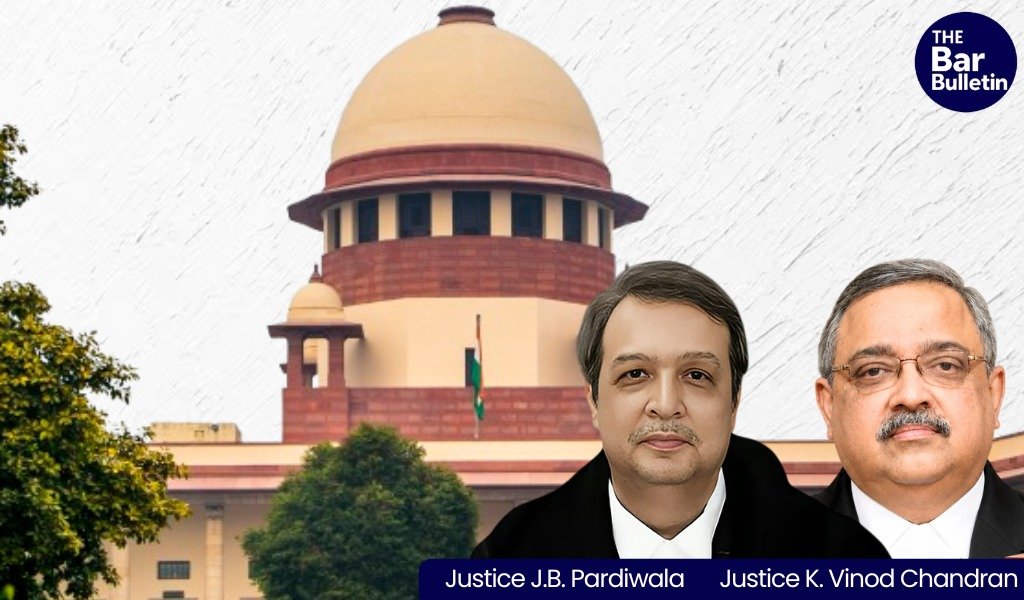
A Two-Judge Bench comprising Justice J.B. Pardiwala and Justice K. Vinod Chandran observed that found that platform-by-platform detection allows harmful material removed from one intermediary to remain on others until independently detected. It stressed the need for coordinated detection through perceptual hash-matching, URL listing and a national database containing verified identifiers and links, not the abusive material itself. Recognising the risk of wrongful removal of lawful content, it emphasised independent human verification, audit trails, periodic audits, correction of erroneous entries and effective grievance redressal.
The Court also criticised confusing reporting channels, inadequate grievance-handling capacity and superficial reliance on platforms’ “advertising standards”. It said content must be examined as a whole, including captions, keywords, links and the function of promoted tools. It considered loss of safe-harbour protection under Section 79 of the IT Act insufficient to address systemic regulatory defaults, and called for consideration of proportionate monetary penalties. It further stressed that child safety requires digital-safety awareness, age-appropriate sex education and victim support, not merely removal of harmful content.
