
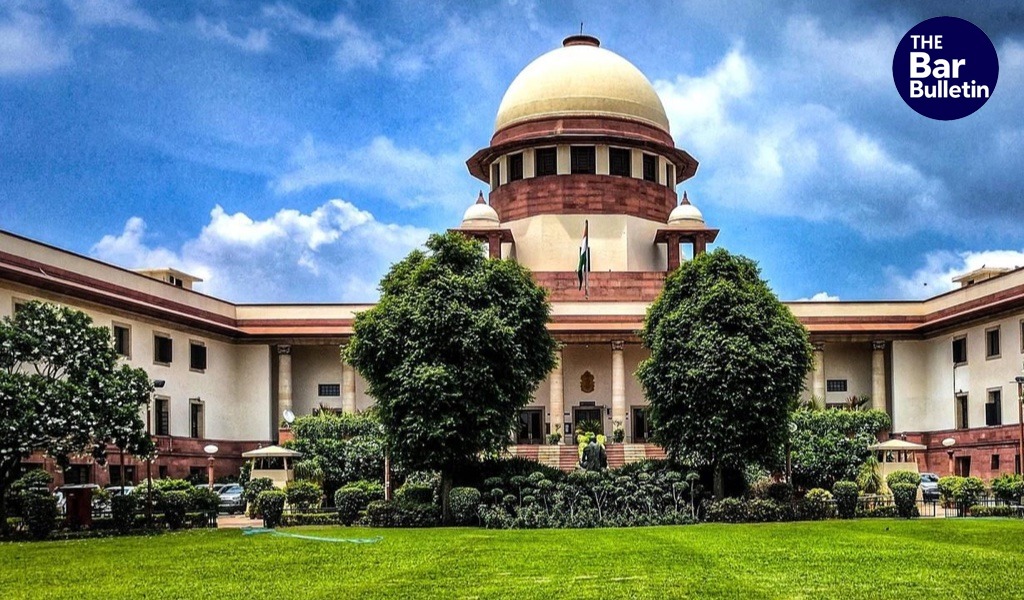

The Supreme Court has restored a penalty of over ₹162.74 crore imposed on Talwandi Sabo Power Limited (TSPL) for failing to demonstrate its declared power generation capacity, holding that such failure attracts strict civil liability and does not require proof of fraudulent intent or illegal profiteering.
A bench of Justices Sanjay Kumar and K. Vinod Chandran allowed appeals filed by Punjab State Load Despatch Centre (PSLDC) and Punjab State Power Corporation Limited (PSPCL), setting aside the Appellate Tribunal for Electricity’s (APTEL) decision that had deleted the penalty.
The dispute arose from allegations that TSPL had misdeclared its generating capacity on four days in January 2017. Initially, penalties were imposed for five dates, but the Punjab State Electricity Regulatory Commission (SERC) ultimately upheld the findings for four dates, leading to a penalty of ₹162.74 crore, of which ₹74.27 crore had already been adjusted from pending bills.
Before the Court, TSPL argued that a finding of “misdeclaration” required proof of deliberate intent to gain commercially, akin to “gaming” under the Punjab State Grid Code. It also contended that no specific time limit had been prescribed in the notices to demonstrate declared capacity, and therefore no penalty could be imposed merely because declared generation levels were not immediately achieved.
Rejecting this, the Supreme Court drew a clear distinction between “gaming” and “failure to demonstrate declared capability.” The Court held that while gaming involves intentional misdeclaration for undue commercial gain and requires inquiry consistent with principles of natural justice, failure to demonstrate declared capability under Regulation 11.3.13 is a separate regulatory breach attracting automatic consequences.
The bench held that when the State Load Despatch Centre calls upon a generator to demonstrate declared capacity, the generator must do so within four time blocks, counting the block in which the notice is received as the first. The Court said this requirement is integral to maintaining grid efficiency and ensuring truthful declarations, especially where fixed charges are payable based on declared capacity.
It further held that the penalty imposed under Regulation 11.3.13 is civil in nature and therefore does not require proof of mens rea. Relying on Union of India v Dharamendra Textile Processors and SEBI v Sri Ram Mutual Fund, the Court held that breach of a civil obligation can invite penalty irrespective of guilty intent.
On facts, the Court found TSPL had unequivocally failed to demonstrate declared capability on all four disputed dates, including instances where it revised declared capacity downward after receiving demonstration notices rather than meeting the declared generation threshold.
Setting aside APTEL’s order, the Court restored SERC’s findings and upheld the penalty, while clarifying that SERC erred in treating failure to demonstrate capacity as requiring the same intent-based analysis applicable to gaming. The Court also directed that consequential financial liabilities, including interest and surcharge implications, would follow accordingly.
Appearances:
For Appellant(s): Ms. Poorva Saigal, Adv.; Mr. Pramod Dayal, AOR; Mr. Rishabh Saxena, Adv.; Ms. Kaavya Madaan, Adv.; Ms. Shirin Gupta, Adv.; Mr. M.G.; Ramachandran, Sr. Adv.; Mr. Shubham Arya, Adv.; Mr. Nikunj Dayal, AOR; Ms. Reeha Singh, Adv.; Ms. Pallavi Saigal, Adv.; Ms. Shree Dwivedi, Adv.; Ms. Harsha Parakh, Adv.
For Respondent(s): Mr. Sajan Poovayya, Sr. Adv.; Mr. Vishrov Mukerjee, Adv.; Mr. Pratyush Singh, Adv.; Ms. Garima Adlakha, Adv.; Ms. Nishtha Kumar, AOR
Mr. Palash Maheshwari, Adv.; Ms. Sindura N. Swamy, Adv.; Ms. Raksha Agarwal, Adv.; Ms. Sunieta Ojha, AOR.
