
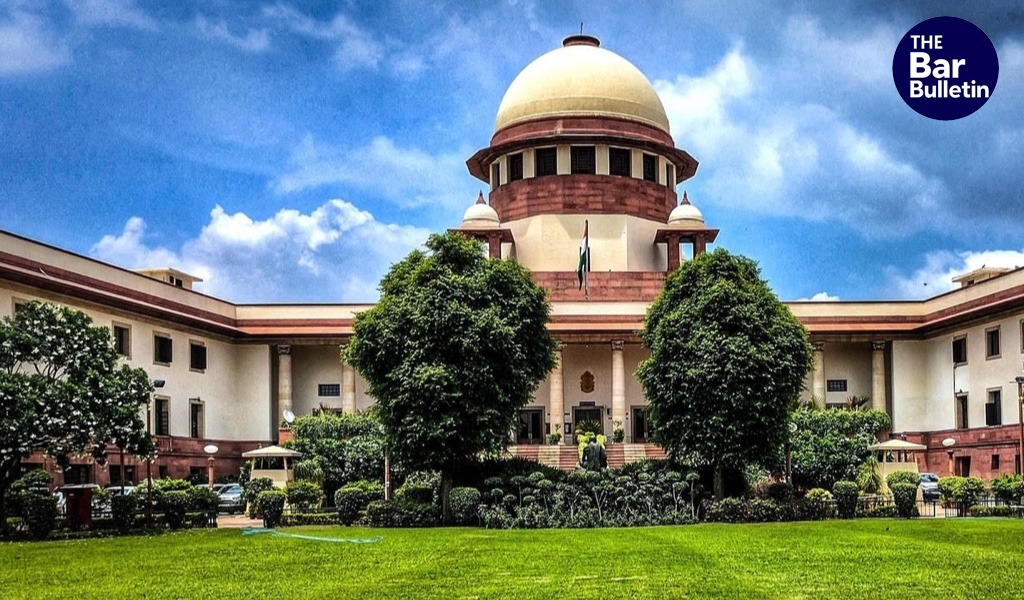

The Supreme Court on Wednesday expressed reservations over a plea challenging the income criteria for Economically Weaker Sections (EWS) reservation in medical education, observing that private educational institutions cannot be compelled to charge fees equivalent to government institutions merely because eligible candidates may find such courses unaffordable.
A Bench of Justice B.V. Nagarathna and Justice Joymalya Bagchi was hearing a petition questioning the rationale of prescribing an annual family income ceiling of ?8 lakh for EWS eligibility while students falling within that bracket often remain unable to afford the significantly higher tuition fees charged by private medical colleges.
During the hearing, the petitioner sought to highlight a contradiction between the EWS income threshold and the fee structure of private medical institutions. According to the plea, students qualifying as EWS candidates may still find admission in private medical colleges practically inaccessible because of the substantial financial burden involved. The Bench, however, was not persuaded by the argument and underscored the fundamental distinction between government-funded and privately run educational institutions. Justice BV Nagarathna observed:
“
“You cannot say private educational institutions shall charge the same as government institutions. That cannot be. One person cannot come and say that private is exorbitant, so make it like government. These are self-financing institutes. For government ones, they get grant from the State. There is a vital difference.”
Addressing concerns regarding high educational costs, the Bench noted that while the law prohibits capitation fees, private institutions are nevertheless entitled to recover legitimate educational expenses through their fee structures. Justice Nagarathna further cautioned that excessive regulation of private medical college fees could adversely affect the availability of medical education itself.
“
“Assistance of private medical colleges to the State in the field of medical education will stop then. We need doctors.”
The Court also observed that financial hardship alone could not justify judicial intervention in fee structures and suggested that deserving students may explore scholarship mechanisms where available.
“
“If you are unable to pay, get scholarship.”