
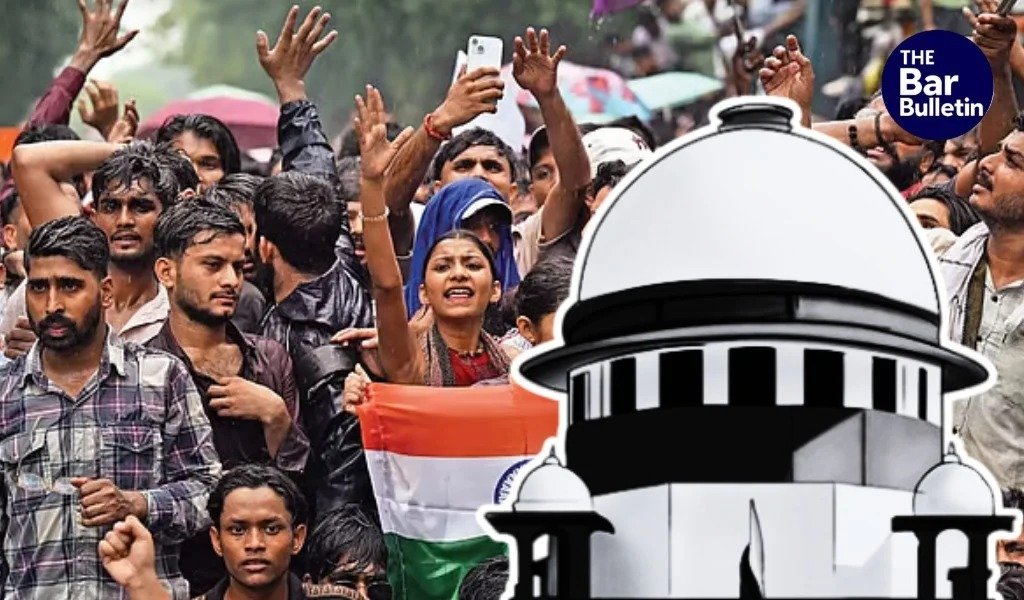

The Supreme Court on Wednesday agreed to tag a public interest litigation seeking action against the organisers of the recent student protest at Jantar Mantar that turned violent with the batch of petitions already pending before it on the issue. The petitioner contended that while the government and police had faced scrutiny over the handling of the agitation, those who organised the protest had escaped accountability despite the violence that followed.
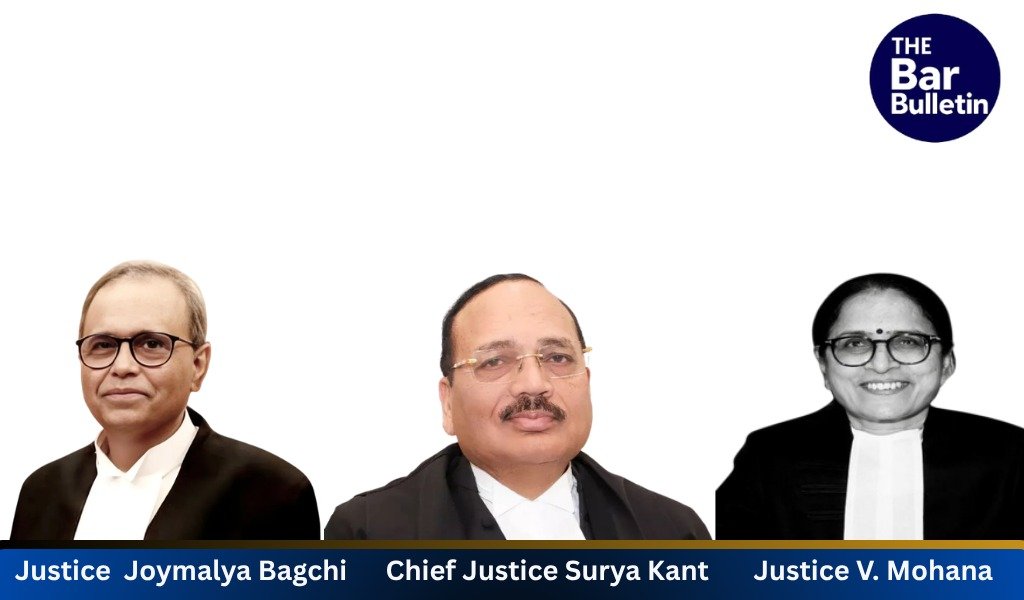
The Bench of Chief Justice of India Surya Kant, Justice Joymalya Bagchi and Justice V. Mohana indicated that it would consider the petition along with the main case, observing that it was open to hearing all viewpoints before taking a decision.
The petitioner argued that nearly two weeks had elapsed since the incident, yet no action had been taken against those who organised the march.
“
“The agitation started with accountability and we respected that. Accountability of the Minister was accepted. Accountability of the police was accepted. The moot question is: 15 days have passed, where is the accountability of the so-called organisers? In every case of a stampede, fire or public gathering, the organisers are the first to be held responsible. Why should this case be any different?”
Referring to the violence that broke out during the protest, Solanki argued that failing to fix responsibility on the organisers would embolden similar incidents elsewhere.
“
“Today the government may be on the back foot, but the law cannot be on the back foot. If this is allowed to pass without accountability, it will become a dangerous precedent. Tomorrow any group of students or protesters may resort to stone pelting believing there will be no consequences for those who organised it.”
The petitioner also referred to recent incidents of violence in other States, arguing that the Court should evolve principles ensuring that organisers of unlawful protests are held answerable for violations of conditions imposed by authorities.
The Bench, however, observed that while accountability was important, authorities were equally required to exercise restraint in handling public protests, particularly where young people were involved. The Court noted that isolated incidents of violence should be dealt with carefully, observing that excessive use of force could aggravate tensions. It remarked that listening to the concerns of protesting students and attempting to pacify them may often be a more effective response than coercive measures, while leaving issues of law enforcement to the competent authorities.
“
“This is a movement which commenced with a peaceful march, and if some kind of incident takes place, I think forces also need to have a lot of restraint in order to ensure that the situation does not go out of hand. Stray incidents, wherever they are, need to be dealt with very carefully, so that the youngsters don’t indulge in violence. Consol them, pacify them & the biggest source of strength is to listen to them, to understand why they are shouting. But let us leave it to the wisdom of the law-enforcing agencies, who know better than us how to deal with such situations.”
While assuring the petitioner that his concerns would be considered, the Bench observed that it was willing to hear all stakeholders before arriving at a considered view. The Court accordingly tagged the petition with the pending batch of matters arising out of the student protests, observing that it remained open to hearing every viewpoint before passing any further orders.
“
“We are sitting with an open mind to hear everyone. We have heard you today, and we will hear you again when the matter is taken up with the connected cases.”