
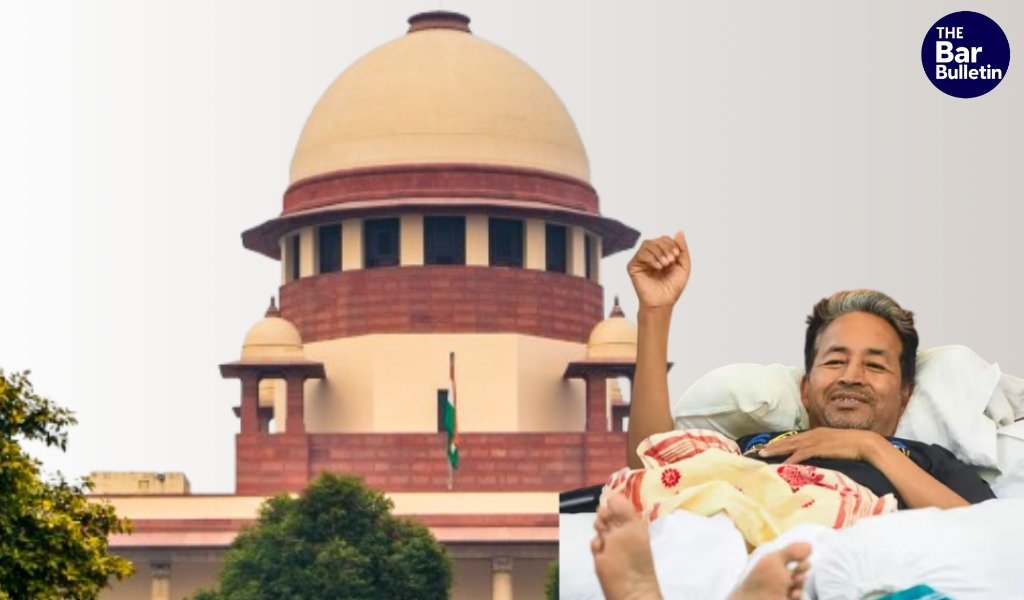

The Supreme Court on Wednesday declined to interfere with a resolution passed by the Supreme Court Bar Association (SCBA) expressing solidarity with climate activist Sonam Wangchuk over his hunger strike in connection with NEET paper leaks and criticising the government’s response to his concerns.
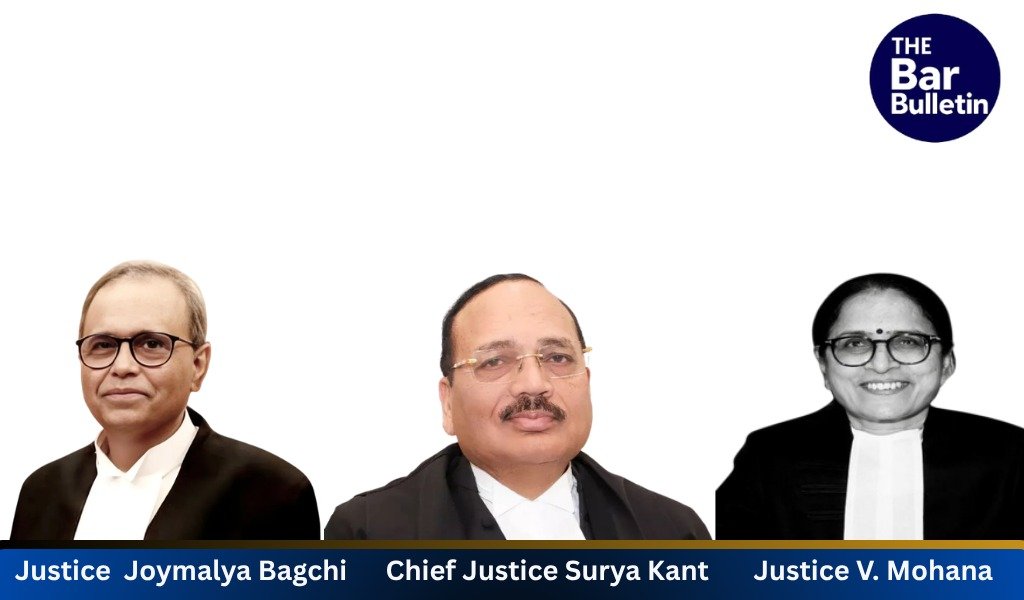
The bench of Chief Justice of India Surya Kant, Justice Joymalya Bagchi and Justice V. Mohana observed that disagreements over resolutions passed by a Bar Association must ordinarily be resolved through its own democratic mechanisms.
The petition, filed by Ashish Gopal Garg, challenged a resolution adopted by the SCBA Executive Committee, contending that it reflected the personal or political views of a few office-bearers rather than the collective opinion of the Bar. Garg further argued that the Executive Committee had become functus officio after the election process commenced and therefore lacked the authority to pass policy resolutions on behalf of the Association.
During the hearing, it was submitted that the impugned resolution praised Sonam Wangchuk and stated that institutional authorities had failed to respond with the urgency and sensitivity demanded by issues affecting the education system and public accountability. He argued that such views could not be attributed to the entire membership of the SCBA without the approval of the General Body. He also informed the Court that more than 37 members had already supported convening a General Body Meeting to reconsider the resolution.
“
“This is not a case of a few members liking or disliking a resolution. The Executive Committee has become functus officio and cannot pass policy decisions reflecting its personal ideology. These are individual opinions which cannot be projected as the opinion of the entire Supreme Court Bar Association. We are a neutral body representing lawyers with diverse views and ideologies. If such a resolution had to be passed, it ought to have been placed before the General Body. The Executive Committee cannot impose its political or ideological views on the entire Bar through the Association’s letterhead.”
Seeking interim relief, the petitioner urged the Court to restrain the outgoing Executive Committee from passing any further resolutions until fresh elections were held.
The Bench, however, was not inclined to intervene, observing that the SCBA Rules themselves provide a democratic mechanism for members dissatisfied with decisions of the Executive Committee.
“
“If you believe the decision is undemocratic, gather the requisite strength under the Rules and seek a General Body Meeting. If the General Body Meeting is not convened despite a valid requisition, or if your rights are otherwise violated, that may give rise to a grievance. But it would be a very dangerous precedent if we begin interfering in the democratic process of a Bar Association, where there can always be a view, a counter-view and healthy democratic debate.”
When the petitioner apprehended that the Executive Committee might continue passing similar resolutions before the elections, the Court declined to grant a blanket restraint, observing that such an apprehension was speculative. Instead, it permitted the petitioner to invoke the remedies available under the SCBA Rules, including approaching the Election Committee and seeking a General Body Meeting in accordance with the prescribed procedure.