

The Supreme Court has held that participation in policy-making under Section 5(24)(m)(i) of IBC does not require the stronger positive-control test under Section 29A IBC, and a corporate guarantee may nevertheless constitute financial debt without pre-CIRP invocation. The Court also clarified that an uninvoked corporate guarantee can still be financial debt, and an individual homebuyer can challenge CoC composition even where an authorised representative has been appointed for the class.
The Court rejected the reasoning that the corporate debtor’s position as guarantor, or non-invocation of the guarantee before CIRP, prevented recognition of financial debt. Default is relevant to initiating CIRP under Section 7 IBC, not to the existence of financial creditor status. The Court also upheld the homebuyer’s right to seek exclusion of related-party creditors, and said that appointment of an authorised representative for the class did not extinguish the individual creditor’s right to approach the adjudicating authority.
Policy-making participation requires less than being in the “driving seat”, emphasised the Court, while distinguishing Section 5(24)(m)(i) from the positive-control standard under Section 29A IBC. A role in navigating policy and channelising business interests may suffice for related-party status. The Court found overall supervision of policy implementation and business activities, rather than merely negative control. ECL’s disqualification as the sole debenture holder also barred its participation as lender and prevented ITSL from representing its debenture interest in the CoC.
Briefly, Saha Infratech Private Limited (SIPL) raised funds through debentures and a separate loan facility from ECL Finance Limited (ECL). Palm Developers Private Limited, the corporate debtor, guaranteed these obligations. ECL held all the subscribed debentures, while IDBI Trusteeship Services Limited (ITSL) acted as the debenture trustee.
After insolvency proceedings against Palm Developers began, ITSL and ECL submitted claims and were initially included in the Committee of Creditors (CoC). An individual homebuyer challenged their inclusion. The NCLT excluded them, holding that their claims were not financial debt and that they were related parties. On appeal, the NCLAT upheld their exclusion.
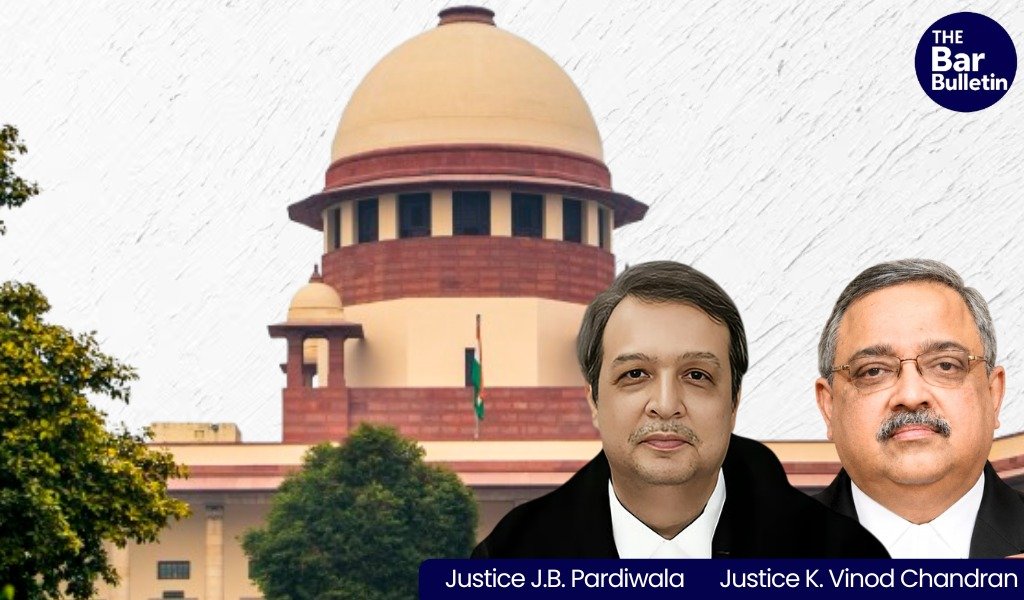
A Two-Judge Bench comprising Justice K. Vinod Chandran and Justice J.B. Pardiwala disagreed with the reasoning that a corporate guarantee could not constitute financial debt merely because the corporate debtor was not the principal borrower or the guarantee had not been invoked before insolvency began. It explained that financial creditor status does not depend on a payment default, as default becomes relevant when a creditor seeks to initiate insolvency under Section 7 IBC. The Court also upheld the individual homebuyer’s right to challenge the creditors’ inclusion, notwithstanding the appointment of an authorised representative for homebuyers as a class.
On related-party status, the Court explained that Section 5(24)(m)(i) of IBC requires participation in the corporate debtor’s policy-making process, not the stronger degree of positive control required under Section 29A. A creditor need not occupy the “driving seat”, and a role in navigating policy and business decisions may suffice. The Court examined rights concerning board deadlocks, construction-budget approval, managerial appointments, project sales and revenue accounts. It found that these arrangements gave ECL and the trustee overall supervision of policy implementation and business activities, rather than merely protective or negative control.
