
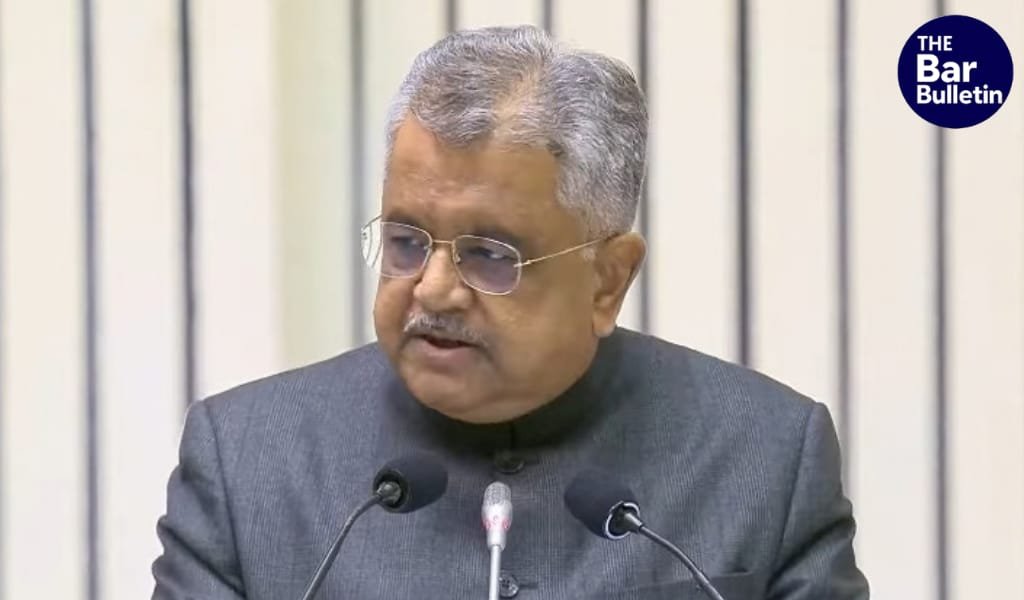

Solicitor General Tushar Mehta, speaking at the valedictory session of the International Conference on the Future of Environment and Climate Dynamics organised by the National Green Tribunal, emphasised the need to balance development with environmental protection, stressing the importance of sustainable cities, clean energy and stronger environmental institutions.
He said environmental challenges could no longer be addressed by a single institution or discipline and required the combined wisdom of law, governance, science and economics, along with the involvement of society. He said climate change was already affecting air, water, forests, biodiversity, cities and agricultural systems. He stated:
“
“Environmental law has increasingly become a law of life, dignity, equality and intergenerational responsibility. It must seek a balance. It must protect biodiversity while addressing climate change. It must promote renewable energy while safeguarding fragile ecosystems. It must pursue development while ensuring environmental responsibility.”
Referring to India’s civilisational understanding of nature, Mehta invoked the Prithvi Sukta of the Atharvaveda and the phrase, “Mata bhumih putro aham prithivyah”: Earth is my mother and I am her son. He also referred to Articles 48A and 51A(g) of the Constitution, which respectively concern the State’s duty to protect the environment and citizens’ fundamental duty towards the natural environment.
He also referred to Articles 48A and 51A(g) of the Constitution, which respectively concern the State’s duty to protect the environment and citizens’ fundamental duty towards the natural environment.
On the challenges ahead, he said cities and infrastructure would continue to grow while energy requirements would rise, making the transition towards clean energy increasingly important. At the same time, he stressed the need for stronger protection of ecosystems and biodiversity, effective environmental mechanisms, green infrastructure and greater institutional cooperation. He emphasised:
“
“We must strive for cities that are not merely prosperous, but liveable. We must strive for energy systems that are not merely productive, but sustainable. We must strive for laws that anticipate and prevent environmental harm rather than merely respond to it.”
Mehta further said courts, tribunals, governments, legislatures, scientists, experts and citizens must work together to address environmental challenges. He said the objective of such deliberations should be to translate ideas into stronger institutions, better laws, effective implementation and responsible governance.
Quoting Mahatma Gandhi, Mehta said, “The Earth provides enough to satisfy every man’s need but not every man’s greed,” adding that development must meet human needs while respecting the limitations of nature. “Environmental protection is not an impediment to human progress. It’s a condition for enduring long-lasting human progress,” he said.
Mehta concluded by expressing hope that the conference would contribute to a future where development and environmental responsibility advance together.
“
“Environmental protection is not an impediment to human progress. It’s a condition for enduring long-lasting human progress…Environmental protection is not an impediment to human progress. It’s a condition for enduring, long-lasting human progress. We must strive for cities that are not merely prosperous but liveable, energy systems that are not merely productive but sustainable, and laws that anticipate and prevent environmental harm rather than merely respond to it.”