
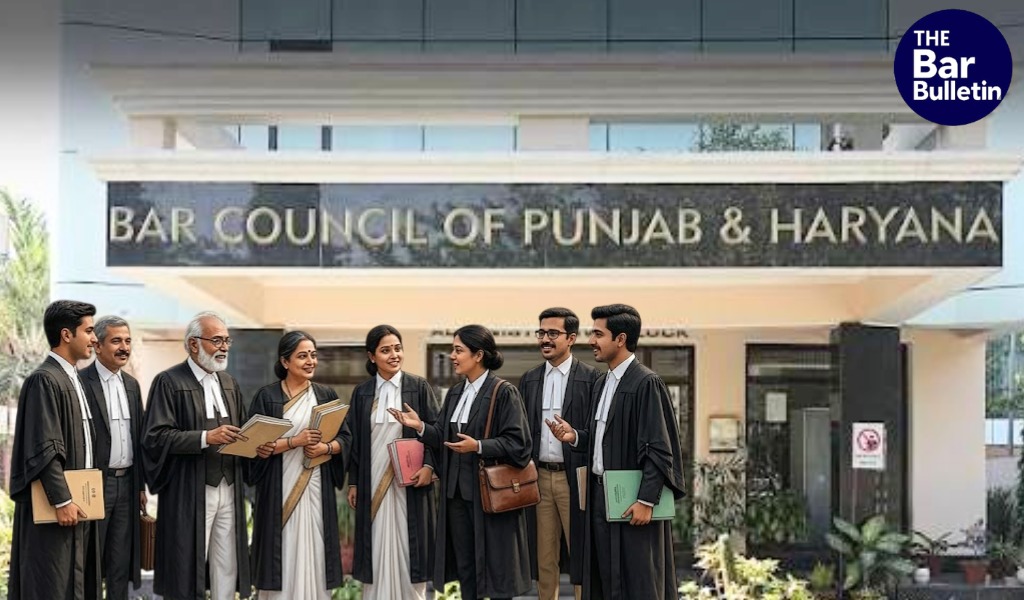
The Bar Council of Punjab & Haryana has unanimously passed a resolution seeking the immediate rollback and comprehensive review of the existing Legal Aid Defence Counsel System (LADCS), contending that its present structure has adversely affected the legal profession, particularly young and independent advocates. While reaffirming its commitment to free and effective legal aid, the Council clarified that its opposition is directed at the current implementation of the LADCS framework and not against legal aid itself.
The resolution was adopted during an emergency General House meeting held on 13 July 2026 at Law Bhawan, Chandigarh, convened to deliberate upon concerns arising from the implementation of the LADCS Scheme pursuant to a communication issued by the Bar Council of India. The meeting resolved to seek an audience with the Chief Justice of India, the Executive Chairman of NALSA, the Union Law Minister/Minister of State for Law and Justice, the Acting Chief Justice of the Punjab and Haryana High Court, and the Judges of the High Court to place the Council’s concerns before them.
The Bar Council expressed concern that the introduction of permanent salaried Legal Aid Defence Counsels has created a parallel State-funded criminal defence system operating alongside the independent Bar. According to the resolution, this has resulted in a substantial diversion of criminal litigation including bail matters, NDPS cases, murder trials and other prosecutions—from independent practitioners to LADCS counsel, particularly affecting junior and first-generation advocates. The Council cited district-wise data indicating that LADCS is handling approximately 11–18% of criminal cases in several Punjab districts, making it a significant participant in mainstream criminal litigation.
The resolution also records concerns regarding the concentration of criminal legal aid work among a limited number of salaried counsel, the diminishing role of traditional panel advocates, reduced opportunities for young lawyers, and the absence of any balancing measures to compensate for the resulting loss of work. It further raises issues relating to verification of beneficiary eligibility, alleged extension of legal aid to financially capable persons, and the increasing handling of ancillary matters such as prisoner release and bail by LADCS counsel.
To address these concerns, the General House resolved to seek an immediate rollback and review of the existing LADCS framework, recommend withdrawal of the present structure after wider consultation with the Bar Council of India, State Bar Councils and Bar Associations, restore the traditional panel advocate system with rotational inclusion of young advocates, and ensure equitable distribution of legal aid work while preserving access to justice. A Sub-Committee comprising elected members of the Bar Council has also been constituted to pursue the matter before the appropriate authorities.